Humidity, Air Conditioning and Solid Wood Bedside Tables in Singapore Homes
Singapore’s tropical climate can make a 45 cm wide solid wood bedside table look as though it has changed shape, developed swollen drawers and acquired a tacky surface. The visible damage may occur in an HDB flat in Tampines, a Bedok condominium or a Punggol apartment where the unit is empty for 14 days during a holiday. Relative humidity commonly ranges from about 65% to 85% outdoors, while an air-conditioned bedroom may remain near 50% to 60%. That repeated difference can make hardwood expand, contract and react to humidity more than many owners expect.
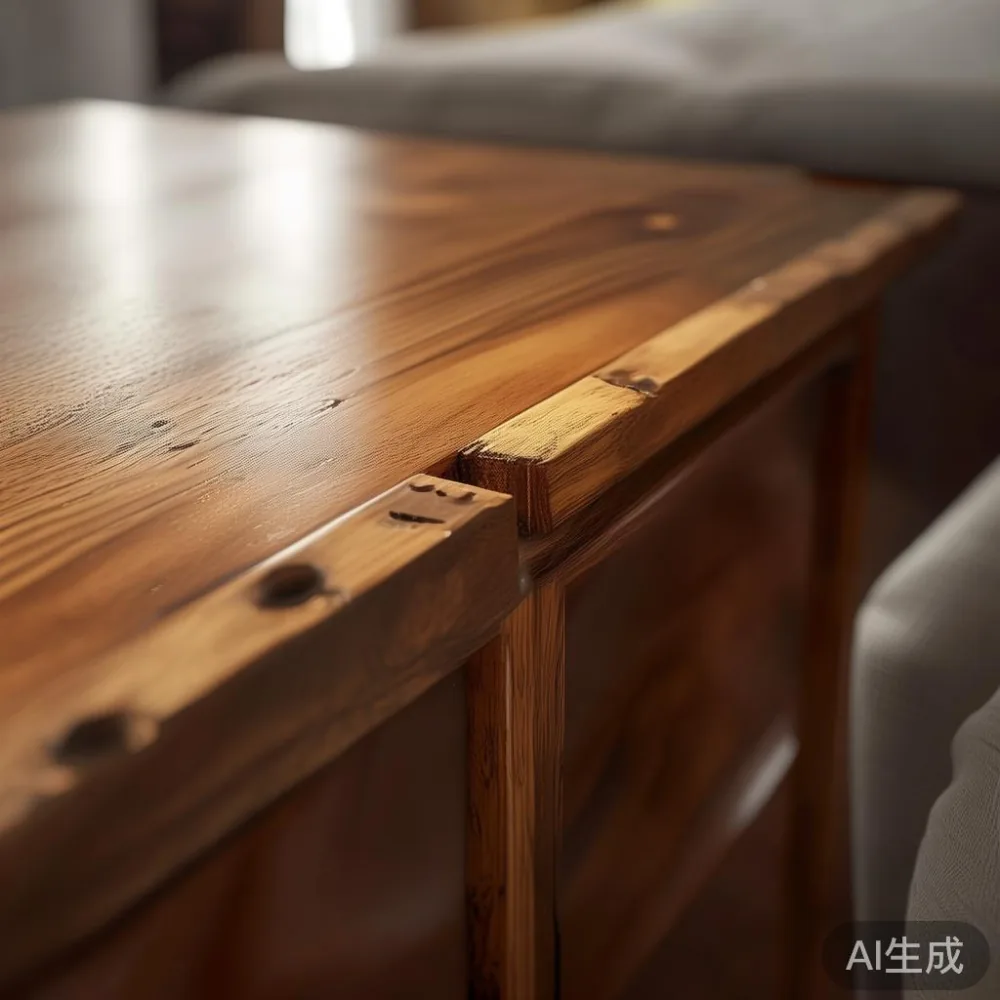
A bedside table has a demanding job. It supports a 0.7 kg phone, a 1.5 kg book, a glass of water and sometimes a humid electric kettle. Its drawer must open through narrow passages after being carried from a loading area, up a lift and along a 120 cm corridor. Its finish must also withstand condensation, cleaning products and daily contact. Understanding how moisture moves through timber is therefore more useful than treating every solid wood product as permanently stable.
MIDHILL has made solid wood furniture since 2008 and exports to more than 15 countries. Its production experience is relevant because a well-made bedside table must be stable within a room, not merely at the factory. Below, I explain the humidity risks, the practical measurements worth checking and the choices that suit Singapore homes.
Why does tropical humidity affect solid wood furniture?
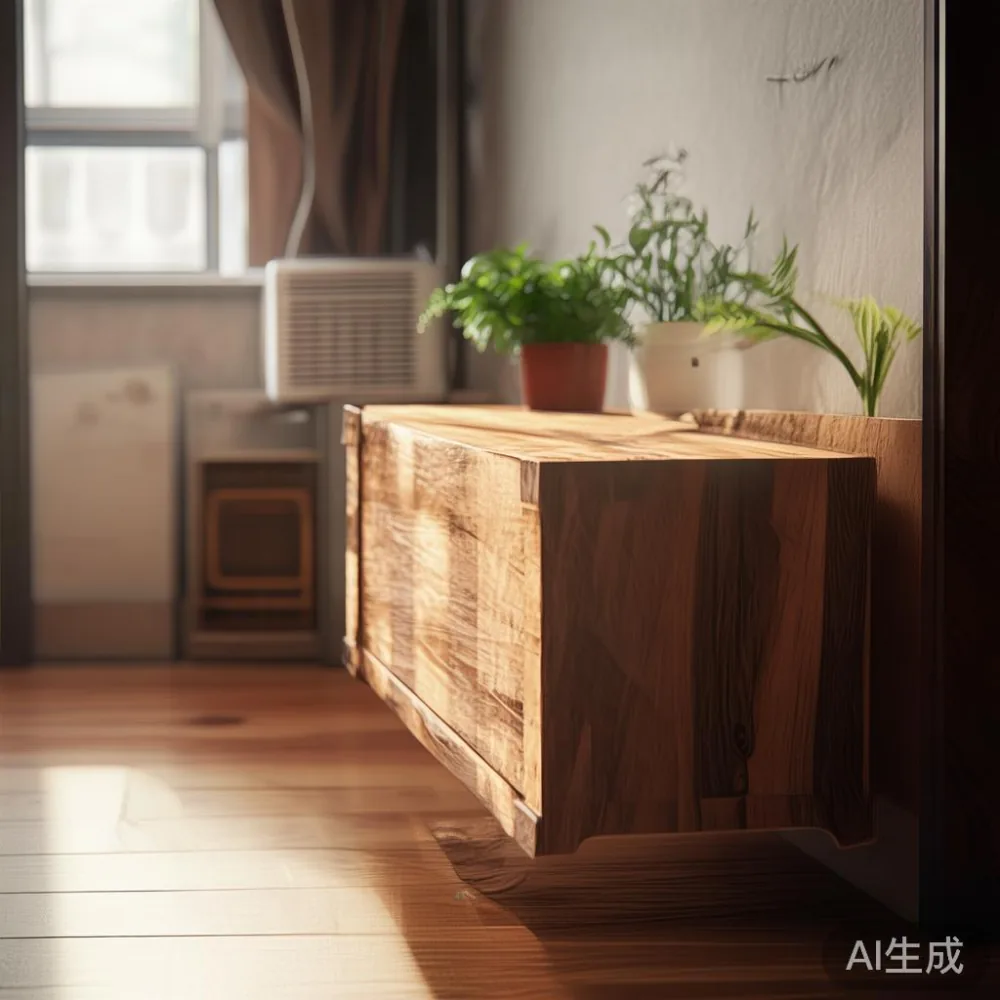
Wood is hygroscopic: it takes in moisture when the surrounding air is humid and releases it when the air becomes dry. A cabinet beside an open window in Punggol may absorb moisture at 78% relative humidity and then lose it in an air-conditioned bedroom at 52%. That cycle can make the timber swell across its width, shrink along its length and develop small stresses around joints, drawer bottoms and decorative mouldings.
The risk varies by species and cut. Teak and iroko have naturally better resistance, while oak, ash, beech and some denser hardwoods can show clearer movement. Solid wood usually responds more visibly than laminated engineered timber, although bonding quality and edge design still matter. A 50 cm wide solid oak bedside table might move by roughly 2 mm to 5 mm across the grain during a substantial indoor humidity change. That amount can jam a drawer or pull a panel away from its housing.
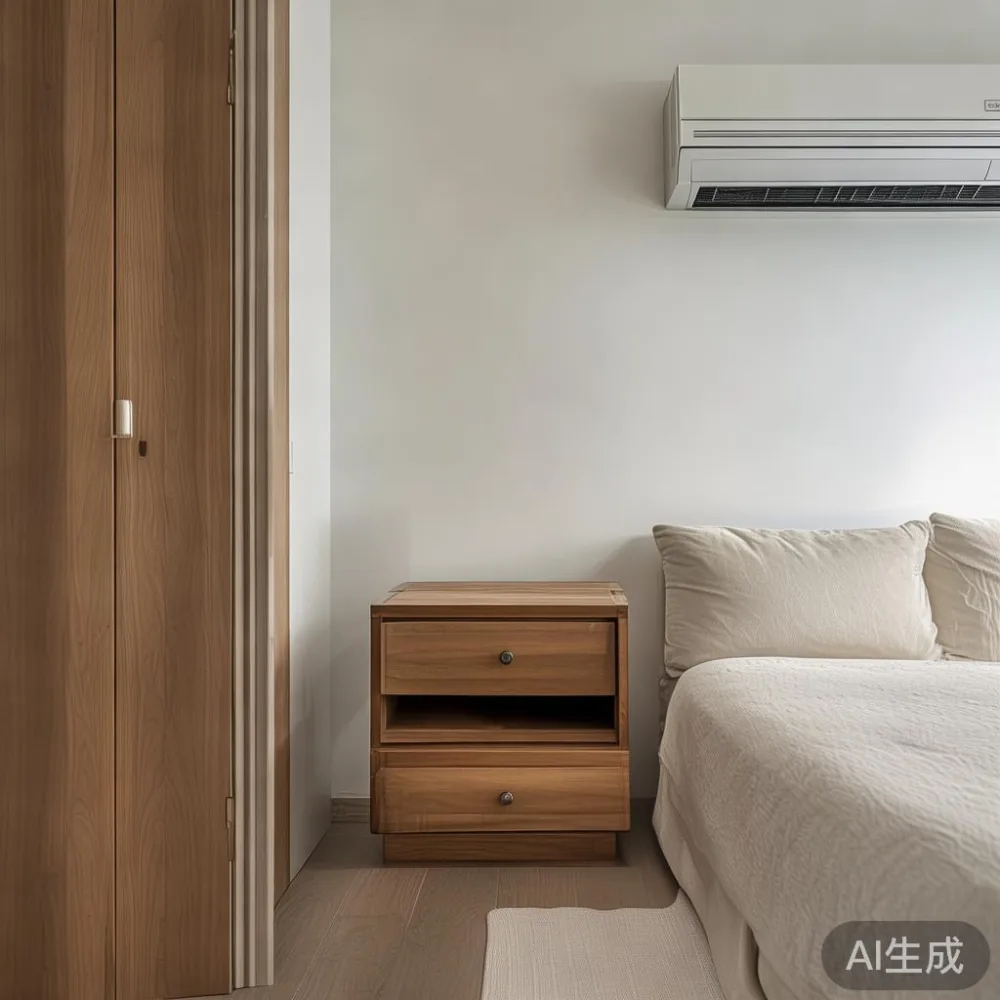
Humidity becomes more harmful when it is persistent. An average of 65% may create slow movement; repeated periods near 80% can encourage mould on a damp floor, metal rust on unrated runners and finish failure. A hygrometer costs about SGD 15 to SGD 35. Place one near the bedside table, 10 cm above the floor and away from a bathroom door, window or air-conditioning outlet. Reading it for 7 days gives a more useful picture than checking only during rain.
Should relative humidity in a Singapore bedroom stay between 45% and 60%?
For bedrooms containing solid wood furniture, keeping relative humidity near 45% to 60% is a practical target. Around 50% is a sensible everyday reading, particularly in Bedok and Tampies where occupied rooms may also receive air conditioning. Readings above 65% deserve attention for several hours each day, while readings below 40% can cause excessive shrinkage and static electricity.
Air conditioning often lowers humidity, but not every system controls moisture precisely. During the night, condensation may form on an exterior wall or window. Keep the bedside table at least 30 cm away from a wall that feels cool or visibly damp, and allow 20 cm to 30 cm of ventilation space behind and beside it. Do not push the unit tight against an exterior wall merely to recover 10 cm of floor space.
Use windows carefully. In Singapore, a window can raise humidity sharply between 6 p.m. and 8 p.m. after a shower or an afternoon storm. Close the bedroom window and let the air conditioner dehumidify the room; open it later when outdoor readings and airflow are suitable. A basic digital logger recording every 15 minutes costs around SGD 25 to SGD 60 and can reveal a damp corner that a single reading misses.
How can I protect a bedside table from swelling drawers and cracked panels?
Start with placement and use. Keep liquids in a coaster or tray, wipe spills within 10 minutes and use a cloth with 2 or 3 drops of mild detergent in 500 ml of water. Avoid dripping water directly onto the timber or finish. Saturated cloths can force moisture into end grain, especially along the top and the exposed sides of a drawer box.
Conditioner marketed for wood can create problems. Oils such as Danish oil may slow water penetration, but they do not remove moisture from timber and must not be assumed to prevent movement. Silicone spray and wax can interfere with refinishing. If a finish gets cloudy or sticky, stop applying products and have the piece assessed. Cleaning with water and mild detergent is usually enough for a dry bedside table.
Small scratches can often be addressed with a matching repair marker costing SGD 8 to SGD 20. Test it on the underside first. Larger finish failure may need sanding with 180-grit followed by 240-grit paper before refinishing. A full refinishing service is more demanding because the colour has to be matched under Singapore daylight, which is bright enough to expose orange tones that seem less visible indoors.
Do not force a swollen drawer. Remove its contents, reduce indoor humidity for 24 hours and gently ease the sides with a soft cloth. If a leg is visibly bowing or the tabletop has a split longer than 20 cm, contact the maker. A tabletop split cannot be repaired reliably with glue alone. Structural issues should be distinguished from a minor 1 mm to 2 mm seasonal gap.
Does air conditioning create a different wood movement problem?
Yes. A constant stream of cool, dry air can lower a bedside table’s moisture content. If the room repeatedly changes from 85% humidity outside to 40% inside, the top, side panels and drawer rails may move by different amounts. The surface may then feel tight on one edge while a small gap appears at another. This is why selecting stable timber and protecting all faces matters.
Look for furniture with solid wood panels that are properly joined, drawers with generous clearances and finishes applied to every relevant face. Avoid a bedside table with decorative trim trapped in a damp corner. A drawer should have about 3 mm to 5 mm of clearance at its sides and avoid metal-on-wood contact that can mark a surface.
Marine plywood drawer bottoms can remain practical in humid conditions, while solid wood drawer fronts preserve the intended appearance. Ask whether any component is veneer or solid timber; both materials can be appropriate, but the maintenance expectations differ. HPL and coated boards may offer dimensional stability, although their edges can chip if exposed to water.
Will a teak bedside table handle Singapore humidity better?
Often, yes. Teak contains naturally oily compounds and performs well in demanding environments, which makes it a sensible choice for a frequently wiped bedside table. Iroko is another comparatively stable option. Oak, walnut and beech can still be used successfully when the maker controls moisture during construction and the owner manages the room’s relative humidity.
My colleague last month inspected a solid teak bedside table in a Tampines HDB flat after its owner returned from a 12-day trip. The bedroom had been closed, windows shut and air conditioning unused. A nearby hygrometer read 82%. The tabletop had raised slightly, but the unit had no split. We left it in the ventilated bedroom for 48 hours, checked it every 6 hours and found the high point returning to the front edge as moisture moved out.
The repair consisted of dry wiping and airflow, not sanding. This result does not mean teak needs no care. It shows why species, construction and exposure history should be considered together. A particleboard bedside table and a well-joined teak unit can behave very differently under the same 80% humidity.
How do lift and corridor dimensions affect humidity-safe delivery?
Before delivery, measure the route in centimeters, not just the room. In many older HDB buildings, a common corridor may be about 120 cm to 150 cm wide, while a compact lift car can offer an internal depth near 120 cm and a door opening around 90 cm. Newer towers and landed properties have generous passages, but corners and a main entrance can still determine the route.
A compact bedside table might measure 45 cm wide by 40 cm deep by 55 cm high and weigh 18 kg. Two-person carrying is sensible because handles, lift limits and tight turns affect control. A heavier unit at 85 cm wide and 40 kg needs more planning even if it fits the lift floor area diagonally. Measure the door width, lift door, lift height and the narrowest corridor turn before dispatch.
Protect the piece with a breathable cover during transport. Plastic wrapped tightly for 8 hours can trap condensation against warm timber. Move the table directly into the bedroom rather than leaving it in a humid corridor. Allow it to acclimatise for 24 hours before loading heavy objects; give a larger or recently lacquered piece up to 72 hours if the room is dry and well ventilated.
For purchases above US$350, MIDHILL offers free shipping, though Singapore orders should have the local landing cost, GST and delivery timing confirmed before payment. Prices in Singapore normally include applicable GST, but promotions and clearance items may be treated differently. Allow about 3 to 7 delivery days for stocked Singapore items and longer for made-to-order production. A precise lead time is more useful than a broad dispatch promise.
Can French light luxury work in an HDB bedroom without making humidity worse?
French light luxury can suit an HDB bedroom, but restraint is useful in a compact room. A bedside table with a pale oak finish, tapered legs and one rounded corner may echo French provincial styling without overwhelming a 3 m wide bedroom. The phrase French provincial for guest room often brings to mind carved detail and warm timber; a smaller piece should use fewer ornaments so drawers remain easy to inspect and clean.
American light luxury similarly favours clean lines, proportionate hardware and tactile finishes. Post-modern light luxury may use simple geometry with a contrasting grain direction, but the construction still matters more than the label. French light luxury, American light luxury and post-modern light luxury should describe appearance and proportion—not excuse poor moisture control.
A marble table belongs in a different humidity conversation. Marble can react to acidic liquids and may crack if a heavy object lands near an edge, yet it does not expand like timber. A marble surface also requires specialist handling because its weight changes lift planning. It should not be assumed that stone automatically protects nearby furniture: a stone top can transmit spills toward an untreated bedside-table edge.
The broader product range may include a solid wood sofa, bed frame, dining table and wardrobe, but the same raw timber should not react identically to every environment. A dining table is often exposed at one edge and supported far from the floor; a bedside table sits close to an exterior wall and receives frequent hand contact. Joinery, end-grain sealing and finish thickness can matter as much as the species name.
How should I compare under 2000 Post-modern furniture for a bedroom?
Compare under 2000 Post-modern furniture by measuring the piece, checking exposed surfaces and obtaining clear after-sales terms. A compact table around SGD 700 to SGD 900 might be appropriate for one HDB bedroom, while a solid hardwood or marble-topped design can fall between SGD 1,000 and SGD 2,000. These are planning ranges, not guarantees: dimensions, timber, finish and delivery can alter the final SGD amount.
Online searches for for sale Scandinavian furniture and light luxury bed vs Mid-century modern bed can create useful visual references, but a photograph does not reveal moisture content or drawer clearance. Ask for the exact timber species, panel construction, finish type and tolerance dimensions. Confirm whether the quoted price includes GST, delivery to the lift lobby and assembly. Keep the final invoice available because household items are not automatically treated like daily consumables in every claim.
For sellers of coordinated products, a search for MIDHILL dining table wholesale or MIDHILL coffee table can help identify the range’s design language, yet a dining or coffee specification should not be used to judge a bedside table. The relevant question remains whether this particular bedside table will remain stable beside an HDB bedroom wall. A search for an Italian light luxury sofa may likewise be useful for style vocabulary but says nothing about a small nightstand’s wood movement.
MIDHILL provides a 10-year structural warranty and lifetime refinishing. Confirm what each document covers before purchase: structural failure is different from ordinary colour change, surface scratches and movement caused by prolonged dampness. Ask how refinishing is arranged after years of use and whether collection, transport or recoating charges apply.
What should I do before accepting a new bedside table?
Inspect the package and furniture before signing the delivery record. Check for cracks longer than 20 mm, loose joints, torn film, water marks and drawer binding. Photograph all sides in the corridor and bedroom within 15 minutes of arrival. Packaging can hide impact damage, and prompt evidence makes a claim easier to assess.
Check the running clearance with a 5 mm spacer or a coin, depending on the drawer design. Confirm that all feet or levellers touch the floor and that the unit does not rock. Place your hygrometer nearby and record the initial relative humidity. If reading exceeds 70%, improve ventilation before adding books, charging cables or a humidifier.
Measure the delivery route again if a replacement or return is needed. A boxed bedside table cannot always pass the same turn as an unpacked one. Review MIDHILL’s 14-day return policy, including unused-condition requirements, collection arrangements and exclusions for custom finishes. Do not assemble or refinish a visibly damaged item before discussing the claim.
Which bedroom habits prevent moisture damage over 5 years?
Use a small tray, keep drinks sealed and move the bedside table away from exterior walls during heavy rain. Check the hygrometer at breakfast and bedtime for 14 days. Maintain roughly 45% to 60% relative humidity where possible, clean with a lightly damp cloth and dry immediately. Inspect the rear edge and underside every 3 months for mildew, lifting veneer or finish blisters.
Over 5 years of daily use, these habits matter more than repeatedly applying an unfamiliar oil. A bedside table may receive 2 wipe cleanings each week, 520 wipe cleanings a year and thousands of hand and object contacts. Stable placement reduces those repeated stresses. If the room is empty for more than 7 days, leave the air conditioner in a sensible dehumidifying mode or arrange checks without creating excessive temperature changes.
For more than 20 kg, use two people, measure every turn and protect the lift wall. Compare dimensions with an allowance of 10 cm around awkward corners, but never force a lift door. A well-chosen nightstand should fit the room, the moisture record and the route into the room—not just the product page.