Styling a Small Singapore Apartment Without Making It Feel Crowded: A Bedside-Table-First Guide
I moved into a 452 sq ft one-bedder in Punggol last February, and within three weeks the bedroom had become the heaviest room in the flat. Not because of the wardrobe, but because of the bedside table. A chunky 60 cm cube with two deep drawers ate up almost a third of the floor space next to my bed, and every night I bumped my shin on its corner walking to the bathroom. That single piece of furniture shaped how the entire apartment felt. Swap it out for something slimmer, and the whole room breathes. This guide is built around that lesson: when you are styling a compact HDB or condo in Singapore, start with the bedside table and work outward.
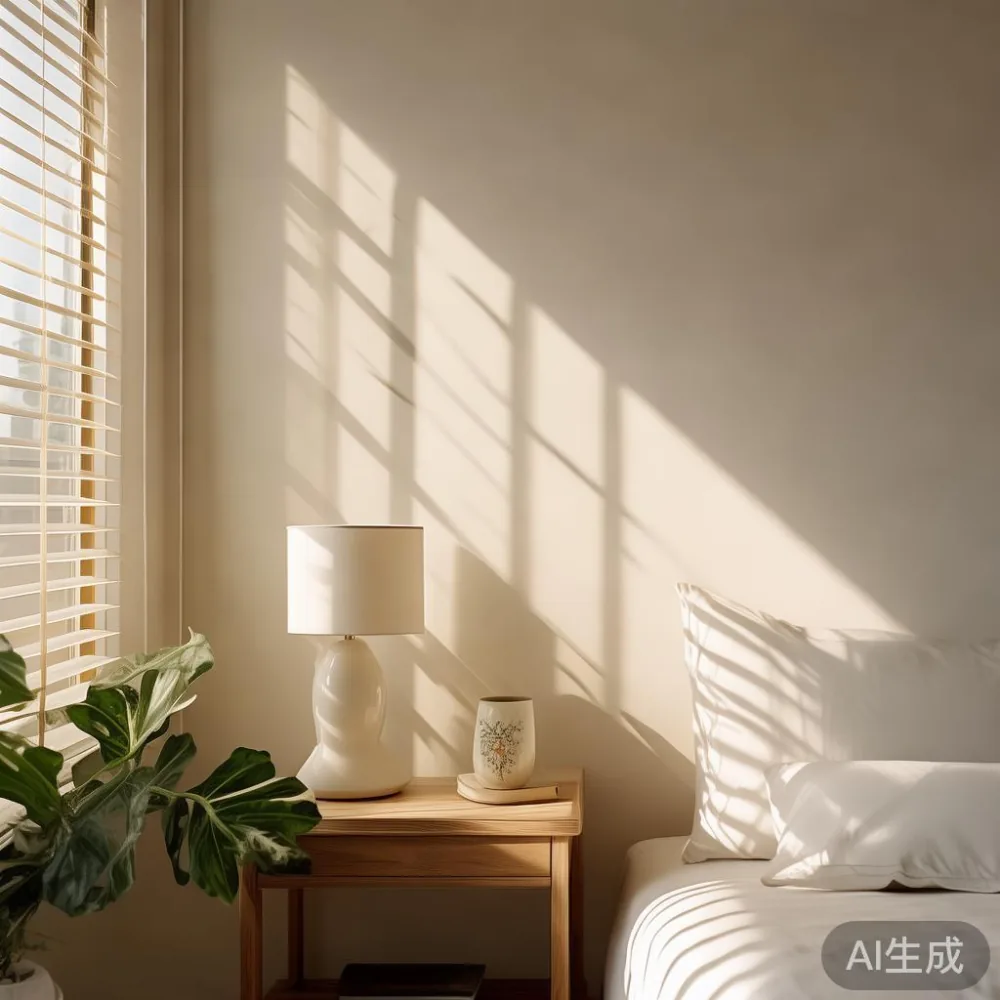
MIDHILL, a Foshan-based solid wood furniture maker founded in 2008 and shipping to more than 15 countries, has spent years solving the "small Asian apartment" problem at scale. Their pieces, from solid wood bed frames to dining tables and wardrobes, are sized for tight corridors and narrower lifts common in Singapore developments. The pieces arrive flat-packed, ship free over US$350, carry a 10-year structural warranty, and include lifetime refinishing. Several of the techniques below come from watching their catalogue reverse-engineer the constraints of a 3-room flat in Bedok or a 4-room in Tampines.
Why the bedside table decides whether your bedroom feels cramped
A bedside table sits in the highest-traffic zone of any bedroom: between the bed and the wardrobe door, in the path to the bathroom, and within arm's reach when you sleep. If that piece is 55-60 cm deep, you lose roughly 0.3 sq m of usable floor just by having it there, which in a 9 sq m HDB bedroom equals more than 3% of your total floor. Push the depth down to 35-40 cm and you recover enough space to open a wardrobe door fully or to slide a laundry basket in without rearranging the room.
Height matters just as much. A bedside table that is taller than your mattress top makes the bed feel lower and the ceiling feel closer. Aim for a top surface within 5 cm of your mattress height. For a standard 50 cm mattress, that means a bedside table around 45-55 cm tall. Width should match roughly two-thirds of your pillow width, so for a king bed a 50-60 cm wide unit works, while for a single bed 35-45 cm is plenty.
Weight is the underrated factor. A solid wood bedside table in oak or ash weighs 12-18 kg, which sounds heavy but is actually lighter than a hollow MDF unit with a stone-look laminate top, which can hit 22-28 kg. Solid wood moves easily for cleaning and survives Singapore's humidity swings between 24°C and 34°C across the year without the corners swelling the way engineered boards do. A well-built oak bedside table from MIDHILL will hold a 1.5L water carafe, a 0.8 kg table lamp, two phones and a 350-page book without flexing.
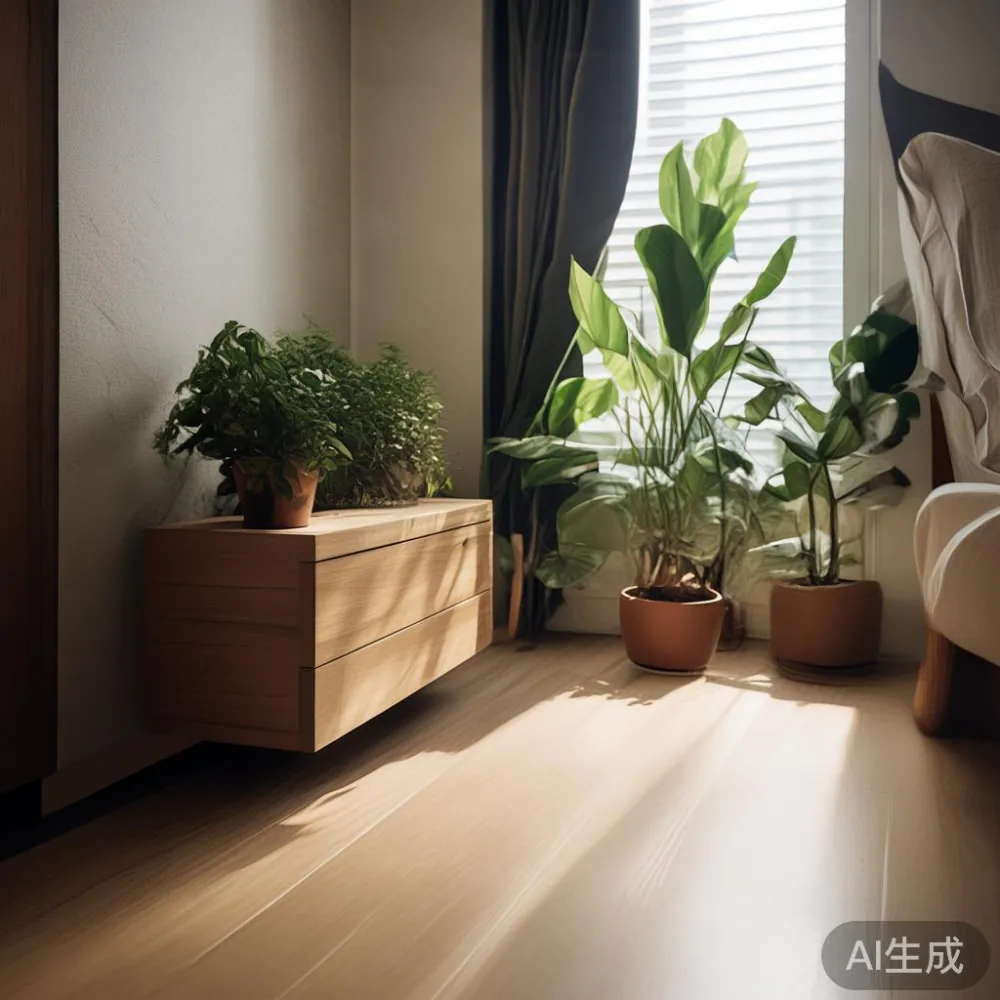
Where can I buy a bean bag in Singapore?
You can buy a bean bag in Singapore directly from MIDHILL's online catalogue, which ships a French fabric bean bag in light-luxury neutral tones to any HDB or condo address with delivery typically completed within 7-12 working days and a 14-day return window if the piece does not suit your room. The bean bag is one of the smartest small-space buys because it collapses flat for storage, weighs under 4 kg when empty, and can be moved from bedroom to living room to balcony in seconds, which is exactly the kind of furniture flexibility a compact flat demands.
Light luxury without the heavy footprint
Light luxury, whether framed as French light luxury, American light luxury or post-modern light luxury, is not about chandeliers and gold trim. It is about restrained material choices, a tight palette of two or three finishes, and one or two statement pieces per room. In a small Singapore apartment this approach is structural, not decorative. A French light luxury living room might pair a single marble table with a slim-lined solid wood sofa and a slim brass floor lamp; that is three textures, three finishes, and the room reads as composed rather than crowded.
For the bedroom, the same logic applies to the bedside table. Skip the ornate carved legs and the mirrored panels. A clean solid wood frame with a single soft-close drawer and a small open shelf below gives you the visual richness of grain pattern without bulk. Ash, white oak and walnut are the three species that photograph well under Singapore's strong tropical light without yellowing the way cherry or beech can. A 40 cm wide ash bedside table with a satin-brass handle reads as light luxury the moment you walk in, and costs a fraction of a fully upholstered version.
The marble table is the one place to spend. A small round marble side table, 45 cm in diameter, brings a cool, heavy counterpoint to warm wood tones and survives decades of daily use without showing it. Use it as a coffee table in the living room, a laptop stand in the study nook, or a bedside table alternative if you want a more open, hotel-like feel. A single 12 mm Carrara marble top on a powder-coated steel base weighs around 9 kg and slides easily for vacuuming.
Measure twice: HDB corridors, lift doors and your actual floor
Singapore's HDB corridors are typically 1.2-1.5 m wide, and standard lift doors open to about 0.8-1.0 m wide with internal cabins of roughly 1.1-1.5 m deep. A flat-pack bedside table boxed at 45 cm wide and 40 cm deep fits through every door in a typical BTO. A fully assembled 60 cm cube does not always fit diagonally into a 1.1 m deep lift cabin, and you will learn this the expensive way on moving day. MIDHILL ships flat-packed for this reason, and their packaging is sized so a single box fits through a standard 0.8 m corridor without tilting.
Before ordering, measure three things in your bedroom: the gap between bed and wardrobe (aim for at least 60 cm walking space), the width of your wardrobe door swing (add 50 cm buffer), and the distance from the wall to the nearest power socket (cables look ugly draped across a bedside table). For a 3-room flat in Bedok with a 9 sq m bedroom, a 35 cm deep bedside table gives you a workable 65 cm corridor. For a 4-room in Tampines with a 12 sq m bedroom, you have room for 45 cm depth.
Weight per square metre matters too. A solid wood bed frame in king size weighs 60-80 kg, a wardrobe 90-140 kg, a dining table 35-55 kg for a four-seater. Spread these heavy pieces along load-bearing walls to keep the room's centre clear. A typical HDB floor load rating of 150 kg per sq m handles this comfortably, but concentrating weight in one corner can make floor tiles sound hollow underfoot. Keep your heaviest pieces, the wardrobe and the bed frame, on opposite walls.
Colour, light and the Singapore tropical problem
Singapore gets 12 hours of daylight on average and roughly 70-80% humidity year-round. Light colours bounce that brightness around and visually expand a room; dark walnut floors absorb it and shrink the perceived space. For walls, stick to off-whites in the warm range, specifically Benjamin Moore White Dove, Dulux Almond White or Nippon 30YY 83/026. For furniture, light oak, ash and natural maple reflect rather than absorb the available light.
Lighting is where most small Singapore bedrooms fail. A single ceiling-mounted LED at 4,000K casts downward shadows that make every surface look flat. Layer two warm 2,700K bedside lamps at 5-7W each, plus one indirect cove strip behind the headboard, and the same room feels 20% larger because the eye reads depth. A slim brass bedside lamp, 28-35 cm tall, fits on a 40 cm wide bedside table without crowding it, and the warm bulb hides dust on dark surfaces that cool bulbs reveal.
Mirrors double the perceived depth when placed opposite a window. A 60 x 80 cm frameless mirror on the wardrobe door reflects the window and tricks the eye into reading the room as twice as long. Avoid mirrored bedside tables though: they scratch within months in a humid climate and date a room faster than almost any other finish.
How to choose a bedside table that earns its 0.25 sq m
A bedside table should do four things and only four things: hold a lamp, hold a phone, hide one or two small objects, and look intentional. If your current piece fails any of those, replace it. The right bedside table for a small Singapore bedroom has a footprint of roughly 35 x 40 cm, a height within 5 cm of your mattress top, a single drawer with soft-close runners, and an open shelf below for a book or a charging dock.
Solid wood construction is non-negotiable in this climate. Engineered boards with melamine finishes start peeling at the edges within 18-24 months in a non-air-conditioned room, which most HDB bedrooms are for at least 12 hours a day. Solid oak or ash, finished with a water-based matte lacquer, survives that humidity cycle indefinitely. MIDHILL offers lifetime refinishing on solid wood pieces, which means a bedside table you buy at SGD 380-520 today can be sanded and re-lacquered in 2035 for the cost of shipping alone.
Budget sensibly. A solid wood bedside table from a Foshan maker runs SGD 280-650 depending on size and wood species, delivered. Marble bedside tables start around SGD 750 and climb past SGD 1,400 for veined Carrara. Upholstered versions with French light luxury detailing sit between SGD 600 and SGD 1,100. Below SGD 200 you are buying MDF with a wood-look veneer, and the corners will chip within a year of Singapore humidity. Above SGD 1,500 for a bedside table you are paying for a brand name, not better wood.
Styling around the bedside table: the bedroom's other three pieces
Once the bedside table is right, the rest of the bedroom falls into place. The bed frame should be 5-10 cm lower than your shoulder height when seated, so for an average Singaporean adult that is 45-55 cm from floor to mattress top. A platform bed frame in solid ash at 40 cm high feels grounded and leaves room for under-bed storage drawers, which recover roughly 0.8 cubic metres of hidden space in a king and 0.6 cubic metres in a queen.
The wardrobe should be no deeper than 60 cm for a small bedroom. Anything deeper wastes the back 10-15 cm, which becomes a graveyard for items you cannot reach. Sliding doors save 0.5 sq m of swing space compared to hinged doors, which is the difference between fitting a dressing corner and not. A 180 cm wide three-door wardrobe with two long sections and one shelving section fits a couple's clothing without crowding the room.
The dining table only enters the bedroom in studio flats, where a 90 x 60 cm drop-leaf table against the wall seats two for dinner and folds to 12 cm deep against the wall when not in use. For 1-bedders and above, keep the dining table in the living area and resist putting one in the bedroom. The moment you do, the room stops feeling like a retreat.
Living room moves that free up your bedroom
Most Singapore bedrooms feel cramped because the living room is stealing furniture. A bulky TV console, an oversized coffee table, a too-deep sofa, all of these can shrink at the source and give your bedroom back its air. A 180 cm wide solid wood sofa in a slim 85 cm depth replaces a 95 cm deep unit and saves 0.18 sq m of perceived floor. A 100 x 60 cm marble and wood coffee table replaces a 120 x 70 cm glass-top unit and recovers another 0.2 sq m.
If you have a study nook carved out of the living room, swap the 120 x 60 cm desk for a 100 x 50 cm wall-mounted fold-down desk that closes to 8 cm deep. Pair it with a French fabric bean bag rather than a desk chair. The bean bag tucks under the desk when not in use and weighs 3.2 kg empty, so moving it for cleaning takes seconds. In a 480 sq ft Punggol flat my colleague owns, this single swap converted a dead 1.2 sq m corner into a usable reading nook.
Storage belongs at 2.1 m and above, not on the floor. Floor-to-ceiling shelving in 30 cm depth, anchored to the wall, holds books, baskets and display objects while keeping the floor visible. Visible floor is what makes a room feel large. Keep the bottom 80 cm of wall clear except for the largest pieces, and the eye reads openness.
What I changed in my Punggol flat, and what it cost
Here is the real tally from my own place. I replaced a 60 cm deep particleboard bedside table (SGD 189 from a local retailer) with a 38 cm deep solid ash bedside table from MIDHILL at SGD 420, including GST and delivery to Punggol in 9 working days. I swapped a 95 cm deep three-seater sofa for an 85 cm deep solid wood-framed sofa at SGD 1,680, also from MIDHILL. I added a 45 cm round marble side table at SGD 890 as a living room anchor, and replaced my desk chair with a French fabric bean bag at SGD 260.
Total spend: SGD 3,250 including the 9% GST. Total floor space recovered across the flat: roughly 1.6 sq m of clear walking space and 0.9 cubic metres of usable storage. The bedroom, which had felt like a storage cupboard with a bed in it, now feels like a 12 sq m room even though the floor plan is unchanged. A friend who visited last month walked in and asked if I had extended the flat. I had not. I had just stopped crowding it.
That is the entire principle. Small Singapore apartments do not need more square metres. They need fewer, better-chosen pieces. Start with the bedside table, because it sets the rhythm for every other decision in the room. Choose solid wood, choose depth under 40 cm, choose a height that matches your mattress, and the rest of the apartment will follow.