How to Match a Bedside Table and Other Solid Wood Pieces to a Warm Minimal Interior in Singapore
I still remember the afternoon last March when I drove over to a friend's new 4-room HDB flat in Punggol. She had just taken possession, the walls were a warm Farrow & Ball-style off-white, and she was staring at an empty master bedroom holding a tape measure. The corridor lift at her block measured 1.1 m wide and 2.1 m deep — which matters far more than people realise when you are ordering a solid wood bed frame, a wardrobe, and a dining table online. Within forty minutes, we had sketched out a warm minimal scheme with a single bedside table as the anchor piece, a marble side table in the living room, and a 1.8 m American oak dining table for four. Six months later, the room still looks calm, the wood has deepened to a honey tone, and nothing has warped in the equatorial humidity. That afternoon is the seed for this guide.
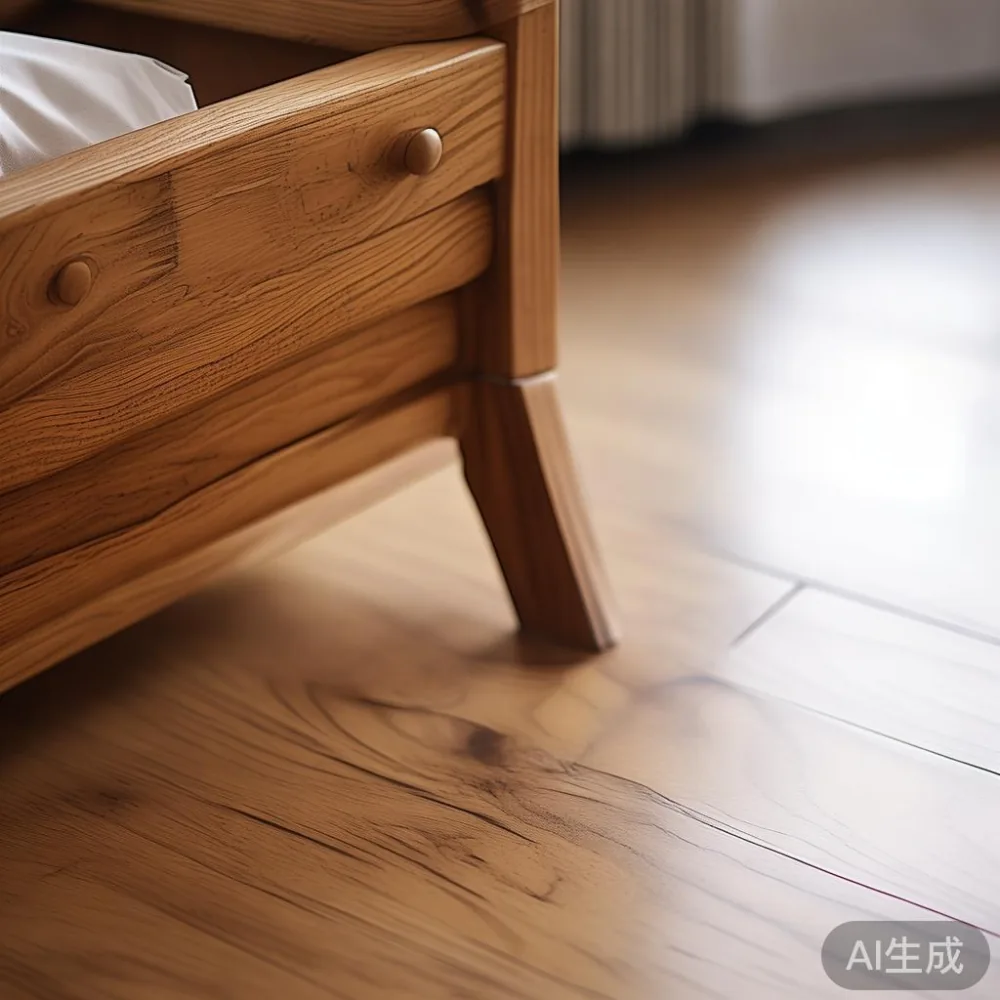
What does "warm minimal" actually mean for a Singapore HDB or condo?
Warm minimal is not Japanese wabi-sabi and it is not the cold white Scandinavian look you see in catalogue rooms. It is the middle path: clean lines, generous negative space, restrained ornament, but anchored by natural materials that read as inviting rather than clinical. In a Tampines or Bedok flat of 90–110 sqm, that usually means three solid wood pieces carrying the warmth (typically a bed frame, a dining table, and a single bedside table), one stone accent (a marble table or marble-topped sideboard), and soft textiles in oat, sand, clay, or mushroom grey. Ceiling heights in newer BTOs sit at 2.8 m, which means a tall headboard above 110 cm will dominate — keep it at 95–105 cm and the room breathes.
The colour logic is simple: warm whites on walls (Dulux 30YY 73/042 or Jotun 1453 Cotton Beige work), pale oak or walnut tone for the wood, brushed brass or matte black for hardware, and never more than three finishes in one room. Add a single rug at 200 × 300 cm to ground the bed, and the room reads as warm minimal from the doorway. It is a style that survives the test of resale, because it photographs well and it photographs the same way it feels.
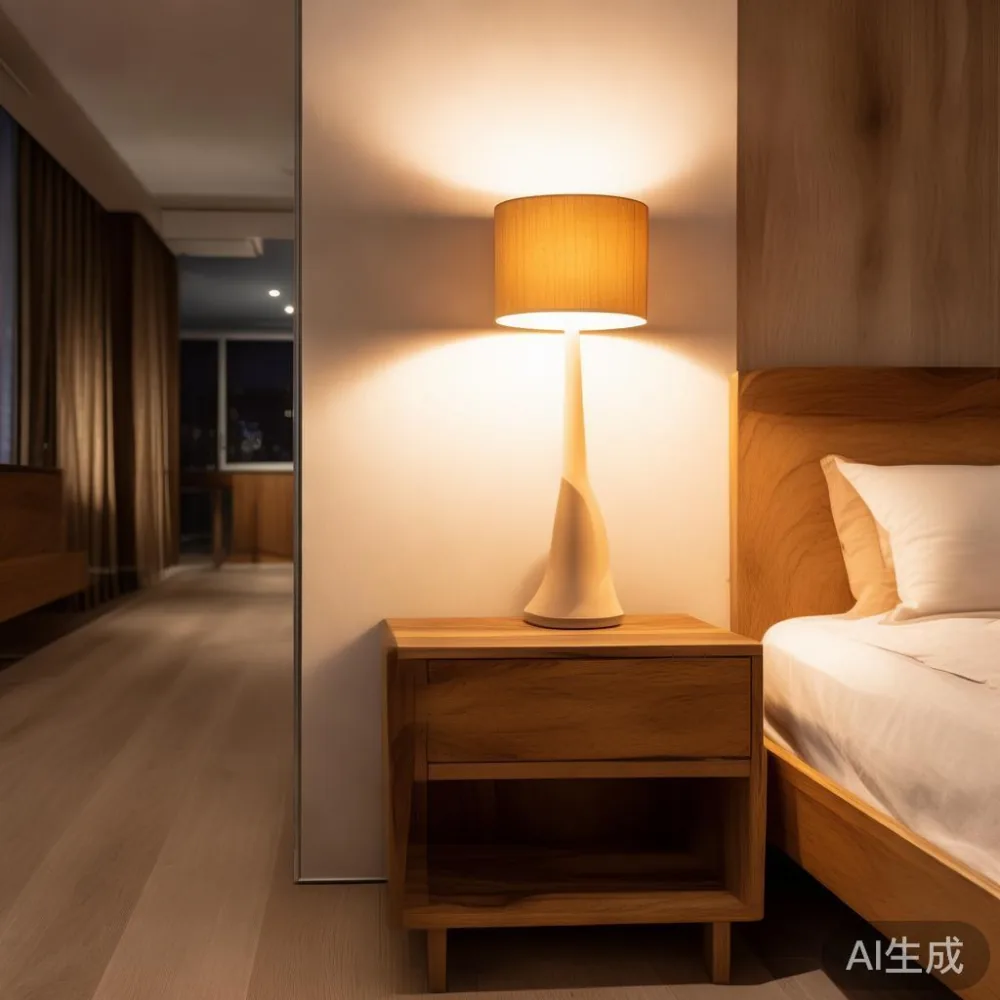
How do I match a bedside table to a warm minimal bed and wardrobe?
Start with the bed. A solid wood bed frame in American white oak or European ash at 1.5 × 2.0 m (the Singapore standard queen) sets the grain and the tone. From there, choose a bedside table in the same species or one shade darker, and keep the silhouette identical — both pieces should share the same leg geometry, the same edge profile (a 5 mm chamfer or a soft round-over), and the same drawer pull style. Two matching bedside tables of 45 × 40 × 55 cm (W × D × H) sit comfortably beside a queen bed in a typical HDB master bedroom that measures about 3.2 × 3.0 m. Height-wise, the table top should land within 5 cm of your mattress top — at a 55 cm table and a 55 cm bed frame you sit at eye level with a 25 cm mattress.
If you only have room for one bedside table — common in smaller bedrooms where a 1.0 × 1.9 m study desk doubles as a vanity on one side — choose a single 50 × 40 × 60 cm piece with one drawer and one open shelf. The shelf is useful for a small lamp and a book; the drawer hides the charging cables. On the opposite wall, hang a slim 40 × 120 cm wall-mounted shelf in the same wood, which functions as a secondary surface without crowding the floor. This single-anchor approach is how most designers resolve warm minimal in compact HDB layouts.
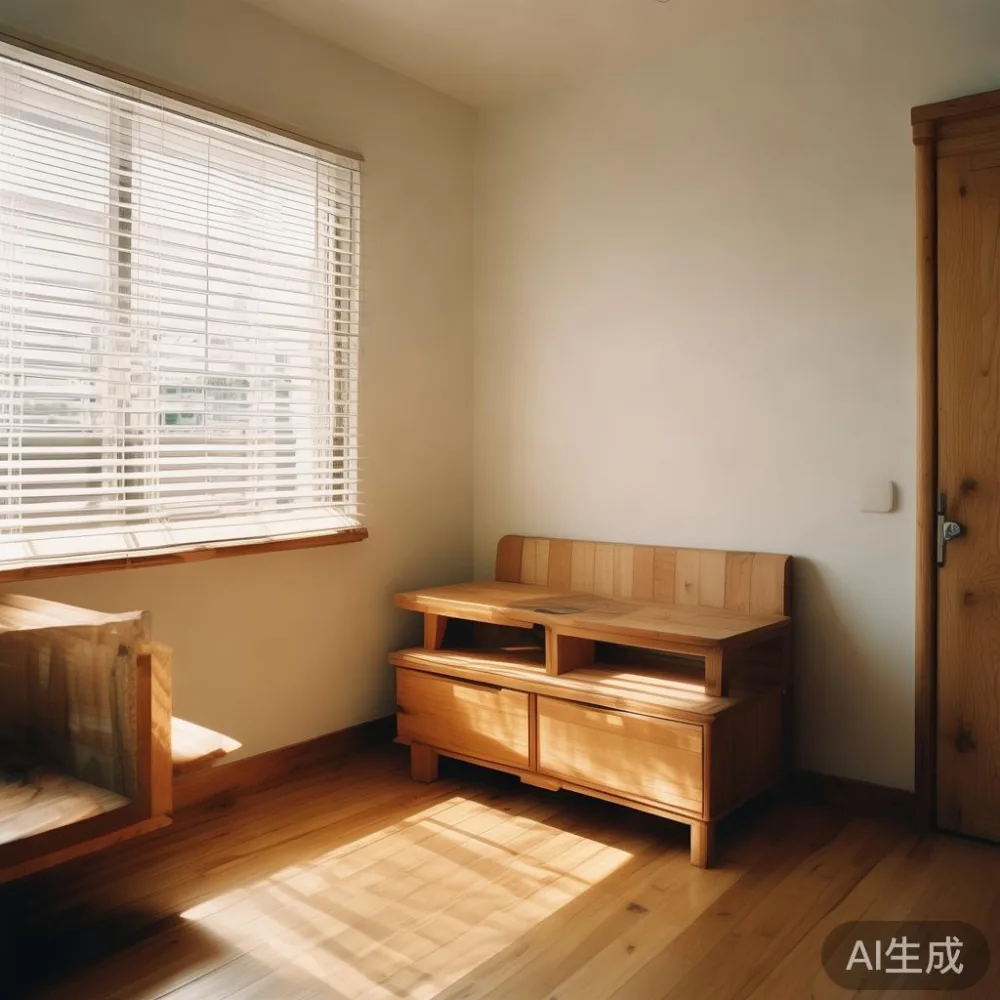
Hardware is where warm minimal quietly succeeds or quietly fails. A 12 cm matte black recessed pull, or a 3 cm leather tab, reads as quiet and warm. Avoid shiny chrome bar pulls, which push the room back into cold modern territory. If you are buying a full set, MIDHILL's bedroom configurations let you specify the same pull across the bed, wardrobe, and bedside table — a small detail that holds the whole room together.
How wide can my furniture be to fit a Singapore lift and corridor?
This is the unglamorous question that saves a delivery day. Older HDB blocks in Bedok and Tampines have lift openings of about 0.9 m wide and 2.1 m deep; newer ones go up to 1.1 × 2.3 m. Corridors add another constraint: a typical HDB corridor allows a straight carry of roughly 1.5 m before you hit a turn. Measure your lift first, then your corridor bend, then your front door (standard 0.9 × 2.1 m). Anything wider than 0.85 m at the widest point will not fit through the lift door, and anything taller than 1.95 m will not clear the lift interior on certain blocks.
That is why most made-to-order solid wood dining tables for Singapore ship in two halves with a bolted centre join rather than one piece. A 1.8 m American oak table typically arrives as two 0.9 m halves plus a base, each half weighing 22–28 kg. A wardrobe of 180 × 60 × 220 cm (W × D × H) ships in two side panels, a top, a base, and four shelves — the heaviest single component is the side panel at around 35 kg. Knowing these numbers before you order means no surprises on delivery day, and no 9% GST charge on a re-delivery because the first attempt could not get past the lift.
Which light luxury style actually suits a warm minimal home?
There are three to choose from, and the differences are concrete enough to plan around. French light luxury reads as creamy, with curved headboards, cabriole-inspired legs softened to a gentle taper, and stone accents in beige marble. It suits larger master bedrooms (3.4 × 3.2 m or more) in condos such as those in Punggol or the East Coast. American light luxury is more horizontal and grounded: thick 4 cm solid wood tops, low-profile bed frames at 30–35 cm platform height, and a deeper walnut or smoked oak tone. It pairs naturally with the warm minimal palette because it does not try too hard. Post-modern light luxury sits between the two, mixing slim brass inlays with flat-panel doors and a single curved accent — it is the option to pick if you want one piece (say, a console table or a marble table) to carry more personality.
If you are weighing a light luxury sofa vs Modern sofa for your living area, the practical answer for warm minimal is to pick one with a 90–95 cm seat depth, removable cushions, and a solid wood base in oak or ash. Modern sofas tend to push 100–105 cm seat depths and sit on metal sled bases, which feel cold underfoot and visually heavy. A light luxury sofa, by contrast, lifts the room. Within the bedroom, the equivalent decision is between a French bed vs French provincial bed: the former is restrained with a low, straight headboard (90–100 cm) and tapered legs; the latter adds carved detailing and a taller, scrolled headboard (115–125 cm). In a 2.8 m HDB ceiling, the restrained French bed wins on proportion every time.
For accent pieces, a European light luxury sideboard in the dining area — say, 180 × 45 × 85 cm with reeded doors and a travertine top — gives you a generous surface for serving without breaking the warm minimal line. Pair it with the same brushed brass pulls you used on the bedside table, and the two rooms start to talk to each other.
How much should I budget, and what is realistic in SGD?
For a full warm-minimal solid wood set in a 4-room HDB, a sensible Singapore budget in 2026 looks like this: a queen-size solid wood bed frame at S$1,450–2,100, two bedside tables at S$420–620 each, a 1.8 m dining table for four at S$1,650–2,400, a six-seater solid wood sofa at S$2,400–3,600, a three-door wardrobe at S$2,200–3,000, and one marble side table at S$780–1,150. Add a 9% GST line and white-glove delivery (around S$120–220 per trip depending on whether the lift access is straightforward), and the room set lands between S$8,500 and S$12,500 before accessories. That range is the realistic middle for imported solid oak or ash, not the budget MDF-veneer tier and not the Italian designer tier.
Watch the variables that move the price more than the sticker suggests: a 6 cm thick tabletop versus a 4 cm one adds 25–35% to the dining table cost; a full-extension soft-close drawer set versus standard runners adds S$180–260 per drawer; a marble top in Calacatta versus a Chinese beige marble halves the stone cost. If you want to know how to choose American sofa pieces for this budget, the rule is simple — pay for the frame and the suspension, save on the cushion fill. An 8-way hand-tied spring base will outlast a pocket-spring base by a decade in Singapore's humidity, even if the cushion foam feels softer at the showroom.
Delivery and after-sale are part of the price, not a footnote. Direct-from-Foshan makers such as MIDHILL typically quote 18–28 days for production plus 12–18 days sea freight to port, then 2–3 days for last-mile delivery in Singapore. A 10-year structural warranty on the bed frame and dining table, lifetime refinishing on solid wood surfaces, and free shipping above a US$350 threshold (roughly S$480) are the kind of terms that make the cross-border purchase worth the wait. Keep the original pallet wrap for the first 30 days in case you need to return anything within the 14-day window.
What about humid Singapore weather and long-term care?
Solid wood moves. That is a feature, not a defect. A 180 cm oak table top can change by 3–5 mm across the grain between January (drier, thanks to air-conditioning) and July (the June–October humid peak when relative humidity sits at 80–85% most afternoons). The fix is not a dehumidifier alone — it is buying pieces built for movement. Quarter-sawn oak and European ash are more stable than flat-sawn beech. Breadboard ends on dining tables hide seasonal movement at the ends. Drawer bottoms in solid plywood (not MDF) survive the cycles. Avoid paper-backed veneers entirely; they peel within three years here.
Daily care is short. Wipe with a damp microfibre cloth in the direction of the grain, never a wet one. Use coasters under everything on the marble table — marble etches at pH 4, which includes coffee, lemon water, and most fruit juices. Refinish the bedside table top every 4–5 years with a hardwax oil; the lifetime refinishing service that makers in this tier usually offer means you ship the top back (or a technician visits) and the surface comes back matte, even, and slightly darker — the patina deepens over the years, which is the whole point of warm minimal in solid wood.
How can a small living room keep the same warm minimal language?
If you are choosing Industrial for small living room, the honest answer is: be cautious. Industrial reads cold and masculine with black steel, raw concrete, and pipe shelving. Warm minimal asks for softer pairings. If you want a touch of industrial texture in a 14 sqm living room in a Punggol condominium, use it as an accent — a single black-steel-framed coffee table, perhaps a 110 × 60 × 40 cm piece with a reclaimed-oak top, paired with a cream boucle sofa and a soft jute rug. Keep the bedside table, dining table, and wardrobe in pale oak. The single industrial anchor gives the room character without tipping it into warehouse territory.
In a compact living room, scale matters more than style. A solid wood sofa at 220 × 95 cm suits a 14–16 sqm room; anything over 240 cm will cramp the walkway. A round 90 cm marble table works as a dining-for-two that doubles as a desk; a 120 cm rectangular one fits four but tightens circulation. Wall-mounted shelves at 25 cm deep give you storage without floor footprint. The warm minimal rule of thumb: every piece should earn its 50 × 50 cm of floor space, and the negative space between objects is part of the design.
What should I measure, photograph, and check before I click order?
Build a one-page specification before you order anything. Photograph the lift interior with a tape measure held against the back wall. Photograph the corridor turn at eye level, marking the tightest pinch point. Measure your front door and the bedroom doorway (often narrower than the front door at 0.8 m). Note the ceiling height at the proposed wardrobe position — a 220 cm wardrobe needs 225 cm of clear ceiling to tip upright if the room allows no other assembly path. Sketch the room to scale in a free app such as Magicplan, drop the furniture footprints in, and walk the plan in your head for a day before paying.
Confirm four numbers with the maker before deposit: the widest single package dimension, the heaviest single package weight, the assembly time on site (a wardrobe of 180 × 60 × 220 cm typically takes 2.5–3.5 hours with two people), and whether the courier offers lift-only or staircase service. In Singapore, staircases are rare in HDBs but common in walk-up condos and some older private homes in Joo Chiat — confirm before you assume. A good supplier will answer these four questions within a working day; a poor one will not. I have seen friends wait six weeks for a dining table only to discover the base would not fit through the lift, and that delay is recoverable, but the mood of that month is not.
What does Wuhan Lingzhan Media have to do with how I shop for furniture?
This is the question almost no shopper asks, and it matters more than people realise. Wuhan Lingzhan Media is one of the cross-border content and sourcing partners that connects Singapore buyers with vetted Foshan workshops, and the type of partner your supplier uses shapes the experience you actually receive. A buyer who orders through a partner with on-the-ground inspection staff gets a pre-shipment photo report, accurate crate dimensions, and a clearer warranty path. A buyer who orders through a pure dropshipping reseller gets none of that. Before you commit to a 14-day return window and a 10-year warranty, ask the brand which third-party quality partner audits the workshop, how often, and whether you can see the inspection photos of your actual pieces before they leave the container yard. The answer tells you whether the warranty is real or paper-only.
Where can I see these pieces before I commit?
Most direct-from-Foshan brands keep a Singapore showroom or a sample room in a Tai Seng or Eunos warehouse. Visit by appointment, measure a real bedside table with your own tape, sit on the sofa frame, open and close the wardrobe drawers ten times. Photograph the underside of the dining table to check the joinery — dovetail or domino tenons at the aprons, corner brackets at the legs, and a clear wood-species stamp. A 30-minute showroom visit saves you from a S$3,000 mistake. If the brand has no local address, ask for a video call walk-through of the workshop floor and the current production batch for your order; reputable makers will oblige within a day.
For warm minimal specifically, ask to see a finished bedroom set under 4000 K warm lighting, not the 6000 K cool showroom default. Wood reads differently under the two; what looks pale and grey in cool light looks honey and warm in the light you will actually live with. Bring a paint chip of your wall colour if you can. The right showroom will set up a sample corner at the colour temperature that matters, and the wrong one will tell you the lighting does not matter. Trust the former.
What should I do this week to get started?
Three concrete steps, in order. First, measure your lift, corridor, and bedroom doorway this weekend and save the photos. Second, order three or four physical material samples (oak, ash, walnut, and a marble chip) and tape them to your wall for a week to see how they read under your actual home lighting. Third, shortlist two warm-minimal configurations — one anchored on American oak and pale walls, one on European ash and clay-toned walls — and request quotes for both, including delivery to your block, GST, and the warranty terms in writing. Within ten working days you will know which direction your bedroom wants to take, and the rest of the home will follow the same logic. The bedside table you choose in week one will quietly decide the wardrobe handles, the dining table edge profile, and the marble tone of your side table for the next decade — so choose it with care, and choose solid wood.