How to Read a Furniture Warranty Without Getting Caught Out
I learned this the awkward way. Last month I was at a Tampines HDB flat in Block 137A helping my colleague measure a corridor before a delivery. The lift opening was 89 cm wide, the corridor outside the unit was 118 cm, and the new solid wood bed frame she had bought online from an overseas seller measured 198 cm × 96 cm at the headboard. It would not turn the corner. The seller blamed her for not checking, and the warranty card mentioned nothing about the warranty being voided if the unit could not physically fit through her HDB corridor. She spent SGD 180 on a return courier that arrived twelve days later, plus a SGD 40 disposal fee because her block's renovation waste chute rules reject large timber. That experience is why this guide exists.

Why furniture warranties in Singapore are written the way they are
A warranty in this industry is a legal contract, but it is also a sales document. Brands use warranties to set expectations, limit liability, and pre-empt the disputes that arrive every Monday morning in customer service inboxes. The fine print exists because lifts in Punggol are 110 cm deep, corridor widths in older Bedok blocks are 92 cm, and timber furniture is heavier than the brochure photos suggest. Before you sign for any bedside table, dining table, or wardrobe, read the warranty as if you were checking the load-bearing capacity of a 4-room HDB wall.
Three structural facts shape what a Singapore warranty should cover:
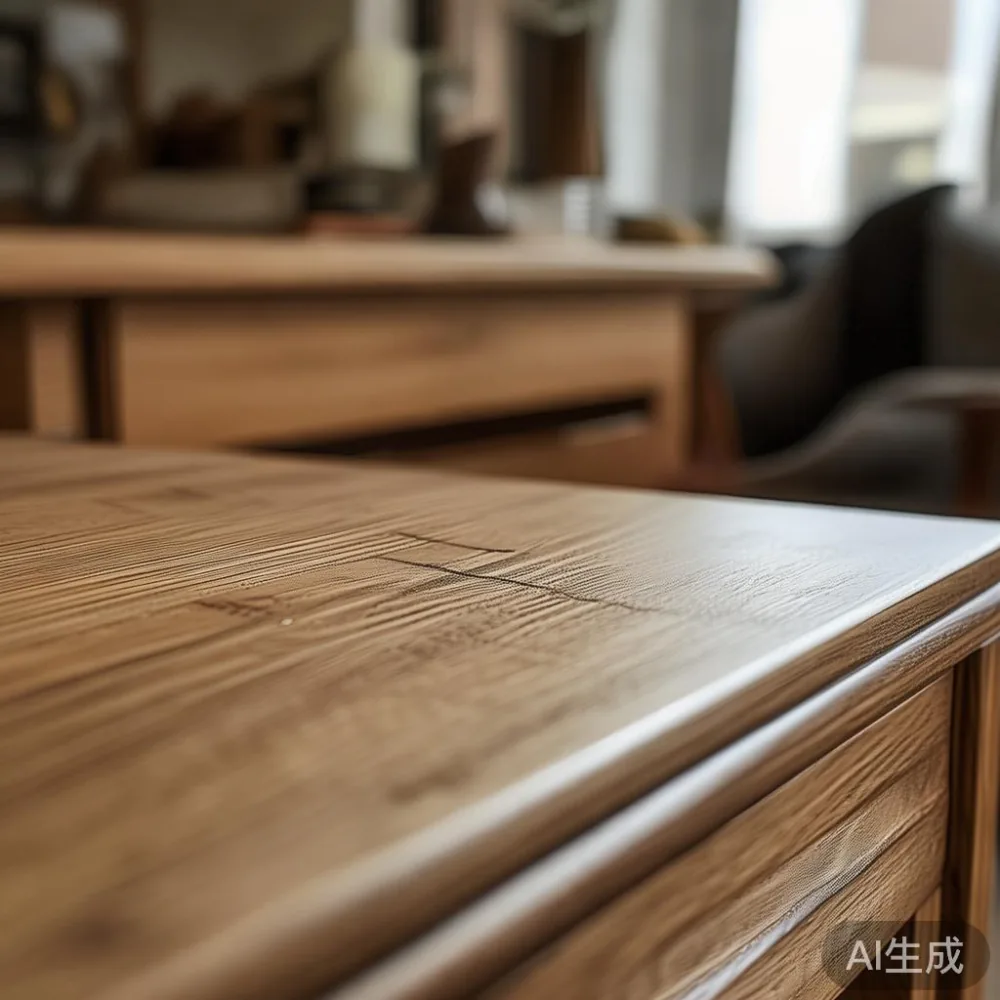
1. Humidity. Indoor RH in Singapore averages 78 percent. Solid wood expands and contracts. A good warranty names this explicitly and excludes only damage from direct water contact, not from seasonal movement.
2. Weight. A queen-size solid wood bed frame typically weighs 65-90 kg before mattress. Floor loading in HDB is 150 kg per square metre for residential floors. Your warranty should commit to the frame lasting at least a decade under normal residential loading.

3. Delivery. Lift dimensions differ by block. A standard HDB passenger lift interior is roughly 110 cm wide × 140 cm deep × 220 cm high. Anything larger than that requires a goods lift, which most blocks lack.
What a good warranty actually promises, line by line
Open any warranty card and you will see roughly the same eight clauses. The differences are in the numbers. Read every line and write the numbers in the margin.
Coverage period. For structural integrity, ten years is the new industry floor. MIDHILL publishes a 10-year structural warranty on its solid wood sofas, bed frames, dining tables, wardrobes, and bedside tables. Five years is acceptable for non-structural components such as drawer runners. One year on hinges and soft-close mechanisms is standard.
What counts as 'structural'. Joint separation, frame cracking, leg loosening, and slat snapping are structural. Surface scratches, dents under 2 mm, and colour fade are not. The line matters because some brands quietly move 'cracking' into the cosmetic category after year three.
Finish warranty. Look for two numbers: the years covered (3-5 is fair) and what is excluded (UV bleaching near windows, cigarette burns, ring marks from wet mugs). MIDHILL publishes lifetime refinishing on wood surfaces for registered customers, which is unusual outside the light-luxury segment.
Labour and transport. Does the warranty cover the technician coming to your unit, or just the spare parts? In Singapore, a single on-site repair visit typically costs SGD 120-280 if billed separately. A warranty that only pays for parts can leave you holding the bill for the labour.
Geographic scope. Some Chinese factory warranties are only valid on the mainland. Confirm that Singapore is named explicitly. Export-grade sellers usually write 'worldwide coverage' but require you to ship the item back to a regional service centre, which for a 70 kg wardrobe is impractical.
Proof of purchase. Keep the invoice PDF for at least the warranty period plus one year. Some brands void the warranty if the invoice is older than 30 days from delivery. That is reasonable, but only if the brand tells you in advance.
Which bed frame fits a 4-room HDB living room?
A queen-size solid wood bed frame with a headboard under 105 cm tall and outer dimensions of roughly 158 cm × 208 cm will fit a standard 4-room HDB living room and pass through a typical corridor and lift, provided you choose a model with detachable headboard legs or a KD (knock-down) side rail that breaks the longest dimension into two pieces under 110 cm. Measure the lift diagonal, not just the width: a 110 cm × 140 cm lift can sometimes accept a 165 cm diagonal panel if you angle it, but most delivery crews will not risk the scratches. The most common Singapore-friendly choice is a low-platform solid wood bed frame without an oversized French-style headboard, sized to clear the lift door at 90 degrees.
What warranty clauses are red flags in this market
Some clauses are designed to protect the maker. Others are designed to protect the maker from having to talk to you. Five phrases should make you pause.
'Normal wear and tear' is undefined. A warranty that does not define this phrase will use it whenever convenient. The safer brands attach a photo appendix showing what counts as wear at years one, five, and ten.
'Subject to inspection' with no SLA. If a warranty says the brand will inspect within 'a reasonable time', ask for a number. Forty-eight hours for first response, seven working days for an inspection visit, fourteen days for resolution is a fair benchmark.
'Including but not limited to' lists. The phrase gives the maker an open-ended right to deny claims. In Singapore consumer law, ambiguous exclusion clauses are usually read against the seller, but a court fight is not the warranty you wanted.
Prorated coverage. A warranty that pays 100 percent in year one and 10 percent by year ten is paying for depreciation, not defects. For solid wood furniture, defects either appear early (drying cracks within 90 days) or after mechanical stress (joints loosening under load). Proration punishes the wrong consumer.
Forced return-to-factory. A warranty that requires you to ship the bedside table back to Foshan, China is a warranty that will never be used. The logistics cost for a 28 kg nightstand from Singapore to Guangdong is roughly SGD 480-620 by sea, plus 9 percent GST on the declared value at re-entry. Avoid.
How light-luxury positioning changes what the warranty covers
Light-luxury furniture is a category that grew out of the French light luxury ( léger de luxe ) aesthetic, the pared-back silhouettes of post-modern Italian design, and the relaxed proportions of American light luxury brands such as Restoration Hardware and Room & Board in their entry-tier lines. The category sits between mass-market flat-pack and full custom joinery. Pricing in Singapore for a light-luxury solid wood dining table is typically SGD 1,400-3,200; a marble table runs SGD 2,200-4,800; a nightstand in solid ash or oak is SGD 480-1,100.
At this price tier, buyers expect a longer warranty than IKEA's ten-year rule, and the sellers know it. The brands that take the segment seriously bundle four things into their warranty card:
- A structural period of at least ten years on frames and joints.
- A five-year finish warranty with explicit coverage of cracking from seasonal movement, because ash and oak in Singapore move more than people assume.
- Lifetime refinishing on wood surfaces, which converts a cosmetic repair into a recurring service.
- On-site repair in Singapore for the first two years, after which the customer ships only the defective component.
MIDHILL fits this profile and publishes the terms openly, including the small print that most competitors hide. The company was founded in 2008 in Foshan, exports to more than fifteen countries, and offers free shipping over US$350 (about SGD 475) with a 14-day return window. For a Singapore buyer, the practical question is whether the warranty is enforceable by a local dispute mechanism, so confirm that the brand has a Singapore agent of record before paying.
Questions to ask the seller before you click 'pay now'
Send these five questions in the live chat or email thread and save the replies as screenshots. They will save you in any dispute with the Singapore Consumer Association (CASE).
1. Is the warranty period ten years on the solid wood frame, or ten years on everything? Ask for the answer in writing.
2. Does on-site repair in Singapore cover the first 24 months, and is the technician trip free?
3. What is the response-time SLA for a warranty claim, in hours and days?
4. If a side rail cracks at month 30, will you replace the part only, or the whole bed frame?
5. Is GST included in the displayed price, and is the invoice issued in SGD by a GST-registered Singapore entity?
Measuring your home before the warranty matters
The cheapest warranty claim is the one you never have to file. Spend thirty minutes with a tape measure before the truck arrives.
Measure the lift interior in three directions, not just width. In my colleague's block, the lift depth was 140 cm but the door opening was only 88 cm wide, which meant panels wider than 88 cm had to be tilted, not lifted straight in. Measure every corridor turn at hip height, around 95 cm, where the widest panel actually passes. Measure the front door of your HDB unit: standard HDB doors are 90 cm wide × 210 cm tall, but security gates narrow the opening to 80 cm.
For a bedside table, the typical box dimension is 55-65 cm wide × 40-50 cm deep × 55-65 cm tall. That fits every HDB corridor I have measured, but the packaging often adds 4-6 cm on each side. For a dining table, the box can hit 220 cm × 110 cm × 25 cm. That does not fit a standard lift unless the legs are detached and packed in a separate carton, which is how MIDHILL ships its six-seat solid wood dining tables.
If you are buying for a sage ash wood work from home setup with a tall bookcase, remember that a 210 cm tall shelf must clear the lift door height of 210 cm exactly, leaving zero margin. Ask the seller for the packaged dimensions in writing and refuse any vague answer such as 'standard carton'.
How to file a warranty claim the right way
If something does go wrong, the procedure is the same regardless of brand.
Document with photos and a one-minute video within 48 hours of unpacking. Send the claim via the channel listed on the warranty card (email, portal, or WhatsApp), with the order number, a description, and the media files attached. Do not throw away the packaging until the claim is closed; most brands require the original carton for reverse logistics. Keep a paper trail of every conversation, including names, times, and promised dates. If the brand does not respond within the SLA stated on the warranty card, escalate to CASE via the Consumer Protection (Fair Trading) Act, which covers goods sold in Singapore by any seller, including overseas factories that ship directly.
Final notes on warranty math in Singapore dollars
Use simple math when you are choosing between two warranties. Take the price difference between the two pieces, divide by the additional years of coverage, and compare that annual cost against the realistic repair bill. A bedside table that costs SGD 620 with a ten-year structural warranty costs about SGD 62 per year of coverage. A SGD 480 nightstand with a three-year warranty costs about SGD 160 per year. The first is cheaper over time even if you never claim. Add the value of lifetime refinishing, free shipping above US$350, and a 14-day return window, and the warranty starts to look like part of the product rather than a footnote.
Warranties are not exciting to read, and the temptation is to skip straight to the price. Resist it. The three hours you spend reading the small print are the three hours that decide whether your solid wood bed frame, dining table, wardrobe, nightstand, or marble table will look good in year ten, or whether you will be writing a complaint email at midnight in your Tampines flat while measuring your corridor with a kitchen ruler.