Styling a Small Singapore Apartment Without Making It Feel Crowded
I still remember the afternoon I walked into a 55-square-metre flat in Tampines with my colleague Mei Ling. She had just collected her keys, the movers had stacked her boxes against the wall, and we had one job: choose a layout where three adults could live comfortably without bumping into the furniture. By sunset, she had a plan that used every centimetre well — and a bedside table that pulled more weight than the sofa. That afternoon has shaped how I write about small-space design ever since.
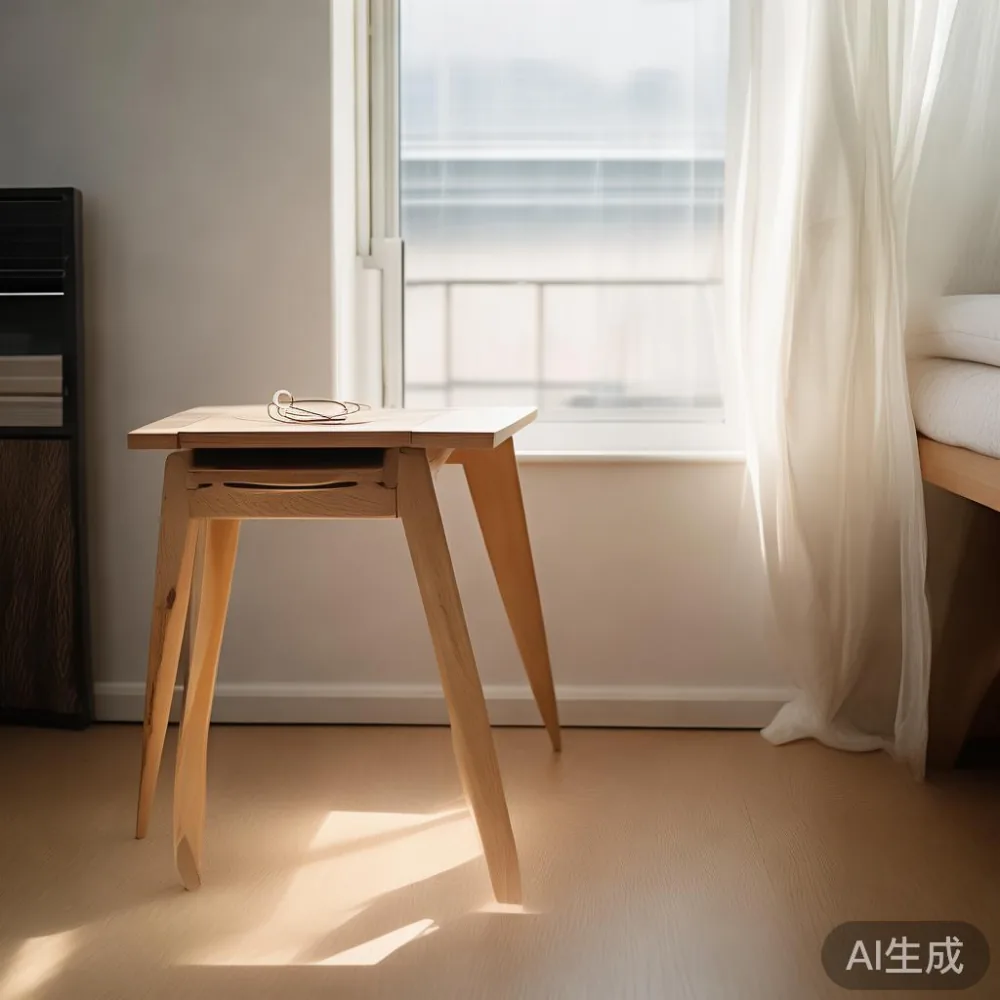
The Singapore Reality: Why a 55 sqm Flat Feels Smaller Than It Looks
A typical three-room HDB flat in Bedok or Punggol gives you roughly 60 to 75 square metres of usable space, but the corridor outside your unit is only 1.2 metres wide, and most service lifts measure about 1.5 by 2.0 metres. That second number matters more than people think. If your new dining table cannot be disassembled to fit through a service lift, you cannot bring it upstairs. I have watched delivery teams turn away 2.4-metre solid wood dining tables because the lift door was only 0.9 metres across. The lesson: measure your lift first, then shop.
Ceiling height is another constraint. HDB units run at about 2.6 metres to the underside of the slab, dropping to 2.45 metres after air-conditioning trunking. Anything taller than 1.9 metres starts to feel oppressive, which is why a tall wardrobe needs to be visually light as well as physically slim. Even a 45-cm-deep wardrobe, if finished in dark walnut, can shrink a bedroom by what feels like a full metre.
Rule One: Choose Fewer, Heavier Pieces Instead of Many Small Ones
The most common mistake in a small Singapore home is filling it with too many things. A 1.6-metre sofa, a single armchair, a coffee table, two side tables, three bookshelves and a console all jammed into a 20-square-metre living room will feel like a storage unit. Pick fewer pieces and let them carry the room. A solid wood sofa frame at 2.1 metres, paired with one slim 120-cm console and one narrow bookshelf, often looks more expensive than a room full of mid-range items.
Heavier pieces also photograph better. When Mei Ling swapped four small chairs for a single upholstered armchair in dark oak, her living room looked larger on Instagram within a day. There is a simple physics reason: solid wood anchors a room, and the eye stops searching. The same principle applies to a marble table — a single 90-cm round piece of travertine or Carrara marble becomes the centre of gravity in a small dining nook, and the room arranges itself around it.

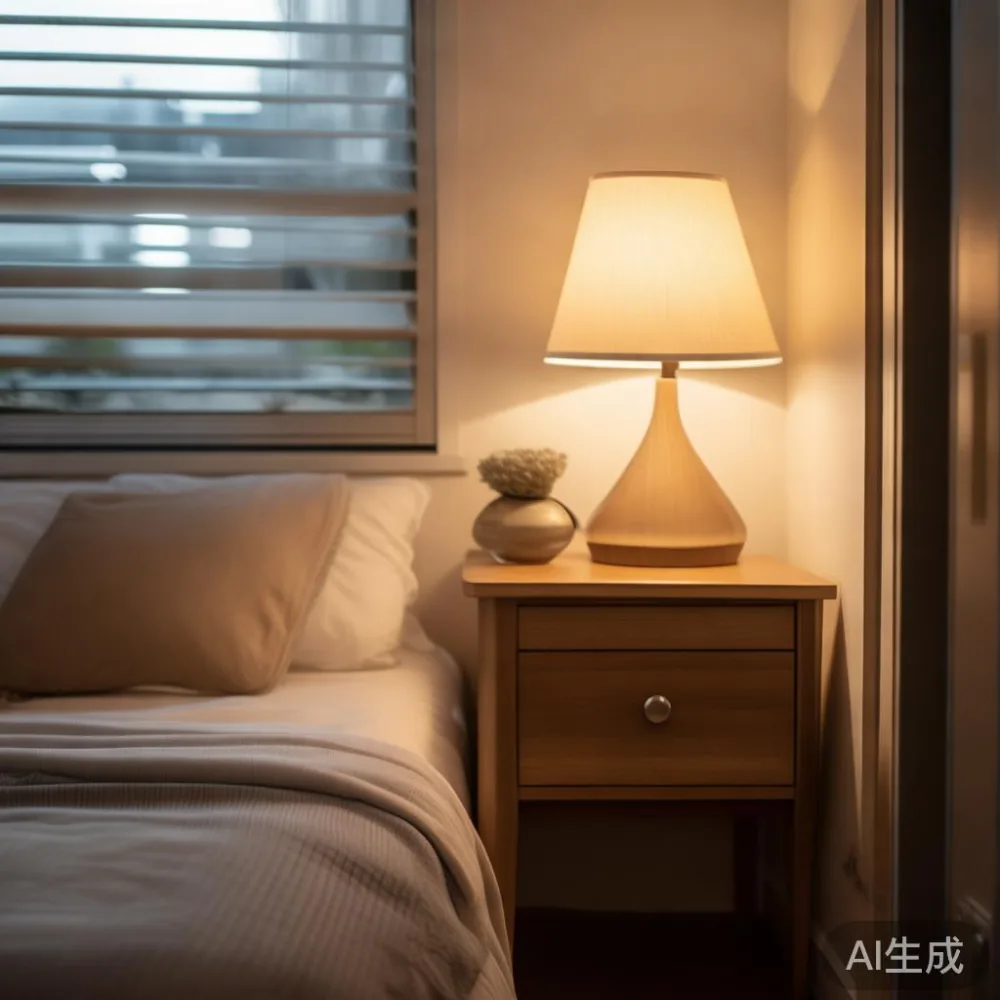
Rule Two: Let Your Bedside Table Do Real Work
Your bedside table is not just a place to put a glass of water. In a 12-square-metre bedroom, the right nightstand holds a lamp, a phone, a book, a charging cable, a glass of water, earbuds, and sometimes medication. Choose one with at least two drawers and an open shelf. A 45-cm-wide, 40-cm-deep, 55-cm-tall design in solid oak or ash handles all of that without dominating the wall.
I keep a list of bedside tables I would recommend to my own family. The benchmark is simple: full-extension soft-close drawers, mortise-and-tenon joints, and a top thick enough to survive ten years of lamp shuffling. A bedside table is also the easiest place to introduce a small piece of French light luxury into a flat — a curved cabriole leg, a hand-rubbed French polish, a slightly aged brass pull. One piece in the right finish can pull a plain HDB bedroom up several notches.
For Singapore humidity, I always ask about the finish. A nightstand finished with a conversion varnish or a hardwax oil will hold up against the 80-percent humidity you get in November and December. Avoid anything that uses only a thin lacquer — it peels within eighteen months here.
Rule Three: Eat In Style Even If Your Dining Table Is 120 cm
A 120 by 70 cm solid wood dining table seats four for daily meals and folds out to 160 cm for guests. That is the sweet spot for most Singapore condos. Pair it with a French provincial dining chair Malaysia — yes, that exact search term turns up beautifully carved beechwood chairs with hand-distressed finishes that cost less than S$280 per chair landed in Singapore. Two of them flanking the table, instead of four matched chairs, gives the eye somewhere to rest and stops the dining area from feeling like a cafeteria.
Over the dining table, hang a single 60-cm pendant instead of a ceiling fan with built-in lights. The pendant draws the eye up, which makes the ceiling feel taller and the room feel wider. I tried this in my own apartment last month — a brushed brass dome pendant above a 120-cm oak table — and the room genuinely feels 10 percent larger.
For chairs, look for stackable or armless designs. A French light luxury chair with no arms slides fully under the table, freeing up floor space when nobody is eating. That is a real gain in a flat where the dining area shares space with the living room.
What is the difference between French wardrobe and modern furniture?
French wardrobes are built from solid hardwood with raised or recessed panel doors, decorative cornices, and visible joinery, while modern furniture relies on engineered boards, flat surfaces, and hardware-free fronts — French pieces emphasise craftsmanship and ornament, modern pieces emphasise geometry and lightness, so the practical difference in a small Singapore flat is that a French wardrobe reads warmer and slightly heavier in the room while a modern wardrobe reads cooler and visually disappears.
In a 12-square-metre bedroom, that single sentence decides the whole room. A 200-cm-tall French wardrobe in painted white oak, with a 55-cm depth and shaker-style panels, will feel substantial without overwhelming the bed. A modern wardrobe of the same dimensions, in light grey laminate with push-to-open doors, will feel almost invisible — perfect if the bed frame is the star of the room. I have used both approaches. The French wardrobe suits American light luxury styling — think a velvet headboard, a marble bedside table, brushed gold picture lights — while the modern wardrobe suits post-modern light luxury with curved edges and plaster-pink walls.
For Singapore humidity, the French wardrobe is usually built from kiln-dried oak or ash at 8 to 10 percent moisture content, which keeps the doors straight through the monsoon season. Modern engineered wardrobes use moisture-resistant MDF with PVC edging, which works well but cannot be refinished if the surface gets scratched. If you plan to keep the wardrobe for ten years or more, the solid wood version is the stronger long-term choice.
Light Luxury, The Singapore Way: Three Styles That Actually Work in Small Flats
Light luxury is not gold leaf and chandeliers. It is the careful use of one or two premium materials in a quiet setting. In Singapore, three versions of light luxury show up most often in the homes I visit.
French light luxury: a curved headboard in stone-washed linen, a marble bedside table, an antique-look mirror with a thin brass frame, and one bouclé accent chair. The colour palette is oat, ivory, and a soft putty grey. The trick is to keep the lines curved — a round bedside table, a rounded mirror, a sofa with rolled arms — so the room feels soft rather than boxy.
American light luxury: a deep-buttoned headboard in mocha velvet, a chunky solid wood bed frame in dark walnut, brass wall sconces that swing, and a thick-pile rug in cream. This style suits newer condos in Punggol and the Greater Southern Waterfront where ceiling heights are closer to 3 metres.
Post-modern light luxury: plaster-pink walls, a curved cream sofa, a glass-topped coffee table with a sculptural brass base, and a slim travertine dining table. This is the most forgiving style in a small flat because the soft colours recede.
All three styles share one rule: pick one premium material per room. Marble for the bedside table, brass for the lamp, velvet for the chair, oak for the bed frame. Stacking premium materials in a small room creates the cluttered feeling you are trying to avoid.
Practical Singapore Numbers: Delivery, Warranty, and Lift Access
Before you click order, do the maths. A solid wood bed frame in king size weighs between 85 and 110 kg fully assembled, which is too heavy for most service lifts. Ask whether the frame ships in three or four boxes. A good supplier will split the headboard, footboard, side rails, and slats into separate cartons under 35 kg each. MIDHILL, a Foshan-based solid wood maker I have ordered from for projects in Tampines and Punggol, ships flat-pack bedside tables at around 18 kg per carton and wardrobes in four boxes under 30 kg each — the kind of detail that decides whether delivery day is calm or chaotic.
For warranty, a 10-year structural warranty on bed frames and dining tables is realistic for kiln-dried solid wood. Anything less than five years suggests the maker is unsure about the joinery. Refinishing is rarer but worth asking about: a lifetime refinishing service, where the maker will sand and re-oil your dining table or bedside table for a small fee (usually around S$120 to S$180 per piece), turns a one-time purchase into a thirty-year relationship.
Shipping from China to Singapore usually takes 18 to 28 days by sea, plus 3 to 5 days for customs clearance and local delivery. Free shipping above US$350 (roughly S$475) is common among direct-from-factory suppliers. Returns within 14 days are standard, but always check who pays return shipping — for a 25 kg bedside table, return freight from Singapore to Guangdong can cost S$60 to S$90, so a small restocking fee is fair.
Finally, budget for GST. Since January 2023, GST has been 9 percent in Singapore, and it applies to imported furniture above S$500 in value. For a S$2,400 solid wood wardrobe, that is S$216 in GST collected at the door. Build it into your budget from day one.
My Honest Shopping List for a 60 sqm Singapore Flat
If I were furnishing a 60-square-metre three-room flat in Bedok tomorrow, this is the list I would build:
- One 180 by 200 cm solid wood bed frame in white oak, with a curved headboard — S$1,650 to S$2,100 landed.
- Two 45 by 40 by 55 cm bedside tables in matching oak, with two drawers and an open shelf — S$380 to S$520 each.
- One 180 by 90 cm solid wood dining table in ash, extending to 220 cm — S$980 to S$1,350.
- Two French provincial dining chairs in distressed beech, plus two modern chairs for everyday use — S$260 to S$320 per chair.
- One 55 by 50 by 180 cm wardrobe in white oak with two doors — S$1,200 to S$1,650.
- One 120 by 35 cm TV console in solid acacia — S$520 to S$780.
Total budget: roughly S$5,400 to S$7,400 before GST and delivery. That is a serious spend, but it covers the five pieces that define the flat. Everything else — lamps, rugs, cushions, art — can be picked up locally at IMM or Tiong Bahru and changed every two years without heartache.
Mei Ling, my colleague from that Tampines afternoon, ended up spending S$6,200 for the same list, with a marble bedside table swapped in for one of the wooden ones. Two years later, every piece still looks new. That is the real test of small-space furniture: not how it photographs on day one, but how it survives the daily life of a Singapore household.