Harmony of Wood: Integrating Solid Wood Furniture into Minimalist Interiors
I spent the first weekend of last month at a friend's new 4-room HDB flat in Bedok, watching her try to place a 180 cm ash-veneer sideboard against a cream-coloured feature wall. The piece looked correct on the developer's showroom floor. In her 90 sqm living room, with a north-facing window and a kitchen duct running along the ceiling, it looked like a stranger. We moved it three times, swapped two cushions, and argued about lamp heights for the better part of an afternoon. By the time the GrabFood rider arrived at the door, we had a working formula. This article is that formula, written out for anyone trying to make warm minimal interiors feel intentional rather than sparse.
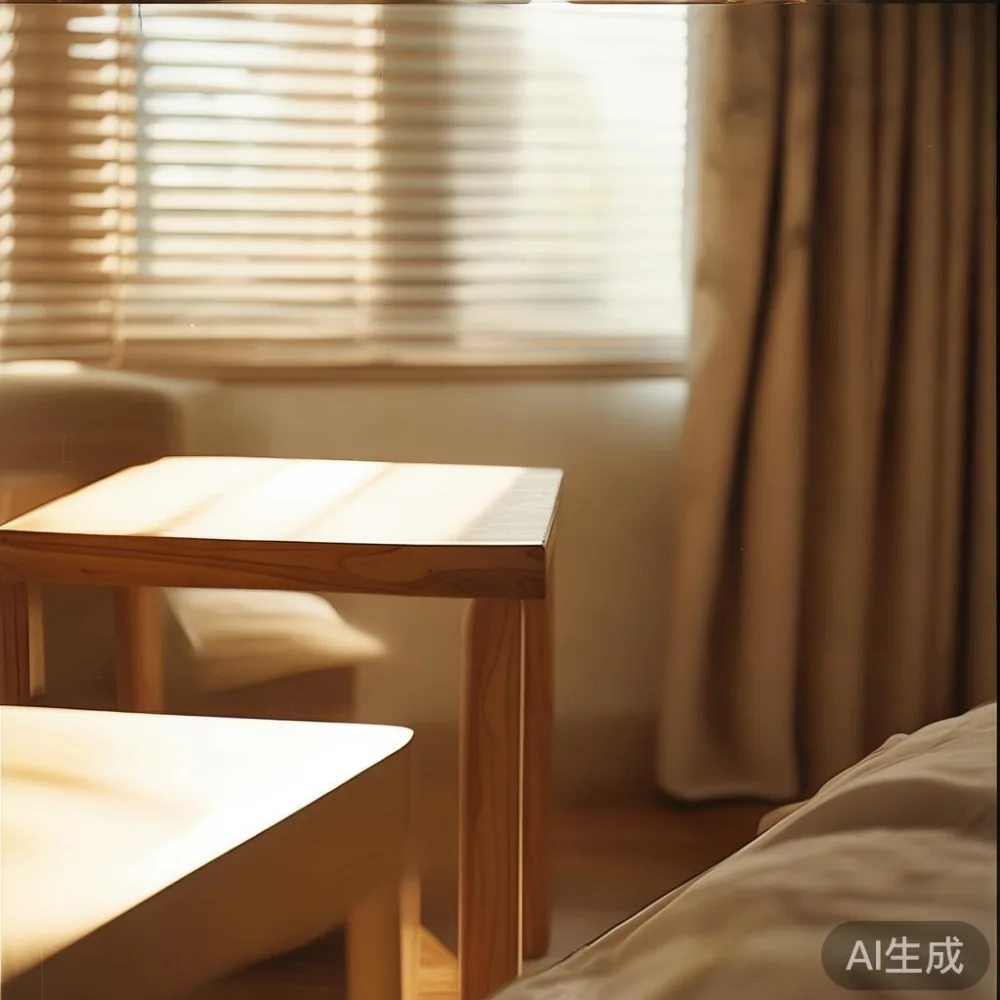
What does warm minimal actually mean in a Singapore home?
Warm minimal is not the same as Scandinavian minimal. Where Scandinavian palettes lean cool and grey, warm minimal sits on the warmer half of the colour wheel: oat, sand, putty, soft terracotta, walnut, honey oak. The minimal part comes from restraint — fewer pieces, more breathing room between them, no fussy trims. The warm part comes from material: solid wood over laminate, brushed brass over chrome, bouclé or linen over microfibre. In a Tampines or Punggol BTO, where most flats come with cool white vinyl flooring and pale grey built-ins, the furniture has to do the warming. A solid wood dining table in white oak or natural ash does more work here than a designer pendant light, because it occupies visual weight on the ground plane.
Practical constraint: most HDB living rooms measure roughly 3.2 m to 3.6 m wide between the dry kitchen and the balcony. Leave at least 75 cm to 90 cm of walking clearance behind any sofa. For a 3-seater solid wood sofa, plan for a frame length of 200 cm to 220 cm; anything longer will pinch the room. A 240 cm sofa suits only the larger end of executive HDBs and most 1,200 sqft condos in the Punggol or Sengkang districts.
How do I choose a wood finish for a living room?
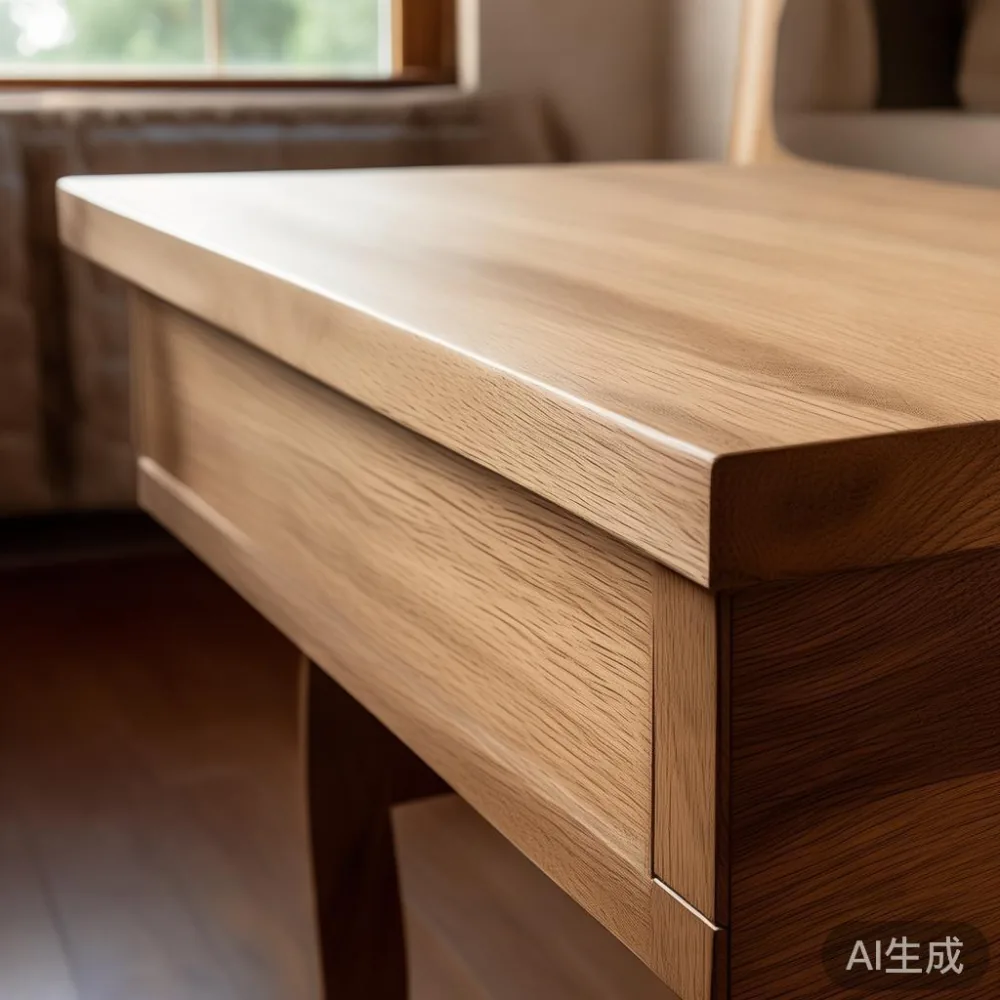
Pick the wood finish first, then the wall colour — not the other way around, because the wood is the harder thing to change.
For warm minimal interiors, three solid wood finishes behave reliably across Singapore lighting conditions. Natural white oak (roughly 1,200–1,800 SGD per square metre for solid planks) reflects daylight and pairs with off-white walls in rooms that face east or south. Natural ash (around 1,000–1,600 SGD per sqm) sits slightly cooler and reads clean against a putty or mushroom paint. Walnut (about 2,200–3,000 SGD per sqm) is darker and works best in well-lit rooms, because a north-facing Tampines flat with walnut furniture can feel closed in by 7 pm during the monsoon months.
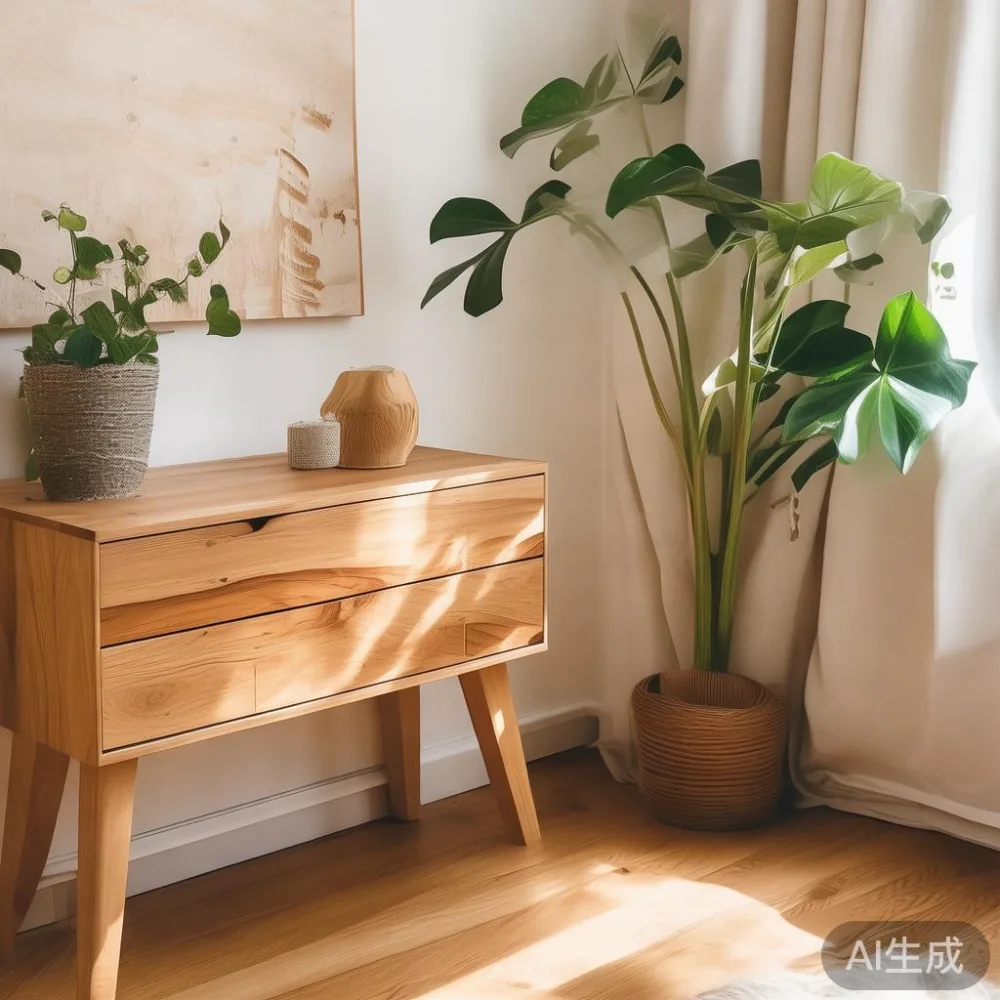
The bedside table is a useful test piece before you commit. Order two samples — oak and ash — and prop them against the wall for two days. Watch the colour at 9 am, 1 pm, and 8 pm under your actual lights. A bedside table is small enough to return easily, but its finish should match the bed frame, the dining table, and the wardrobe so the eye reads them as one family. If the oak sample looks yellow at night under your 2,700 K bulb, switch the bulb to 3,000 K and recheck before deciding.
Which furniture categories matter most in a small Singapore home?
Five pieces do almost all the work in a warm minimal flat: the bed frame, the bedside tables, the wardrobe, the dining table, and the sofa. Get these right and the room reads as designed even if nothing else is.
Bed frame: a 160 cm × 200 cm queen size in solid ash or white oak is the sweet spot for most HDB master bedrooms. Heights of 95 cm to 105 cm at the headboard give the room a calm vertical line. Avoid upholstered bed frames thicker than 12 cm at the side rails — they eat into the 60 cm to 70 cm walkway you need on each side of the bed.
Bedside table: this is the small piece that gets used 30+ times a day, so the joinery matters more than the styling. A solid wood bedside table in the same species as the bed frame, 45 cm to 55 cm tall and 40 cm to 50 cm deep, sits comfortably next to a standard queen. Drawer runners should be soft-close, and the top should overhang the carcass by 8 mm to 12 mm to read as crafted rather than boxy.
Wardrobe: a 180 cm to 240 cm three-door solid wood wardrobe handles two people's clothing without dominating the wall. Sliding doors save 60 cm of swing clearance, which is the difference between a workable and an unusable bedroom in a 4-room flat.
Dining table: a 140 cm × 80 cm solid wood dining table seats four without crowding a 3 m × 3 m HDB dining corner. For households that host six, a 180 cm × 90 cm table with extension leaves gives flexibility without committing floor space permanently.
Sofa: a 210 cm three-seater in linen or bouclé with a solid wood base — the kind of sofa you'd describe as a solid wood sofa — anchors the living room. Frame depth of 95 cm to 100 cm supports relaxed seating without forcing you to push the sofa 30 cm from the wall.
How do light-luxury styles translate to HDB scale?
Light luxury is a useful shorthand for interiors that look considered without looking formal. Three versions show up often in Singapore condos and higher-end HDBs.
French light luxury leans on curved silhouettes, cabriole-style legs in low relief, brushed brass hardware, and a muted palette of cream, taupe, and pale walnut. A French-leaning bedside table might have a softly rounded edge, a single drawer with a small brass pull, and tapered legs. It reads elegant rather than ornate, which is why the style has migrated into BTO flats that would never have supported full Louis XVI profiles.
American light luxury prefers bigger geometry and warmer woods. Think a thick 4 cm oak tabletop, a deep-seated sofa in oat bouclé, and visible joinery on the bed frame. The proportions suit the slightly larger rooms in Punggol and Sengkang executive HDBs, where ceiling heights of 2.8 m to 3.0 m can take a chunkier silhouette.
Post-modern light luxury is the looser of the three — sculptural bases, asymmetric marble tables, mixed metal accents. A post-modern nightstand might pair a curved white marble top with a smoked-oak base. Marble table pieces work best as accents because genuine marble weighs 25 kg to 35 kg per square metre; a 50 cm marble side table is a two-person lift up a HDB staircase if the lift is out.
For most readers, French light luxury is the easiest entry point. It scales down gracefully, the brass hardware pairs with the warm brass finishes common in BTO light fixtures, and a French-style solid wood bed frame or bedside table can sit comfortably next to IKEA storage without looking mismatched.
What about delivery, lifts, and the small-print details?
Singapore logistics matter as much as styling. A standard HDB passenger lift measures about 1.1 m wide by 1.4 m deep with a 2.1 m door height. A 240 cm wardrobe will not fit flat — it has to go in vertically or be partially disassembled. Good suppliers plan for this; MIDHILL, for example, has shipped solid wood pieces to HDBs across Tampines, Bedok, and Punggol for over a decade, and the team knows which corridors need side-loading and which blocks have lift sizes that won't accept a 200 cm headboard in one piece. Worth asking before you order.
Typical delivery windows from Foshan factories shipping to Singapore run 25 to 40 days by sea plus 5 to 7 days for last-mile handling, so plan purchases 6 to 8 weeks before you actually need the piece. Free shipping above a 350 USD order threshold (about 480 SGD at today's rate) usually applies, but confirm because GST at 9 percent is added at checkout and is non-refundable on returns unless the item is faulty.
A 14-day return window sounds generous until you remember the lead time. By the time the bedside table arrives, you've lived with the empty corner for over a month, which makes returns psychologically harder. Photograph the unboxing. Check the drawer alignment, the finish uniformity under your bedroom lights, and the corner joinery within the first 48 hours. A 10-year structural warranty on solid wood frames is the kind of detail that separates serious workshop output from flat-pack imports; lifetime refinishing on a dining table or bed frame means you can sand and re-oil it every 8 to 12 years and keep the piece for two or three decades.
What should I check before clicking order on a solid wood bedside table?
Seven quick checks, in order:
1. Species and origin. Ask whether the bedside table is solid wood throughout or solid wood with engineered panels on the back or drawer bases. Both are acceptable, but the price and weight differ by 30 to 50 percent.
2. Joinery. Mortise-and-tenon or dovetail drawers outlast stapled or glued joints. A bedside table drawer is opened and closed around 30 times a day; cheap joinery fails within 18 months.
3. Finish type. Hardwax oil penetrates the wood and can be spot-repaired. Lacquer sits on top and looks shinier but chips white if knocked. For warm minimal, hardwax oil reads more natural.
4. Dimensions against your lift. Measure your lift, your corridor, and your bedroom doorway before confirming. Add 10 cm clearance on each side for safe carrying angles.
5. Hardware. Soft-close drawer runners from brands like Blum or Hettich cost the factory roughly 40 to 80 SGD per drawer but prevent the slamming that loosens joinery over time.
6. Warranty and after-sales. A 10-year structural warranty signals the workshop stands behind its drying and joinery. Lifetime refinishing services matter if you want the piece to age gracefully rather than be replaced.
7. Real photos in real homes. Developer showrooms are styled. Ask for customer photos from HDB or condo settings similar to yours. A bedside table that looks great in a 2,000 sqft condo can look bulky in a 90 sqm flat.
Where does American sectional sofa Malaysia sit in this picture?
That phrase turns up because a number of Singapore buyers compare cross-border options when sourcing warm minimal pieces, and an American sectional sofa Malaysia search often leads them to suppliers who also ship solid wood dining tables, bed frames, and bedside tables. The comparison is worth doing, but check the same seven points above regardless of where the piece ships from. American sectional sofas tend to be deeper (100 cm to 110 cm seat depth) than European ones, which suits taller users but eats floor space in a standard HDB living room. Malaysian solid wood workshops often use rubberwood, which is a serviceable hardwood at a lower price point than American oak or European ash — around 800 to 1,200 SGD per sqm for solid planks. If budget is the constraint, rubberwood is honest. If longevity is the constraint, pay more for oak or ash and refinish every decade.
Final layer: how do I keep a warm minimal interior looking warm?
The furniture does the heavy lifting, but three small habits keep the room from drifting cool. First, lights at 2,700 K to 3,000 K, not 4,000 K. Cool bulbs undo warm wood overnight. Second, textiles in oatmeal, rust, or clay rather than grey or blue — two cushion covers and a throw on the sofa are enough. Third, one visible brass or aged-brass element per room: a lamp base, a drawer pull on the bedside table, a picture frame. Warm metals read warmer than silver or black.
If you follow the chain — pick the wood finish first, match the bed frame, bedside table, wardrobe, and dining table in the same species, scale every piece to your HDB or condo dimensions, and confirm the lift can take the delivery — you end up with a flat that feels calm by Tuesday and still feels calm two years later. That is the quiet promise of warm minimal done in solid wood, and it is a much better outcome than the sideboard that looked like a stranger in my friend's Bedok living room.