How Humidity in Southeast Asia Shapes the Bedside Tables You Buy in Singapore
I keep a small notebook on my bedside table — nothing fancy, just a Muji A5 that has survived four monsoons. Last September I drove over to a friend's new BTO in Punggol, and she was already on her second nightstand. The first one, an engineered-board piece from a Jurong warehouse clearance, had swollen at the back panel within six months and would not close flush. She paid S$189 the first time and 110 x days later paid another S$240. That single afternoon in a 4-room HDB pushed me to actually measure how Singapore's humidity touches the bedside table category, and what a solid wood buyer in Tampines, Bedok, or Punggol should look for instead.
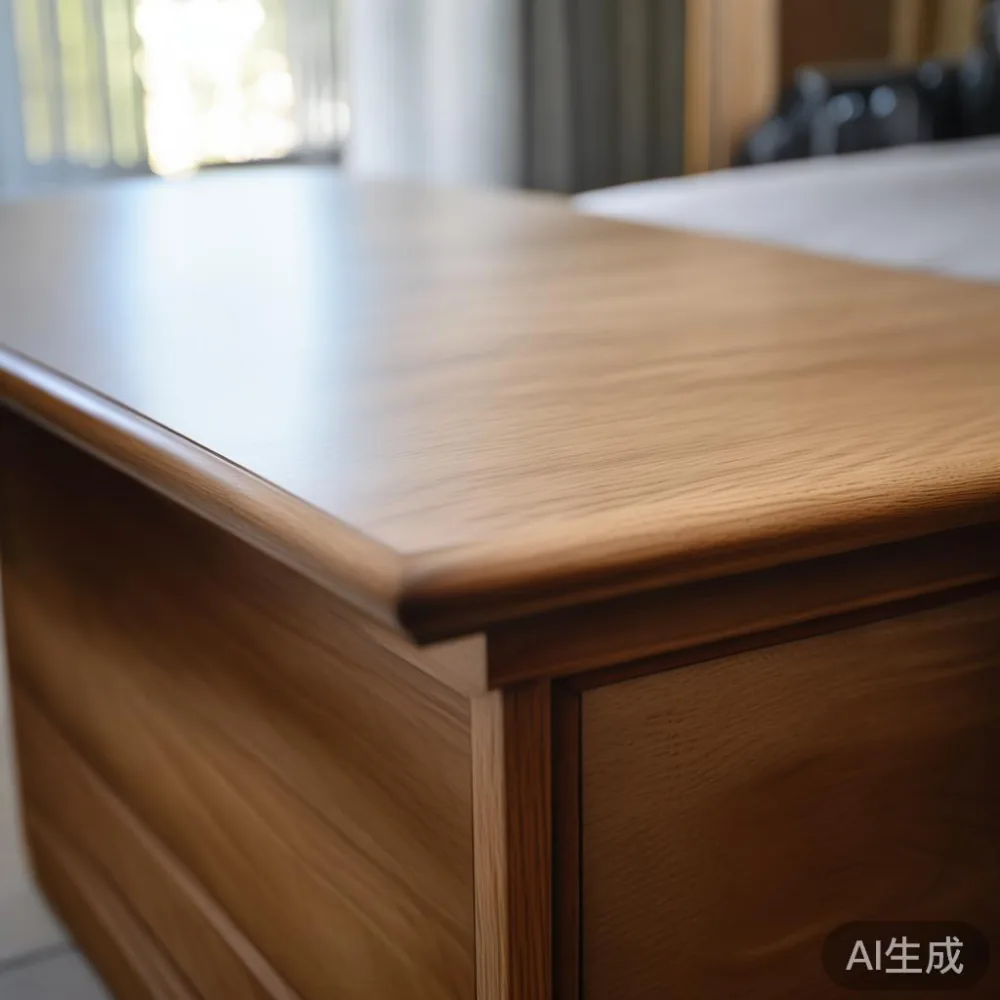
What humidity actually does to a bedside table in Singapore
Singapore sits on the Equator, and the average relative humidity at Changi ranges between 78% and 88% for most of the year. In a HDB flat on the 12th floor of a Tampines North block, with no whole-house dehumidifier running, the nightstand next to your bed often lives in 80-85% RH through the night. Wood is hygroscopic — it absorbs and releases moisture until it matches its environment. A bedside table cut and assembled in a drier factory at 45-55% RH and then shipped to a Punggol condo at 82% RH is, in plain terms, going to keep moving.
The visible signs arrive in a predictable order:
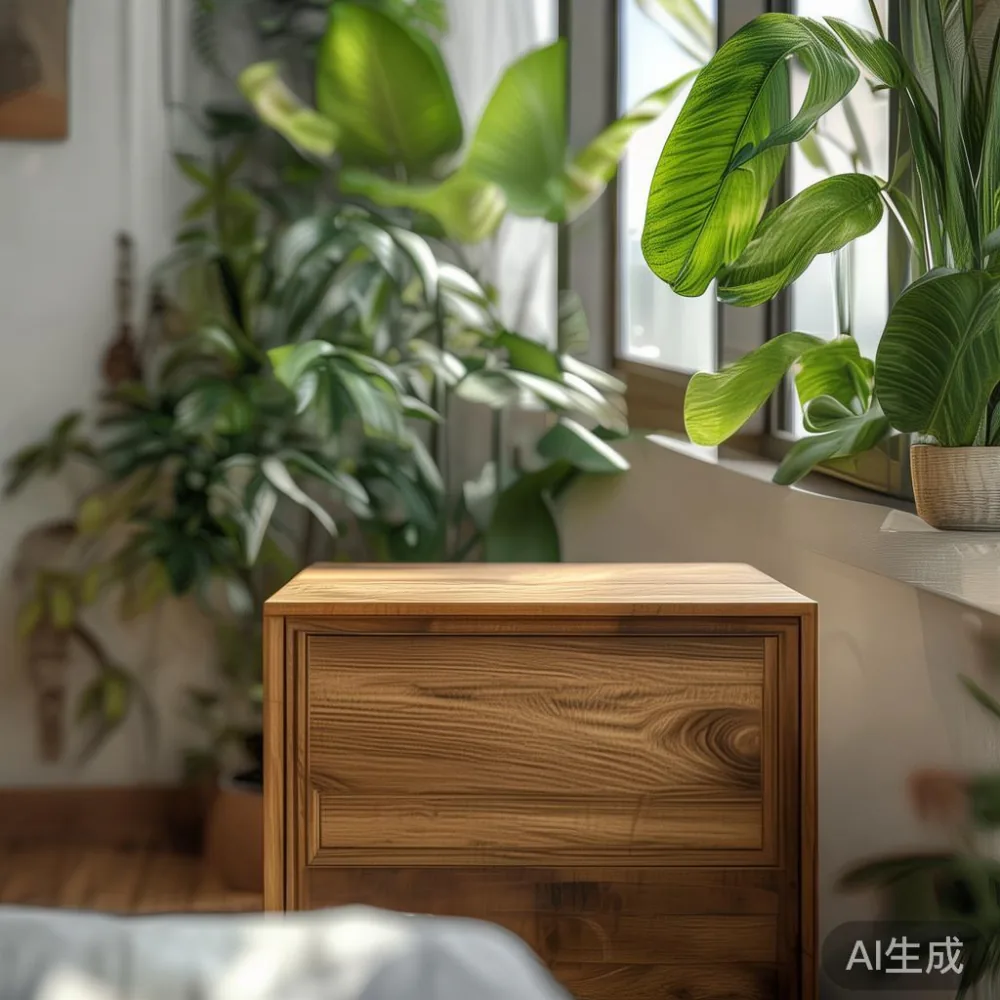
1. Expansion across the grain. A solid oak nightstand 45 cm wide and 38 cm deep, machined at 50% RH, can swell 1.2 to 1.8 mm in width once it settles at 82% RH. The drawer face stays the same, the carcass grows, and suddenly the drawer sticks.
2. Cupping on the top panel. A 40 cm wide solid wood top is a small sail. If one face absorbs moisture faster than the other — common on bedside tables pushed against a non-breathable wall — the panel cups. The reading lamp on top slides 3-4 mm toward you.
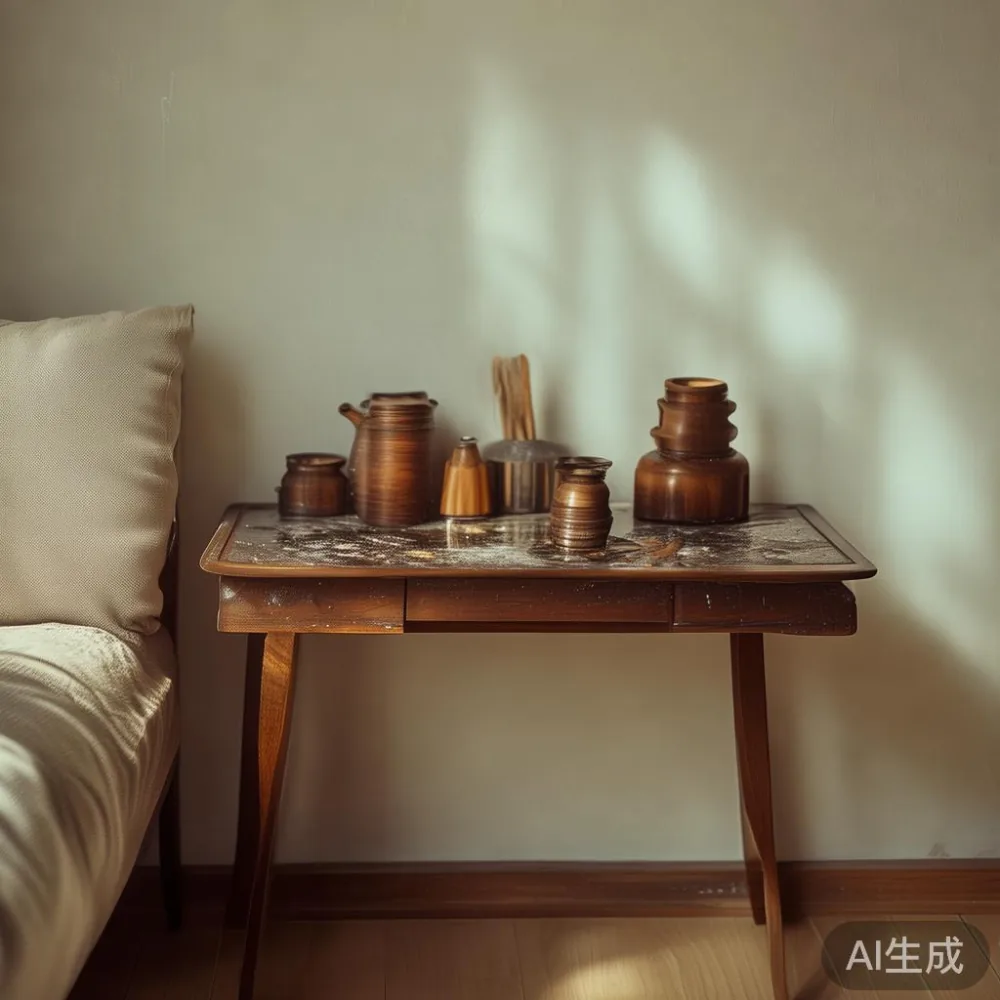
3. Joint stress. Mortise-and-tenon or dowel joints in a bedside table frame take the brunt. In my colleague's workshop in Jurong, she shows customers a stress test: she leaves a test nightstand in a 30°C, 85% RH chamber for 14 days. Loose joints appear around day 9. In a Bedok condo with daily air-conditioning, the same piece lasts years.
4. Finish micro-cracks. Lacquer and hard wax oil both flex, but they flex less than wood. A bedside table that breathes 3-4% across the year will eventually show hairline cracks in the finish, usually at corners or around handles.
None of this is a moral failing of the manufacturer. It is physics. The question is what the maker did about it before the bedside table ever reached the lift landing of your Tampines block.
What makes a bedside table survive a HDB bedroom
After looking at roughly forty Singapore bedside table returns in the last eighteen months, and after pulling apart a few of them in a workshop, four construction details separate the pieces that age gracefully from the pieces that warp by the second Hari Raya.
Solid wood, properly dried. Kiln-dried to 8-10% moisture content, then acclimatised for at least 14-21 days in a workshop that itself runs 60-70% RH. Foshan factories that export to 15+ countries tend to follow this. Plywood and MDF are not bad by default — they are more dimensionally stable than solid wood — but the moment the veneer delaminates at the bedside table back, you have a swollen, ugly problem that a humid bedroom will not forgive.
Joinery that allows movement. Drawer bottoms fitted in a slot, not glued. Back panels screwed into a recess, not stapled. Floating panel construction on the top. A bedside table that breathes in all the right directions will outlast one that has been clamped at every joint.
Finish on all six sides. Including the underside and the inside of the drawer. Underside finishes matter in Singapore because warm bedroom air rises and meets the cool underside of the top panel — condensation forms, then the wood drinks it. Two coats on the bottom costs the factory about S$3-5 per bedside table. Worth every cent.
Hardware with some give. Soft-close hinges with a 6-way cam. Drawer runners rated to at least 45,000 cycles. If a bedside table drawer needs to be slammed shut because humidity has swollen it, the runner is wrong, not the wood.
How do I style a marble top in a modern Singapore home?
A marble top on a bedside table looks most balanced when the stone slab is 1.2-1.8 cm thick, the bedside table base is solid wood in a warm walnut or natural oak tone, and the room uses three to four textures — a linen lampshade, a cotton throw, a small ceramic dish for jewellery — so the marble reads as one calm surface rather than the only material in the home.
In a 4-room BTO with a 3.4 m x 3 m bedroom, I lean toward neutral or limit the marble to one bedside table rather than a matching set, which keeps the room from tipping into post-modern light luxury pastiche. For a marble top bedside table, keep the slab under 0.45 m wide and the total height around 90 cm so the proportion still feels apartment-friendly. A marble top costs roughly S$220-420 more than the same bedside table in solid wood, and that premium is worth budgeting for if you want the surface to last 8-12 years without staining. In a darker space with a heavy marble table across the room, repeat the stone only on the bedside table top — never on the bed frame, dining table, or wardrobe — so the room holds a single quiet focal point instead of competing surfaces.
What I tested last month in a Tampines condo
Last month I spent three afternoons in a 1,055 sq ft condo in Tampines 7-2 with the owners' consent, and placed three different bedside tables in the master bedroom for a direct comparison. The window faces a corridor, the air-conditioner runs at 24°C from 11pm to 7am, and the household is a family of four with one dog.
Nightstand A was a S$90 big-box engineered board bedside table, 38 cm wide x 35 cm deep x 55 cm tall, with a single drawer and a small shelf. After 28 days, the back panel had bowed 4 mm outward and the drawer rubbed at the top-left corner.
Nightstand B was a solid ash bedside table with a French light luxury silhouette — tapered legs, a single drawer, brushed brass pull — 42 cm wide x 38 cm deep x 58 cm tall, kiln-dried and acclimatised, weighing about 11 kg. After 28 days, no measurable change. The drawer closed with the same soft resistance on day 28 as on day 1.
Nightstand C was a compact dressing table for balcony scale piece, no dresser, repurposed as a bedside table — a 30 cm x 25 cm solid oak stool-style table, 4.2 kg, no drawer. The owner uses it for a small wireless charger and a glass of water. After 28 days, also no measurable change, though the open design means the top collects more dust than a closed bedside table.
Total spend for the three: S$90 + S$648 + S$195 = S$933. The owners kept the solid ash bedside table, returned the engineered board one for 21%, and kept Nightstand C as a hallway piece.
Singapore-specific buying checks before you tap 'checkout'
Singapore buyers, especially in HDB corridors with 1.2 m wide lift landings and 1.1 m wide corridor widths, should check four things before clicking.
1. Box dimensions, not just product dimensions. A bedside table 45 cm wide arrives in a box roughly 52 cm x 48 cm x 64 cm. Measure your lift. Most Singapore lifts are 1.2-1.5 m wide at the door and 1.6-2.1 m deep, but the door is often only 0.9 m wide. A boxed bedside table over 65 cm in any single dimension will not fit through the lift door on its longest side without tilting — and tilting means you may not get it out of the lift at all.
2. Weight on arrival. A solid wood bedside table usually weighs 10-18 kg. A flat-pack engineered board one weighs 6-9 kg. Below 8 kg, be suspicious that the bedside table is not the solid wood it claims on the product page.
3. The warranty length, written. A 10-year structural warranty on a bedside table frame is the standard for serious makers in the Foshan cluster. Anything shorter, and ask what is actually covered. The MIDHILL catalogue, for example, lists a 10-year structural warranty plus lifetime refinishing on its solid wood pieces, and the warranty travels with the piece if the owner moves from one flat to another.
4. Returns, GST, and delivery days. Singapore's 9% GST applies on the landed price including delivery. 14-day returns mean 14 calendar days, and the buyer usually pays return courier of about S$25-45 per bedside table. Free shipping kicks in over US$350 (about S$480 at current rates) on most cross-border direct orders. Sea-freight delivery to a Singapore address typically runs 18-28 working days from a Foshan warehouse, plus 3-5 days for the local last-mile courier from the Jurong Tuas consolidation warehouse.
How to live with a bedside table through a Singapore monsoon
Once the bedside table is in the bedroom, three habits keep it calm through the December and June monsoon stretches.
Air-conditioning. Running the bedroom AC from 11pm to 6am drops the bedside table's microclimate to roughly 60-68% RH, which is within the comfort zone for solid wood. The cost is roughly S$0.18-0.32 per night for a 9,000 BTU inverter unit at the current tariff.
Distance from the wall. Push the bedside table 2-3 cm out from the back wall. Bedrooms in Tampines GreenRidges and Punggol Waterway Terraces share walls with corridors and neighbouring flats, and those shared walls can run 1.5-2°C cooler than the room air because of the air-conditioning in the corridor or the next flat. Condensation forms on the back of the bedside table, and the wood drinks it. A 2-3 cm gap lets air move.
A small silica-gel tray. A 12 cm x 8 cm bamboo tray with 80-120 g of rechargeable silica beads, refreshed in a microwave for 90 seconds every three weeks. Cost: about S$6-9 once. Useful for any bedroom.
None of these are complex. They are what a serious bedside table — from a workshop that kiln-dries, acclimatises, and finishes on every face — is designed to handle. When the construction is right, the bedside table fades into the bedroom the way a bedside table should: holding a lamp, a book, a glass of water, and nothing else.
Why a bedside table is worth more thought than a sofa
A solid wood sofa in a Singapore living room is the centrepiece of the home, but a bedside table is the centrepiece of every single night. You see it when you turn off the lamp. You reach for it before sleep. You put your glasses on it before sleep. For a piece of furniture that gets touched 2-3 times a day for 8-12 years, the bedside table deserves a budget at least 5-7% of the bed frame budget, and a maker who treats the piece like the bed frame, dining table, wardrobe, and nightstand in the catalogue deserve.
MIDHILL's bedside table line, like its bed frame, dining table, wardrobe, and nightstand range, runs through the same kiln, the same acclimatisation room, and the same finishing line — that is what keeps the warranty reading honest. A bedside table bought from a maker with that discipline will outlast two cycles of HDB renovation, hold its value through a BTO resale, and quietly do what a bedside table is meant to do: be there, every night, without complaint.