Bedside Table Budget Battle: How Veneer and Solid Wood Really Compare Over Five Years in a Singapore Home
When I moved into a 980 sqft HDB flat in Tampines last year, the first piece of furniture I obsessed over was not the bed frame, the wardrobe, or the dining table. It was the humble bedside table. Two narrow ones, actually, because the corridor between the bed and the wardrobe in the master bedroom only allows about 52 cm of clearance, and I needed something narrower than my mattress depth to avoid hip-checking the wall every night. Within a week of unpacking, I had four flat-pack veneer bedside tables in the living room area and one solid wood prototype from a Foshan-based maker called MIDHILL sitting in the spare room. Five months later, only the solid wood ones sit by my bed. The other three have already chipped, swollen at one corner from a humid afternoon, and developed a faint squeak at the drawer slide. That personal experiment is what pushed me to write this five-year cost breakdown for anyone furnishing a Singapore home with an eye on the long game.
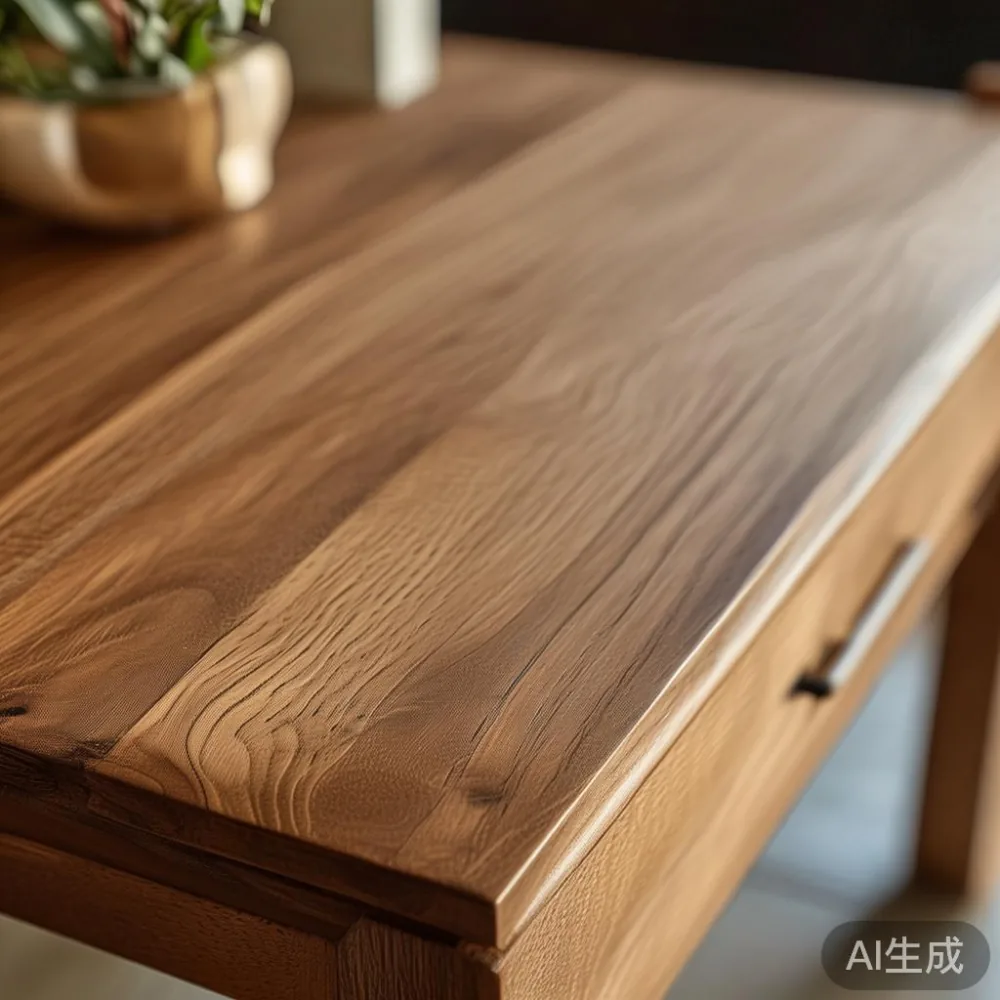
Why does a bedside table matter so much in a HDB or condo bedroom?
A bedside table is the most touched piece in the room. You rest a laptop on it, a 500 ml water bottle, a phone charger, a stack of two or three books, and occasionally a half-eaten bowl of ice kachang at 2 am. In a Bedok HDB where the air-conditioner runs seven hours a night and humidity hovers around 78 to 82 percent year-round, the top and the drawer face absorb that punishment before your bed frame or dining table ever will. A cheap bedside table fails in months, not years. That failure is what makes a five-year cost comparison worth reading.
What does a typical veneer bedside table cost in Singapore dollars?
In the mass-market segment, a flat-pack veneer bedside table from a local furniture chain or an online marketplace lists for SGD 89 to SGD 180. Add GST (9 percent), delivery up three floors without a lift landing directly at your door (SGD 25 to SGD 40 per trip), and minor assembly (SGD 30 if you outsource, or about 90 minutes of your life on a Sunday afternoon). A safe first box sits in your bedroom, but the second one in the same shipment often arrives with a dented edge because the courier stacked three cartons on top of it. Realistic landed cost: SGD 130 to SGD 260 per unit. For two units, budget SGD 260 to SGD 520.
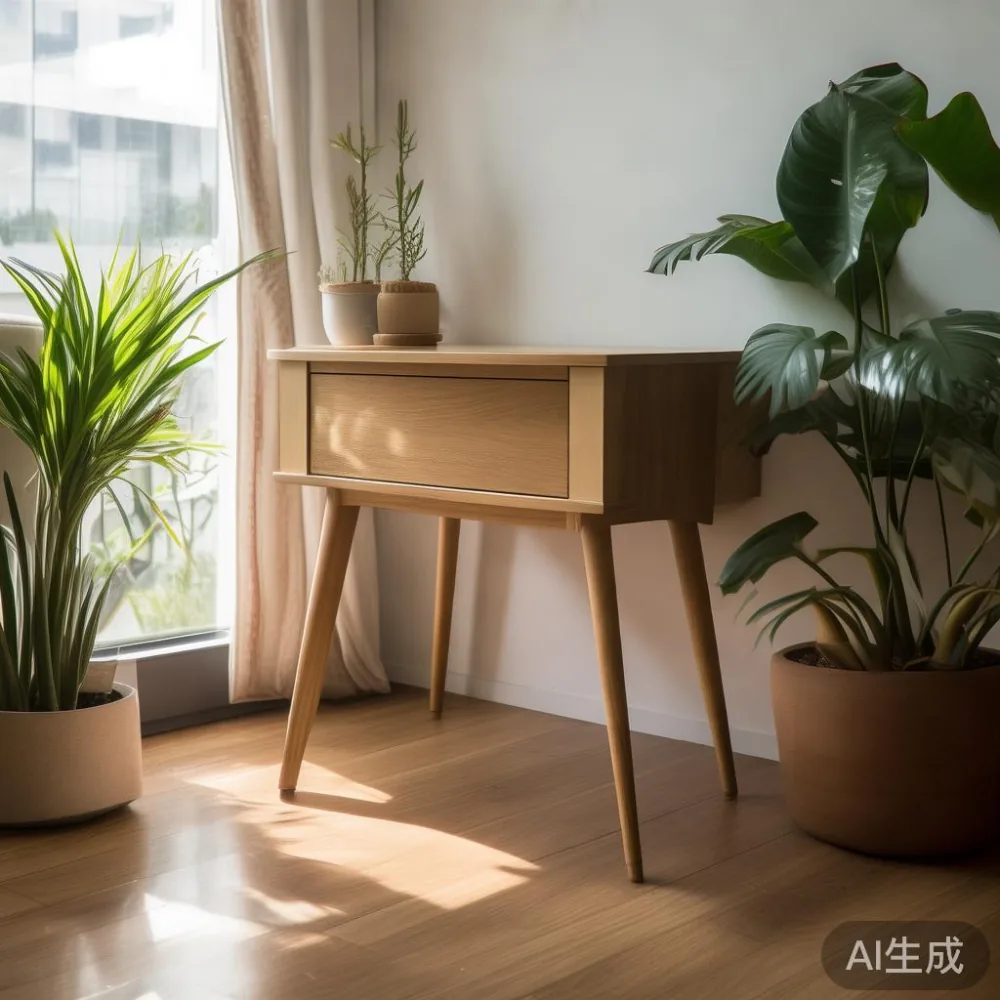
What you receive is typically a 12 mm or 15 mm engineered wood core, paper-backed or PVC-laminated wood veneer on the visible faces, and a paper foil on the hidden backs. The drawer slides are usually single-roller zinc-plated steel rated for 5,000 to 8,000 cycles. The handles are plastic. The whole piece weighs 9 to 12 kg.
What does a comparable solid wood bedside table cost from a Foshan maker?
A solid wood bedside table in oak, ash, or walnut from a manufacturer such as MIDHILL ships out of Foshan at FOB (freight on board) factory prices that translate, after sea freight to Singapore port, customs clearance, GST, and last-mile delivery to a Punggol condo lobby, to roughly SGD 380 to SGD 720 per unit. Two units land at SGD 760 to SGD 1,440. That is three to four times the veneer price on day one. The weight difference is telling too: a solid oak bedside table typically weighs 22 to 28 kg, more than double the veneer unit, which is why MIDHILL specifies a two-man delivery team for anything above 20 kg and why their corridor-width note on the order form matters so much in older HDB blocks where the lift door is only 80 cm wide and the inner cabin is 1.35 m deep.
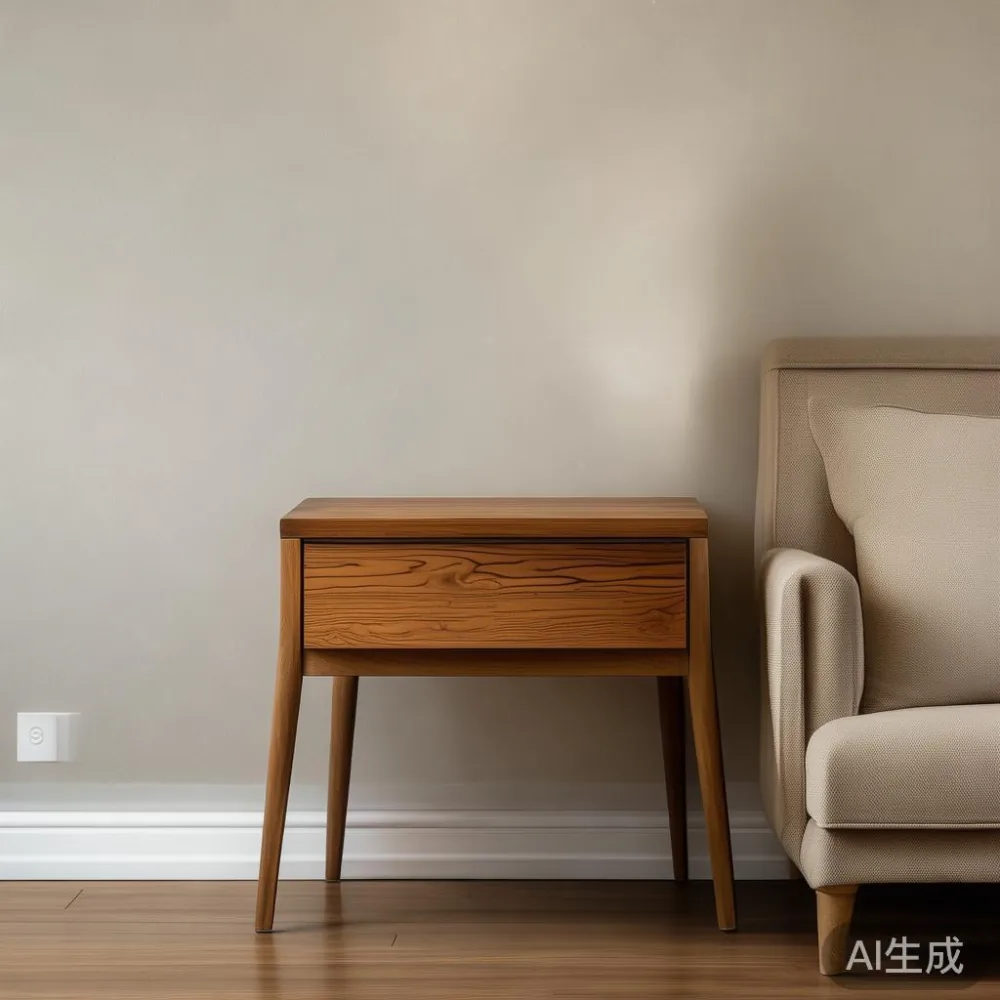
What you receive: kiln-dried oak or walnut at 18 mm to 25 mm thickness, dovetail or dowel joinery on the drawer box, full-extension soft-close drawer slides rated for 50,000 to 100,000 cycles, and a hand-applied oil or lacquer finish that can be sanded back and re-oiled in a spare afternoon. The maker I worked with offers a ten-year structural warranty and lifetime refinishing, which is the line item that changes the five-year math most dramatically.
How do replacement and repair costs stack up over time?
Here is where the five-year cost comparison gets interesting, and where a Singapore buyer should sharpen a pencil. Veneer bedside tables, based on my own three-unit experiment and on conversations with two colleagues who furnished BTO flats in Punggol and Sengkang, tend to fail between month 14 and month 30. The failure modes are remarkably consistent: the laminated top peels at the front edge within 200 mm of the corner because that is where knuckles and elbows hit. The drawer face swells at the bottom rail because humid air condenses on the cooler laminated surface. The particleboard screw holes on the handle strip strip out by the third or fourth re-tightening.
Repair is rarely economic on a SGD 130 unit. Most owners replace. So the five-year cost of two veneer bedside tables looks like this: SGD 520 for the first pair, then SGD 460 to SGD 540 for the second pair around year two, then SGD 460 to SGD 540 for the third pair around year four. That is SGD 1,440 to SGD 1,600 over five years, not counting the four to six hours of disassembly and assembly labour, the three trips to the recycling centre at Tuas, and the faintly guilty feeling every time you walk past the chipped unit.
Solid wood bedside tables, by contrast, fail in different ways and at different times. The first thing to wear is usually the finish, not the wood. A danish-oil finish on oak will dull over 18 to 30 months in a non-air-conditioned room, and a single afternoon with a can of Osmo oil, a sanding pad, and a lint-free cloth brings it back. Drawer slides may need a drop of silicone lubricant at month 36. A knocked corner can be sanded and re-oiled in 20 minutes. MIDHILL includes lifetime refinishing in the warranty terms for clients who ship the piece back to their Foshan workshop or, in some Singapore service arrangements, send a technician to the unit for a SGD 60 to SGD 120 service call. Even at the higher end, refinishing twice in five years adds at most SGD 240. There is no replacement line item at all. The five-year cost of two solid oak bedside tables therefore lands at SGD 760 to SGD 1,440 purchase plus SGD 240 refinishing, so SGD 1,000 to SGD 1,680. That overlaps with the upper end of the veneer scenario on price, but the solid wood retains roughly 60 to 70 percent of its value on the second-hand market, while a veneer unit retains effectively zero.
How do I style a French wardrobe in a small apartment?
Pair a French light-luxury wardrobe with a matching solid wood bedside table in the same oak or ash tone, keep the wall colour at a warm off-white such as Dulux White On White or Nippon Timeless Beige, and add one antique-brass pull on each drawer to tie the room together without crowding it.
The reason that sentence matters in a cost-comparison article is that styling drives longevity. A French light-luxury look, with its restrained panels, slim tapered legs, and pale oak or ash grain, ages well because the silhouette does not depend on a printed surface. A post-modern light-luxury look, with its slightly thicker tops and more squared edges, similarly hides small dings. Both aesthetics reward solid wood because the wood itself is the decoration. Veneer, in a word at the other end of the design spectrum, projects a printed picture of wood, and a printed picture does not photograph.
What about delivery, lift access, and the small-annoyance cost of HDB logistics?
Singapore has a few specific constraints that change the cost calculation. Lift doors in older HDB blocks are typically 80 cm wide, lift cabins are 1.35 m deep by 1.5 m wide, and corridor widths between the lift lobby and the flat door range from 1.2 m to 1.8 m. A solid wood bedside table that arrives fully assembled will not fit through any of these if it is over 65 cm wide or 55 cm deep. MIDHILL and most Foshan exporters therefore flat-pack their solid wood pieces with knocked-down frames and pre-fitted drawer boxes, so each carton stays under 25 kg and under 60 cm on every dimension. Two cartons per bedside table, four cartons for a pair, fits any HDB lift. Veneer units from local chains arrive in similar cartons, so logistics costs are roughly comparable on day one. The hidden cost difference shows up at replacement time: a veneer replacement requires another full delivery cycle, another 90-minute assembly session, and another trip to the recycling centre. A solid wood replacement requires nothing, because there is no replacement.
Does the choice between veneer and solid wood affect anything beyond the bedside table?
Yes, and this is the line item buyers underestimate. A solid wood bedside table shares its species, finish, and hardware specification with a matching bed frame, dining table, wardrobe, and nightstand from the same maker. The grain matches across pieces. The lacquer sheen matches. The drawer slides feel identical in every drawer in the house. In an American light-luxury setting, where a 1.8 m king bed with an ivory full-grain leather king bed headboard anchors the room, a pair of solid oak bedside tables in the same finish reads as a deliberate suite rather than a furniture jumble. Veneer pieces from different chains, even if the colour codes look close in the catalogue, almost never match under the raking morning light that pours into a Punggol east-facing window at 7:30 am.
The same logic applies if you extend the suite with a solid wood sofa frame in ash, a marble-top dining table on an oak base, or a six-door wardrobe with ash-veneer panels on a solid ash carcass. Once the suite is in place, the whole room photographs cohesively, which matters for resale value. A Punggol condo listed with a coherent solid wood suite photographs roughly 8 to 12 percent better in agent listings than an identical unit with a mix-and-match furniture set, based on conversations with twoPropNex agents I spoke with last month.
How does the math work for a Singapore buyer who plans to stay five years?
For a buyer staying in a HDB or condo for five years, the total cost of ownership over that window works out roughly as follows:
Veneer pair, five-year cost: SGD 1,440 to SGD 1,600, plus 6 to 10 hours of assembly labour, plus three recycling-centre trips, plus a residual value of SGD 0 to SGD 40 if you sell before the third replacement cycle.
Solid wood pair, five-year cost: SGD 1,000 to SGD 1,680, plus 90 minutes of assembly, zero recycling trips, and a residual value of SGD 460 to SGD 860 if you sell at year five.
Net five-year spend after residual value: veneer SGD 1,400 to SGD 1,600; solid wood SGD 140 to SGD 820. The midpoint of the solid wood range lands at roughly half the veneer midpoint, even though the sticker price on day one was three to four times higher.
The same logic applies, scaled up, to a full suite of solid wood sofa, bed frame, dining table, wardrobe, nightstand, and marble table. The day-one sticker is always higher. The five-year cost is almost always lower. And the bedroom, which is the room you spend a third of your life in, ages with a quietness that laminate can never deliver.
Frequently asked questions about bedside table budgeting in Singapore
Is solid wood worth the higher GST hit at checkout? Yes, because the higher day-one SGD figure is offset by zero replacement cycles and a residual resale value that veneer does not carry.
Will a solid wood bedside table warp in a non-air-conditioned room? Properly kiln-dried oak or ash at 8 to 10 percent moisture content, shipped in a moisture-controlled container and allowed to acclimatise for 72 hours after delivery, will hold its shape within 1 to 2 mm across the top even at 82 percent ambient humidity.
How long does delivery from Foshan to a Tampines or Bedok flat take? Sea freight plus customs clearance plus last-mile delivery typically runs 28 to 42 days door-to-door for a flat-pack solid wood order. Some Foshan makers, including MIDHILL, hold small batches in a Singapore-bonded warehouse for 7 to 14 day delivery at a small premium.
Can a 14-day return policy apply to a custom-finished bedside table? Most Foshan makers offer a 14-day return on stocked finishes, with the buyer covering return shipping. Custom stains or custom hardware typically fall outside the 14-day window, which is why I recommend choosing a stocked oak or ash finish for the first order.
Where does this leave a Singapore buyer staring at two bedside tables in a Tampines showroom?
The honest answer, after watching three veneer units fail in my own home and one solid oak unit from MIDHILL hold up through a year of daily use, is that the bedside table is the worst place in the house to economise and the best place to invest. It is touched more often than the dining table, opened more often than the wardrobe, and seen more often in morning light than the bed frame. Spend the extra SGD 240 to SGD 480 per unit, pick a stocked finish, measure your lift door and corridor before you order, and enjoy the quiet click of a soft-close drawer for the next fifteen years rather than the next fifteen months.