Solid Wood Bedside Table Cost Breakdown in Singapore
Solid wood furniture is often described with broad words such as premium, timeless, and handcrafted, but those terms do not explain the final price tag. The more useful question is what the customer receives: the species of timber, its condition after drying, the dimensions, the construction method, the surface treatment, the hardware, and the delivery terms. For a bedside table, even a 10 cm difference in drawer depth or a change from ordinary pine to white oak can affect both price and usefulness.

This guide uses Singapore apartments, including Tampines, Bedok, and Punggol HDB flats and newer condominiums, to explain those cost drivers. It also considers lift access, corridor turns, GST, and the practical space needed around a bed. MIDHILL is a Foshan solid wood furniture maker established in 2008, with a 10-year structural warranty and a lifetime refinishing service. Its furniture reaches 15 or more countries, which gives useful context for how regional manufacturing, export standards, and Singapore delivery requirements interact.
What determines the price of a solid wood bedside table?
The price of a solid wood bedside table begins with the timber. Solid wood is not one material. It can mean rubberwood, pine, beech, ash, walnut, oak, or another species, and each has a different market value. The label should state the actual wood and whether the visible surfaces are solid wood, veneer, or a mixture. A cabinet may use solid timber for its frame while using veneer on a broad panel to control movement and cost.

Species alone does not determine quality. A well-made rubberwood bedside table can be more serviceable than poorly joined solid oak. The moisture content matters too. Wood for Singapore conditions should generally be dried and stabilised for local humidity, often around 70% to 85% depending on the supplier and product. Dry timber that has been acclimatised properly is less likely to split, swell, or develop gaps after arriving in a humid bedroom.
Dimensions carry direct numerical consequences. A typical bedside table measures about 40 to 50 cm wide, 35 to 50 cm tall, and 35 to 45 cm deep. A compact HDB model may be 35 cm wide for a narrow bedside position, while a larger unit could reach 55 cm wide with 2 substantial drawers. Width, height, depth, drawer count, and internal storage all add material, labour, and packaging.
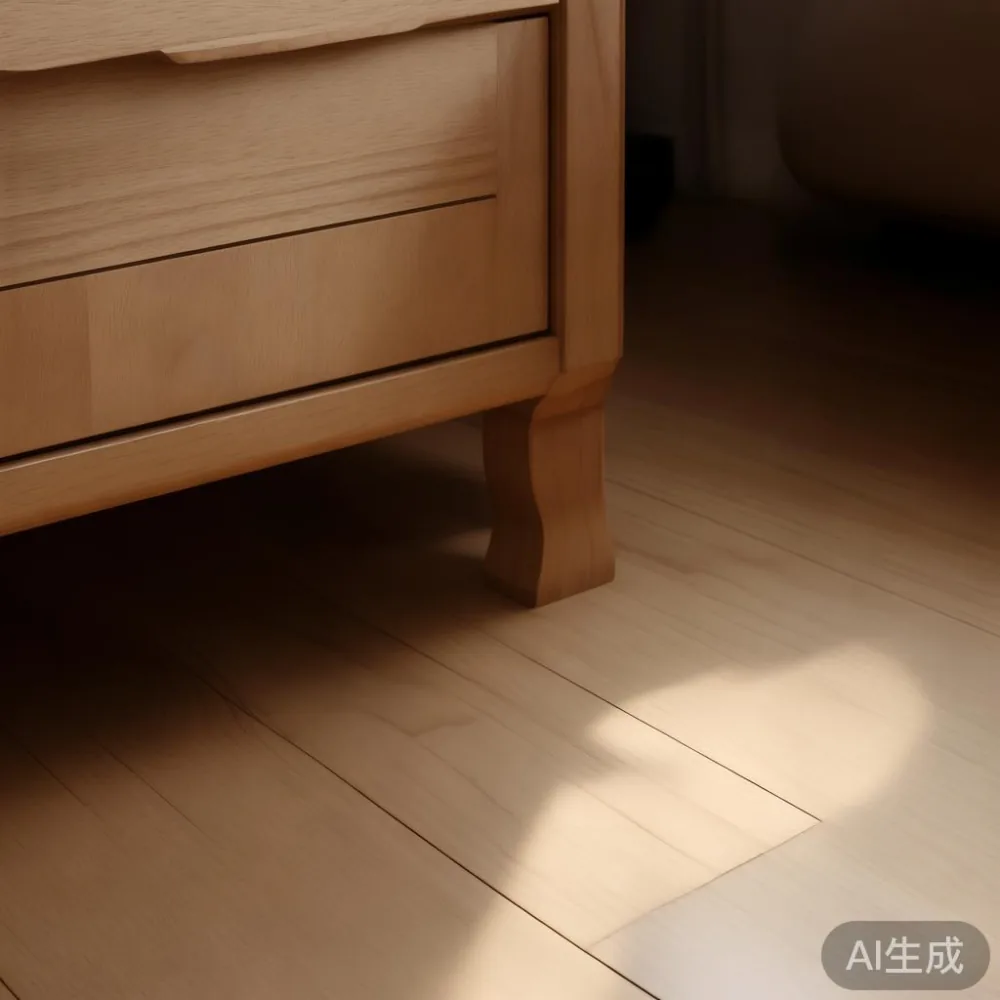
Construction tells a more revealing price story. Mortise-and-tenon joints, dowelled drawers, properly fitted backs, and reinforced corners take more work than simple assembled components. A visible dovetail joint can justify a higher figure when it also improves durability. Machine cutting may reduce labour, but it does not automatically make a piece inferior. Fit, finish, and structural performance are what the buyer experiences.
Is the timber solid throughout, and does the drawer actually work?
Ask whether the visible parts are solid wood, then inspect less visible areas. In a bedside table, the top, front, frame, drawer sides, drawer bottom, and back may use different materials. That is not necessarily deceptive if the specifications are clear. It becomes a problem when a product is presented as entirely solid wood but contains significant particleboard or fibreboard in structural areas.
Drawer operation deserves a physical test. Pull the drawer out by its handle, not by the front panel, and check whether it travels in a straight line. It should slide without scraping, binding, or excessive side play. Soft-close hardware may add around SGD 20 to SGD 80 per drawer, while quality full-extension runners could cost another SGD 60 to SGD 180. Traditional wooden runners are often included in solid wood pieces, although not every manufacturer treats them as a premium feature.
Last month I visited a Singapore supplier and tested several bedside tables with a 2 kg weight in the open drawer. Two units from the same displayed range had noticeably different drawer movement. The better one used a tighter joint between the drawer side and base, had no protruding screw heads inside, and closed with a controlled sound. The other had 2 to 3 mm of lateral movement and a rough interior edge. That experience showed why construction can separate two products that share the same timber name and finish.
For the buyer, visible and hidden specifications should be compared side by side. A bed frame may use solid wood for the main rails and headboard, but still combine engineered timber with metal supports. The same principle applies to a wardrobe with solid wood fronts and a mixed internal structure. Claims should describe materials by component rather than relying on one broad label.
Why do finish and hardware change the price so much?
Surface treatment affects price because preparation takes time. Sanding a bedside table through several grits, filling small pores, applying stain, drying, and adding a protective top coat can add materially more than leaving the timber in a natural matte state. An oil or wax finish may feel tactile and repair easily, but it generally offers less spill resistance than a hardened lacquer. A durable lacquer can handle daily use, although scratches may still show on darker wood.
Colour also affects the amount of finishing work. White and pale finishes may require more preparation to avoid showing defects. Walnut tones often use stains and layered effects rather than plain oil. Post-modern light luxury styling often pairs pale oak with clean lines and restrained hardware, while French light luxury leans toward softer profiles and warmer visual cues. The finish is part of the design, not merely a protective layer.
Hardware should be identified by type and operation. A simple knob may cost only a few dollars as a component. A brushed brass pull can cost several times more, and a solid brass handle with a premium finish can cost roughly SGD 15 to SGD 60. Lighting hardware, charging sockets, and concealed cable management add another layer. A bedside table with a built-in USB-C port may sit around SGD 40 to SGD 150 above a similar model without it, depending on the electrical specification and certification.
Marble is another factor when comparison-shopping. A marble table can have a premium top supported by a solid wood or metal base. Marble adds weight, requires careful packaging, and creates a different maintenance profile. The same principle applies to a solid wood sofa with timber framing, a dining table with a thick top, and a nightstand with a stone surface. Material origin matters, but so do reinforcement, workmanship, and shipping protection.
How does light luxury affect what you pay for?
Light luxury is not a fixed material category. French light luxury often emphasises curved silhouettes, tactile upholstery, warm woods, and decorative profiles. American light luxury tends toward clean geometry, comfort, and understated detailing. Post-modern light luxury can combine recognisable classic references with simpler forms. A bedside table can sit in any of these languages, but its price should still be justified through measurable construction and material details.
Design development adds cost before production begins. Custom sizing, prototype samples, complex drawer profiles, unusual corner radii, and special finishes require more design hours. Standard dimensions reduce this cost because components can be repeated accurately. That does not make a standard piece less attractive; it simply makes the value proposition clearer.
Some buyers encounter design terminology while researching a wider furniture brief. A comparison titled Japanese sofa vs Modern sofa can clarify differences in proportion and construction, although a sofa is not a bedside table and should not be judged by bedside-table criteria. Likewise, French for dining room usually describes a style approach rather than a manufacturing standard. Questions such as is light luxury bed worth it and how to choose Japanese bed belong to bed-frame decisions, where support systems, slat spacing, and clearances carry more weight than they do for a small cabinet.
The phrase best Italian light luxury bed for 2026 also points to a broader design market rather than a verified construction method. For any solid wood bed frame, the sleep surface, centre support, joints, and stability matter more than a country label. Similar care belongs beside a dining table, wardrobe, or solid wood sofa. The relevant test is whether each product suits its location, daily use, and maintenance expectations.
Will the bedside table fit through my HDB flat or condominium?
Fit is a Singapore issue with real cost consequences. Many HDB lift doors are approximately 80 to 90 cm wide, while lift cars may offer limited depth. Condominium corridors can be narrower, and right-angled corners force a measured box through an opening that looks wide enough on a floor plan. Before purchase, ask the retailer for the packaged dimensions rather than relying only on the assembled dimensions of the bedside table.
For example, an assembled bedside table measuring 45 cm wide, 50 cm high, and 40 cm deep may fit into a standard lift but fail to turn through a tight common corridor. A flat-packed design can solve the access problem, yet it requires assembly space and hardware. It may also reveal whether the carton can fit into a lift without blocking other residents. Deliveries to upper floors may add a carrying surcharge of roughly SGD 20 to SGD 80 per item, depending on distance, stairs, and the building's service rules.
Check the route from the ground floor to the bedroom door. Note the narrowest corridor, lift height, door width, and any 90-degree turn. A useful rule is to compare the carton’s smallest two dimensions with the narrowest opening and the carton’s longest edge with the available turning space. If there is uncertainty, send photographs and measurements to the supplier before dispatch.
Bedroom placement matters too. A bedside table commonly needs 40 to 60 cm beside the mattress, but the table itself may need only 35 to 50 cm of width. Leave enough room to open a drawer toward a seated position and to reach a wall switch. In Punggol or Tampimes units where bedrooms are compact, a 35 to 40 cm bedside table can preserve circulation without making the room feel congested.
How do GST, delivery, returns, and warranty affect the total?
Singapore prices should be clear about GST. A displayed price of SGD 420 before GST becomes SGD 452.40 after 9% GST. A price of SGD 680 becomes SGD 741.20. Comparing imported furniture against local stock is misleading unless tax and delivery are treated consistently.
Delivery is another price driver because large furniture needs protective packaging, handling, and suitable transport. A small bedside table may add around SGD 25 to SGD 60 for standard Singapore delivery, with longer islandwide or scheduled services costing more. Furniture companies may also charge more for carrying, upstairs placement, or carrying the boxed unit to the lift. A manufacturer offering free delivery above US$350 concerns a different currency and purchasing threshold, so the buyer should confirm the Singapore equivalent rather than assume local free delivery.
Returns and warranties affect long-term value as well. A 14-day return window gives a buyer time to check colour, drawer clearance, and room fit. It does not remove the need to inspect packaging on arrival. The 10-year structural warranty offered by MIDHILL addresses long-term frame stability, while its lifetime refinishing service addresses surface renewal. Those services can be more valuable than a small launch discount because they reduce the cost of future care.
Ask what the warranty excludes. Typical questions include moisture damage, unauthorised modifications, commercial use, and finish wear. Check whether replacement parts are supplied, who arranges collection, and whether the service is available for customers outside the country of manufacture. Transparent terms are part of the product’s value.
What should I compare before paying for a solid wood bedside table?
Compare the specification sheet, not only the photograph. Record the timber species, whether it is FSC-certified where applicable, dimensions, internal drawer dimensions, joint type, drawer runner, finish, weight, and packaged size. For a bedside table, internal measurements can matter more than decorative carving. A drawer measuring 32 cm wide, 28 cm deep, and 10 cm high may hold a phone, watch, books, and earphones; a shallow 6 cm drawer may hold little more than small accessories.
Weight is also informative. A small solid wood bedside table might weigh 12 to 25 kg, while a thick or reinforced unit can reach 30 to 45 kg. Greater weight can indicate more timber, but it can also signal moisture, dense species, or inefficient design. Use weight together with the other specifications.
Price benchmarks should reflect the complete offer. A simple solid pine bedside table might appear at around SGD 180 to SGD 320 before GST. A more refined oak or walnut model with better drawer hardware and finish may sit around SGD 420 to SGD 850 before GST. Stone-topped, marble table, or highly engineered versions can move above SGD 900. Prices vary by size and specification, so these are comparison ranges rather than universal rules.
Style should complete the room rather than dictate the budget. A buyer searching for best French provincial furniture may focus on carved edges, shaped drawers, and curved profiles. Those details can increase labour, but furniture should still be stable and proportioned correctly. A compact French-inspired bedside table at 42 cm wide and 48 cm high may suit an HDB bedroom better than an oversized model, while its curved drawer front should open without striking the bed frame.
For a practical final check, sit beside the table, open the drawer, reach the switch, and view the wood under bedroom lighting. Compare the surface with the bed frame, wardrobe, and other pieces. A small bedside table can anchor a compact room if its colour and scale agree with the larger furniture. That coherence often delivers more visual value than adding another decorative feature at the last moment.
How do you judge whether a solid wood price is fair?
A fair solid wood price reflects identifiable costs rather than a vague prestige mark. The timber species, dimensions, moisture preparation, joinery, finish, hardware, packaging, warranty, and local delivery should all be visible in the offer. A low figure may suit a simple, smaller product, while a higher figure may be justified by better timber, finer drawer engineering, or longer-term service. The important point is not where a price sits within a range, but whether the specification explains it.
For Singapore buyers, request exact packaged measurements, confirm the GST-inclusive total, and compare the bedside table with the room’s access route. Inspect drawer travel, check the finish, and read the warranty exclusions. A solid wood piece that fits the room, functions smoothly, and can be maintained for many years is more economical than one chosen only for its label or appearance.