Humidity, HDB Corridors, and Your Wooden Bedside Table: A Practical Guide for Singapore Homes
I delivered a 90 cm oak bedside table to a fourth-floor walk-up in Bedok last month, and the lift door was so narrow I had to angle the box at 30 degrees just to slide it in. We got it upstairs, unboxed it, and the homeowner immediately pointed at the corridor humidity sensor on her wall reading 82%. She asked, point-blank: "Will this thing warp in six months?" That question, asked a hundred times a year in Tampines, Punggol, and Bishan flats, is exactly why this article exists.
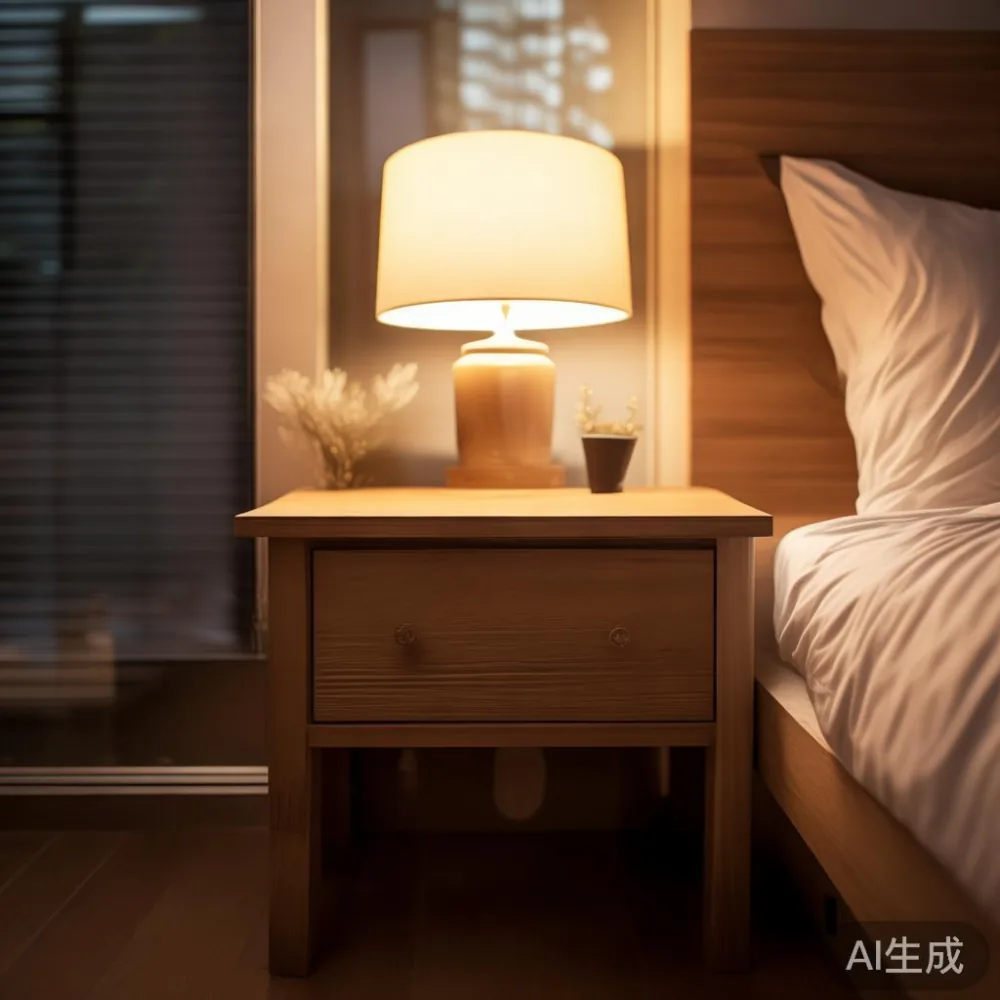
Singapore sits in a tropical climate where relative humidity hovers between 70% and 85% for most of the year, peaking during the November-to-January monsoon and again in June. Solid wood furniture responds to that moisture the way a sponge does: it swells, contracts, and occasionally cracks if you ignore it for long enough. A bedside table is usually the first casualty because it sits right next to an open window or beside a frequently used air-conditioner that cycles on and off all night. In this guide I will walk through what actually happens inside the wood fibres, how Singapore-specific home conditions change the picture, and what you can do to keep a piece looking new for the next decade.
Why Singapore Humidity Hits Furniture Harder Than You Think
Most people assume humidity only matters for outdoor decks. Inside a HDB flat in Tampines or a Punggol executive condo, the picture is more complicated. Your interior humidity rarely sits at a stable 50%. Instead it climbs to 80% when you open the windows to air out the kitchen, drops to 45% when the air-conditioner runs for three hours, then spikes again when the unit cycles off. Wood responds to that swing by expanding and contracting, sometimes by 2% to 4% across the grain. On a 45 cm wide bedside table top, 3% expansion equals roughly 1.35 mm of movement every time humidity shifts from low to high. Multiply that across weeks and you start to see hairline gaps at mitre joints, sticky drawers, and doors that no longer sit flush.
Salt-laden air makes it worse. HDB estates closer to the coast, like Marine Parade or parts of Bedok, carry a fine chloride mist that settles on wood surfaces and pulls moisture deeper into the grain. Even a brand-new piece from MIDHILL, shipped flat-packed from the Foshan workshop at 6% to 8% moisture content, will reabsorb ambient moisture within the first two weeks in a Singapore home. The trick is not to prevent that absorption. The trick is to manage it.
How do I care for a loveseat in humid weather?
A loveseat in Singapore needs the same disciplined moisture management as any solid wood piece: keep indoor relative humidity between 45% and 60%, run a small dehumidifier (a 12-litre Meaco or similar pulls about SGD 280 to SGD 380 at Gain City) for at least four hours a day during the monsoon season, and wipe all wood surfaces with a dry microfibre cloth every week to remove salt deposits before they embed into the grain.
That short answer usually surprises people. They expect a complicated waxing ritual. In reality the discipline is environmental. Place your loveseat at least 15 cm away from the air-conditioner so cold air does not hit one side of the frame. Keep it 30 cm from any balcony door. If your loveseat has a storage compartment, slide in two packets of silica gel (the 50 g ones from Daiso at SGD 2.50 per pack) and replace them every 60 days. A loveseat also flexes more than a static dining table, so the joints are the failure point: check the corner brackets twice a year with an Allen key and tighten by a quarter-turn if you feel any play.
What Humidity Actually Does Inside a Solid Wood Bedside Table
Picture a single piece of oak or ash cut from the same log. The long fibres run parallel to the length of the board. Water molecules slide between those fibres far more easily than they push across them. That is why a bedside table will cup slightly across its width long before it changes length. The classic signs appear in this order:
Stage 1 (1 to 3 months in a new flat): The drawer faces stick. You push them in and they spring back. This is the wood swelling into the runner slots. A properly fitted drawer should have 1.5 mm of clearance on each side at 55% humidity.
Stage 2 (3 to 9 months): Hairline cracks appear on the top surface, usually running along the grain rather than across it. These are compression failures from uneven drying after the air-conditioner runs overnight.
Stage 3 (9 to 24 months): Mitre joints at the corners open up by 1 to 2 mm. Veneer bubbles if the substrate was MDF. Solid wood separates cleanly and can be re-glued; MDF cannot.
A well-built bedside table from MIDHILL uses mortise-and-tenon joints at the corners and solid wood drawer boxes, which means it can flex through those stages without falling apart. A cheaper flat-pack piece using dowels and MDF will not survive stage 2.
Reading the Condo HDB Layout: Why Your Bedside Table Sits Where It Does
Singapore HDB bedroom layouts in newer BTOs (post-2018) typically give you 3.2 m to 3.6 m of wall length beside the bed. Corridor widths in 4-room flats measure 1.1 m to 1.2 m, and lift doors run 0.9 m wide by 2.1 m tall. That 0.9 m is the real constraint: a bedside table deeper than 45 cm will not pass through the lift in its box if the box adds another 8 cm of padding. MIDHILL designs its bedside tables at 40 cm depth for exactly this reason. The piece I delivered to Bedok last month was 50 cm wide, 40 cm deep, and 55 cm tall, weighing 14 kg boxed, well within the 250 kg single-piece lift load rating.
Condos add their own quirks. Punggol Waterway Residences and Treasure Crest have wider lifts (1.1 m door, 1.6 m deep cab), but the corridor turns are sharper because the layouts are tighter. A long, heavy piece like a Post-modern corner sofa for condo will not fit through a 90-degree corridor turn unless the box diagonal is under 2.4 m. That is why modular furniture dominates condo deliveries here, and why a bedside table, being a single small box, is one of the easier pieces to land.
One more local factor: GST. Anything above SGD 500 imported value gets the 9% GST layer. MIDHILL ships CIF to Singapore with DDP options, which means the 9% is absorbed into the price you pay and the piece arrives at your door with no surprise 9% added by the courier. The total landed cost on a SGD 580 bedside table works out at roughly SGD 632 all-in if you self-import, but DDP keeps it cleaner.
The Furniture Pieces Most at Risk (and How to Save Them)
Not every piece in your home suffers equally. Here is how humidity ranks the usual suspects in a Singapore bedroom and adjoining living area:
Bedside table: High risk. Sits next to the air-conditioner, receives direct night-time cold drafts, and is small enough that any expansion looks obvious. A 1.5 mm gap at the drawer front is visible from across the room.
Bed frame: Medium risk. The slats absorb moisture from below if your bedroom sits above a non-air-conditioned storey. Hardwood slats on a king-size frame can cup across 180 cm of width during the December monsoon.
Wardrobe: Medium-to-low risk if built-in, high risk if free-standing. A 200 cm tall free-standing wardrobe with a 60 cm wide door will rack in its carcass if one side faces a balcony door and the other faces an air-conditioned interior. The door will swing open on its own by 2 to 3 cm.
Dining table: Low-to-medium risk. Dining tables are usually in the air-conditioned living area and have large flat surfaces that hide small movement well. The risk jumps if you place the table directly under a ceiling fan, because the fan pulls humidity off the surface unevenly.
Solid wood sofa and loveseat: Medium risk. Frames flex with use and humidity together. Look for joinery that uses mortise-and-tenon or finger joints, not staples.
Marble table: Low risk for the wood sub-frame, but the marble top can stain from humidity-driven condensation if you place cold drinks on it. Always use coasters.
A Routine That Actually Works in a Tampines Three-Room Flat
I have watched three families in Tampines go through the same furniture cycle: new BTO, IKEA-and-Taobao phase at year one, upgrade to solid wood by year three, first repair by year four. The ones whose furniture still looks good at year six share a routine. It is not expensive and it takes about 20 minutes a week.
Weekly: Dry microfibre wipe on all horizontal wood surfaces. Silica gel refresh in any enclosed storage. Check that bedside table drawers still slide with two fingers (no force).
Monthly: Vacuum the back panel of the wardrobe with a brush attachment to stop dust holding moisture against the wood. Inspect mitre joints at eye level with a torch.
Quarterly: Apply a thin coat of beeswax or hard wax oil to the top surface of the bedside table, dining table, and any exposed bed frame rails. One 250 ml tin (SGD 28 to SGD 45 at hardware stores) covers about 8 sqm per coat.
Yearly: Tighten all visible bolts on the bed frame, dining table base, and wardrobe hinges. Singapore's minor tremors from construction and MRT pass-throughs loosen fixings faster than people realise.
This routine keeps wood moisture content in the 8% to 12% range, which is the comfort zone for tropical furniture.
Why Quality Construction Matters More in a Humid Climate
A cheap piece uses plywood cores with a thin wood veneer, MDF drawer boxes, and staples instead of dowels. In a Tampines flat that piece will fail within 18 to 30 months. A properly built piece uses solid wood throughout, kiln-dried to 6% to 8% moisture content before machining, and assembled with mortise-and-tenon or dowel joints that can flex. MIDHILL's bedside tables, dining tables, and bed frames ship with that construction standard, and the 10-year structural warranty covers joint failure even when the cause is environmental rather than mechanical.
The practical test is simple: pick up the bedside table and feel the weight. A 40 cm deep, 50 cm wide, 55 cm tall solid oak bedside table should weigh 11 to 15 kg. If it weighs under 8 kg, it is mostly hollow or MDF. Heavier is better in this climate.
What to Do When Damage Has Already Started
If you already see hairline cracks or stuck drawers, do not panic. Solid wood is forgiving. Wipe the surface with a barely damp cloth (not wet) to raise the moisture content slowly over 48 hours, then apply hard wax oil. The cracks will close partially within a week. For stuck drawers, sand the runner edges with 220-grit paper by 1 mm on each side. For opened mitre joints, apply a thin PVA glue line, clamp for 24 hours, and wipe the squeeze-out before it dries.
If the piece is outside warranty and you would rather not DIY, MIDHILL's lifetime refinishing service covers Singapore deliveries twice within the first ten years of ownership at a subsidised rate of SGD 80 to SGD 150 per piece, depending on size. Collection and redelivery within mainland Singapore are included.
The Long View: Furniture as a Decade-Long Investment
A solid wood bedside table that costs SGD 580 and survives ten years in a Bedok flat works out at SGD 4.80 per month, before you factor in the daily pleasure of opening a drawer that still slides with a fingertip. That math favours buying once and buying well. The light-luxury positioning of French and American light-luxury collections from MIDHILL reflects this: post-modern light-luxury lines favour restrained silhouettes and natural finishes that age into a richer tone over the years rather than peel or craze like thick polyurethane.
For Singapore homes specifically, the smartest move is to match the wood species to your microclimate. Teak and white meranti handle 80% humidity without much movement. Oak and ash need more controlled environments and reward owners who run a dehumidifier. Walnut sits in the middle. Ask your supplier what moisture content the wood was kiln-dried to before machining, and ask for the data sheet. A good maker will have it. A bad maker will change the subject.
Your bedside table, bed frame, wardrobe, dining table, marble-topped accent piece, and that Post-modern corner sofa for condo you have been eyeing all share the same enemy and the same cure: awareness of humidity, discipline with the dehumidifier, and a quick weekly wipe. Do those three things and the next decade of furniture in your Tampines, Bedok, or Punggol home will look better than the last one.