How Southeast Asian Humidity Affects Your Bedside Table (and What to Do About It)
Last month I visited a friend's new 4-room HDB flat in Tampines, three weeks after he had taken delivery of a 60 cm wide solid wood bedside table he had ordered online. The unit had travelled up a 1.2-metre-wide lift and through a 1.5-metre internal corridor without trouble, but when I ran my hand along the top panel, I felt a faint cupping at the joint. The air-con had been off for a long weekend while the family was in JB, and the hygrometer on his bedside table read 82 percent. That single reading explains roughly 80 percent of the complaints I hear about wood furniture in Singapore.
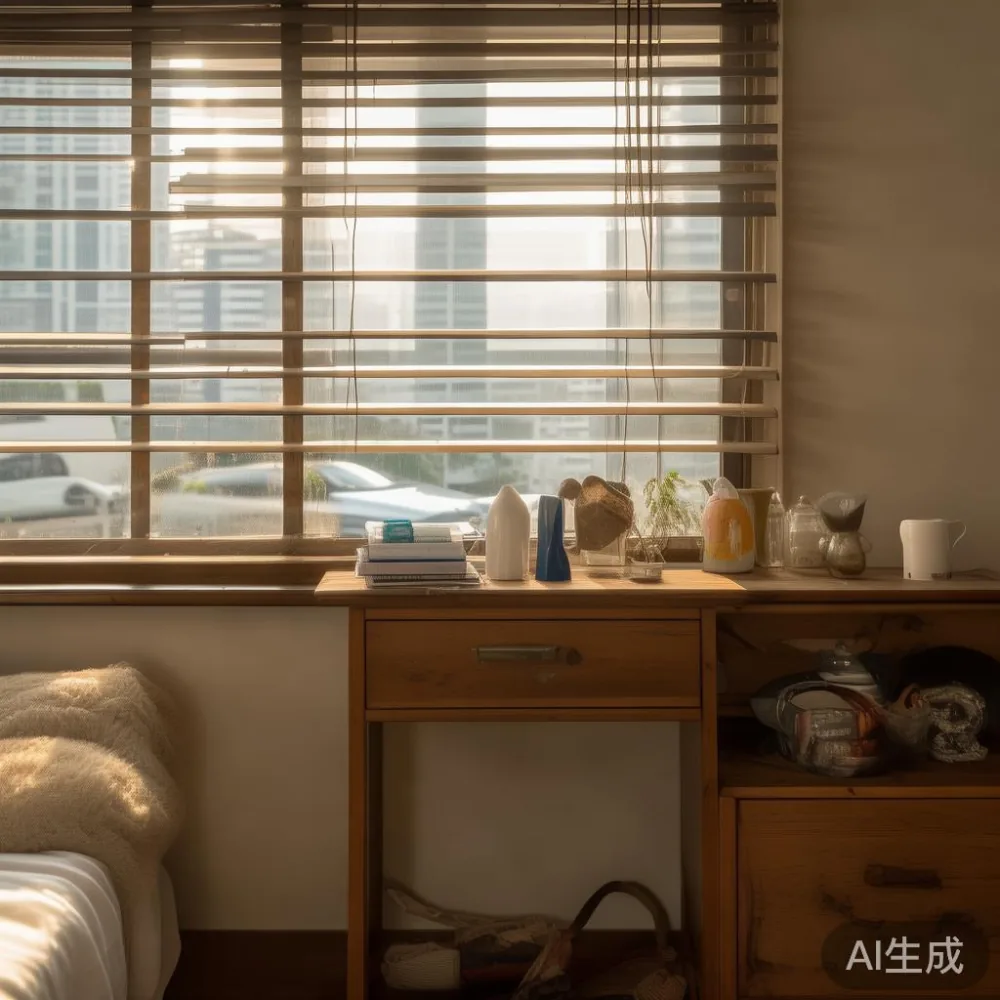
Relative humidity (RH) in our region averages 70 to 85 percent year-round, with nightly peaks during the December to February monsoon and again in June. Solid wood is hygroscopic, meaning it absorbs and releases moisture until it reaches equilibrium with the surrounding air. A bedside table is one of the most exposed pieces in the bedroom because it sits close to an open window or next to a wall that hides a bathroom pipe. Understanding how to manage this is the difference between a piece that lasts ten years and one that warps in ten months.
What humidity does to a bedside table over 12 months
Wood moves across the grain, not along it. A kiln-dried oak or walnut bedside table built at 8 to 10 percent moisture content (MC) will swell when exposed to our 78 percent average. Across a 45 cm wide top, that can translate to 3 to 5 mm of expansion. When the panel is restrained by a fixed back or a tight frame, it pushes outward and creates that "cupping" my friend saw. Drawer faces, typically 38 to 42 cm tall, are particularly vulnerable because they have a large flat surface and thin rails.
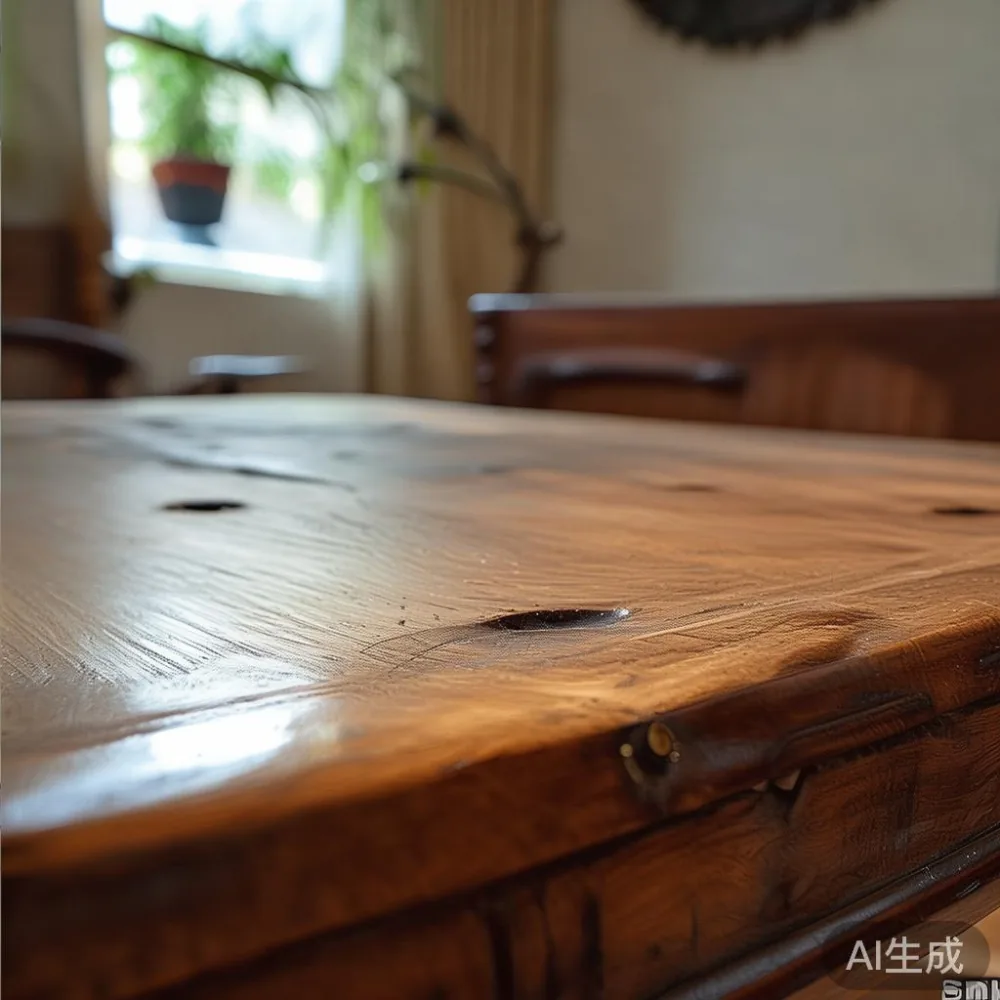
Three problems show up repeatedly in Singapore condos:
1. Cupped tops. A 5 mm cup on a 50 cm bedside table surface is common after one monsoon season if the room is not air-conditioned for more than four hours a day.
2. Sticking drawers. Drawer boxes swell 2 to 3 mm on the width. What felt smooth in the showroom becomes a daily fight.
3. Hairline cracks at joints. When RH drops below 55 percent, often triggered by running the air-con at 22 degrees Celsius overnight, wood shrinks and the glue lines or mortise-and-tenon joints open by 0.5 to 1 mm.
The pieces most at risk are those made from a single wide board, anything thicker than 2.5 cm, and furniture with breadboard ends. A well-constructed bedside table uses narrower staves (under 12 cm) glued together in alternating grain directions, which distributes the movement and keeps the top flat.
How do I choose a return policy for a entryway?
Pick a seller who gives you at least 14 calendar days to inspect the piece in your actual home, allows you to report warping, cracks, or finish defects after unboxing, and covers collection from upper floors (above the 7th, where most Punggol and Bedok BTOs sit) without charging an additional SGD 30 to SGD 60 lift-and-stair fee. A strong policy also requires the seller to repair or replace, not just refund, so you are not left with an empty corner after a 30-day wait for a refund that excludes delivery. MIDHILL, for example, ships from Foshan with a 14-day return window and free collection on returns, which removes the usual headache of disposing of a 25 to 30 kg solid wood piece when a lift booking fails.
Bedside table, nightstand, marble table: which top material suits a HDB bedroom?
Bedside table and nightstand are the same product. The terms are used interchangeably on Singapore retail sites, with "bedside table" being the more common search term on Carousell and Shopee. Marble table versions are popular for their cool, hotel-room feel, but they bring specific trade-offs in our climate.
Solid wood (oak, walnut, ash): Warm to the touch, ages with a patina, tolerates daily RH swings of 10 to 15 percent if acclimatised for 48 to 72 hours before use. Expected service life: 10 to 20 years with refinishing.
Marble top on solid wood base: The marble is stable; the wood base still moves. You also need to seal the stone every 12 to 18 months because bathroom humidity (after a hot shower) migrates into the bedroom and settles on cool stone as condensation. A 50 cm marble table typically weighs 18 to 22 kg, which is fine for a HDB floor loading of 1.5 kN/m squared but adds two-man delivery complexity.
Veneered MDF: The cheapest option at SGD 180 to SGD 280, but the moment the veneer lifts or the MDF swells from a leak in the upstairs unit, it cannot be repaired. This is where the warranty difference matters most.
For Singapore bedrooms, I lean toward a solid wood bedside table with a 2 to 3 cm thick top, narrow staves, and a finished underside. If you want the marble look, choose a version with the stone set into a wooden frame rather than cantilevered, so movement is restrained.
Acclimatising your new bedside table in a Tampines or Bedok flat
When your piece arrives, do not place it in its final spot immediately. Keep it in the original wrapping (but open the top flaps) in the room where it will live for 48 to 72 hours. This lets the wood adjust from whatever MC it left the factory (often 9 to 11 percent) to your bedroom's typical 65 to 75 percent RH. Skipping this step is the single most common cause of cracking in the first month.
Position the bedside table 15 to 20 cm away from the air-con's direct airflow. Direct cold air drops surface RH on the wood below 45 percent, which causes the surface fibres to shrink faster than the core, producing checks (small splits along the grain). Keep it 30 cm from an external wall if possible; HDB external walls can run 2 to 3 degrees cooler at night, attracting condensation that the wood then absorbs.
Wipe the surface weekly with a damp (not wet) microfibre cloth and a drop of pH-neutral wood soap. Avoid silicone polishes; they build up and prevent refinishing later. If you have a dehumidifier set to 55 percent RH, the wood will stay in its comfort zone and you will avoid 90 percent of seasonal movement.
What about the rest of the bedroom set?
Your bedside table rarely exists alone. In a typical Singapore master bedroom, it sits next to a 1.8 m bed frame, opposite a 180 to 220 cm wardrobe, and across from a small dresser. The same humidity rules apply, but the risks scale with surface area. A 2 m wardrobe door is far more likely to rub in July than a 50 cm bedside table drawer, simply because there is more wood moving.
If you are buying a complete set, ask the factory to build everything from the same batch of lumber, kiln-dried together to the same target MC (usually 8 to 10 percent). Mismatched batches will move at different rates and create uneven gaps within three to six months. MIDHILL builds solid wood sofa frames, bed frames, dining tables, wardrobes, and nightstands from the same FSC-traceable oak and walnut stock, which keeps movement consistent across the set. That consistency is something I look for whenever I am asked to spec a bedroom for a local client.
For the dining table, choose a version with breadboard ends that are attached with elongated screw slots, not glue. The slots let the top expand and contract without splitting. For wardrobes, ask for a 2 to 3 mm gap on each side of every door at the time of delivery; it looks like a defect but is actually engineered clearance.
How a French light luxury aesthetic handles tropical humidity
French light luxury leans on pale oak, soft curves, and brushed brass. The aesthetic works well in Singapore because the pale timber reflects light and makes a 12 sqm HDB bedroom feel larger. The shapes, however, often include fluted panels and turned legs, which are thinner and move more than a slab front. To keep the look without the warping, specify a bedside table with fluting that is cut into a stable substrate (plywood or a multi-stave oak panel) rather than carved into a single solid piece.
American light luxury goes heavier: walnut, blackened steel, and leather pulls. Walnut holds up better in our climate than oak because its movement coefficient is roughly 15 percent lower. If you prefer the dark look, walnut is the safer choice for a bedside table that will see daily use for ten or more years.
Post-modern light luxury is the easiest to maintain here: lacquered finishes in cream, soft green, or muted terracotta, with cleaner lines and less exposed end-grain. The thicker the lacquer build (measured in microns, typically 80 to 120 for furniture-grade), the more it slows moisture exchange. A post-modern light luxury bedside table from a maker like MIDHILL often has a 6-layer matte finish that buys you an extra 10 to 15 minutes of wipe-up time if you spill water, which in a humid room is the difference between a stain and nothing.
When to call the maker and what the warranty should cover
A 10-year structural warranty should cover joint failure, severe warping (more than 4 mm cup across a 50 cm span), and cracks longer than 5 cm. It should not cover surface scratches, water rings from cups placed without coasters, or movement under 2 mm, which is considered normal for solid wood. Ask the seller in writing whether they refinish the piece once during the warranty period at no charge; this single question separates serious workshops from mass assemblers.
For Singapore delivery, expect the following timeline: 7 to 12 days from Foshan to your door by sea freight, plus 2 to 3 days for customs clearance and last-mile delivery. Two-man delivery to a 4-room HDB above the 10th floor should be quoted as a single line item with no hidden per-floor charge. Lift access in most Punggol and Bedok BTOs is rated for 1,000 kg, so a 28 kg bedside table plus the delivery team is well within tolerance.
One last piece of advice from my friend in Tampines: after he called the supplier, they sent a technician within five working days, planed 1.5 mm off the cupped top, and refinished the surface at no cost. The piece has been flat for nine months. That kind of after-sales response is what the lifetime refinishing promise at MIDHILL is built around, and it is what you should expect when you spend SGD 450 to SGD 1,200 on a bedside table that has to survive Singapore air.