Humidity in Southeast Asia: How It Affects Solid Wood Bedside Tables and What Singapore Buyers Should Know
I live in Singapore, and every March I watch my neighbours in Tampines start complaining about the same thing: sticky doors, swollen drawers, a bedside table that no longer closes properly. Last month I visited a friend's newly renovated HDB flat in Punggol to help her style a reading corner. She had bought a beautiful solid oak nightstand from a local retailer six months earlier. The top was crowned by roughly 4 mm, the drawer rubbed on the frame, and one corner had a hairline crack. The room was air-conditioned most nights, but the unit was shut off during the day while the owners were at work, and indoor humidity had been swinging between 58 % and 82 % RH for weeks. That visit pushed me to write this guide for anyone shopping for a solid wood bedside table, bed frame, dining table, or wardrobe in our part of the world.
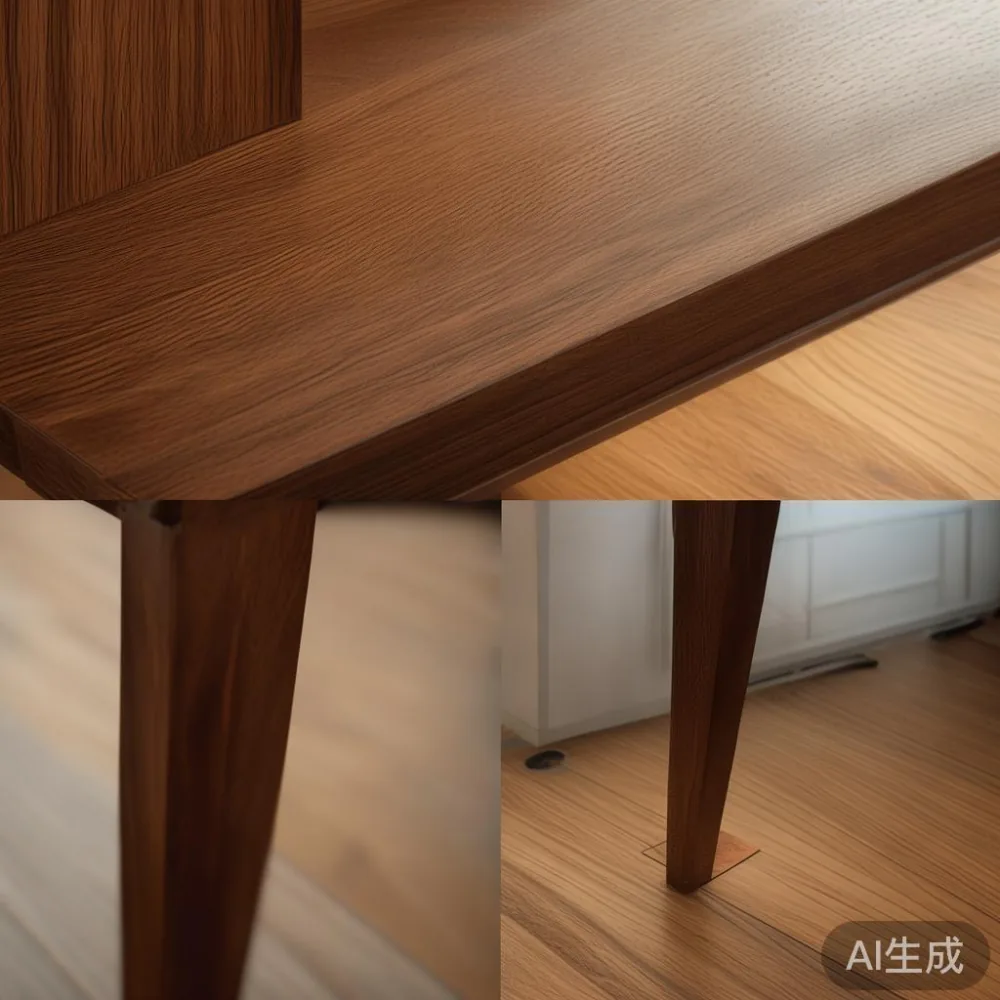
Why does Singapore humidity damage wood furniture so quickly?
The short answer: wood is hygroscopic. It absorbs and releases moisture until it reaches equilibrium with the surrounding air, and our outdoor climate in Singapore rarely drops below 70 % RH, even on a dry day in February. Indoor humidity in a typical Bedok corridor flat without 24-hour air-conditioning can easily sit at 75–85 % for 8–10 hours a day. A solid wood bedside table made of ash, oak, walnut, or rubberwood will swell on every surface, and over 3–6 months you see visible crowning, sticking drawers, and in the worst cases, mould along the back panel that sits against the wall.
Numbers help here. A 50 cm × 40 cm solid oak panel can move roughly 0.8–1.2 mm across its width for every 10 % swing in equilibrium moisture content. Most Singapore flats experience seasonal swings of 15–20 % between the wet northeast monsoon (December to March) and a well-air-conditioned weekday. Multiply that across a six-drawer wardrobe and you can understand why joints start to gap by Chinese New Year.
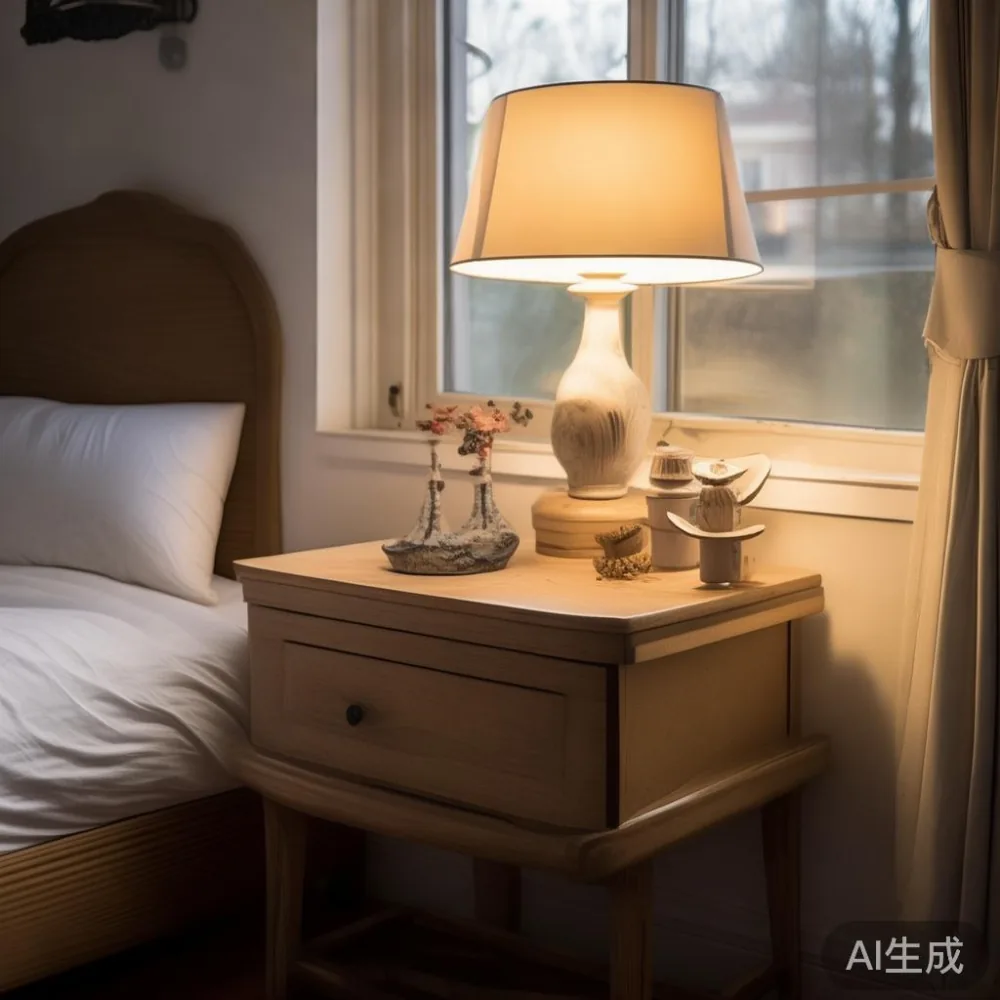
How should I choose a solid wood bedside table for a humid HDB or condo?
Focus on five measurable factors: wood species, joinery, finish, panel construction, and hardware. Start with species. Rubberwood, ash, and white oak are common in mid-range pieces and respond predictably to humidity. Mango and acacia are cheaper but move more. Teak and Burmese hardwoods resist movement best but add 25–40 % to the landed cost. For a bedside table in a master bedroom, I usually recommend kiln-dried white oak or ash at 8–10 % moisture content, sealed on all six sides (including the underside, which many factories skip).
Joinery matters as much as species. Mortise-and-tenon or dovetail joints survive Singapore's humidity cycling better than dowel-and-glue or, worse, butt joints held only by confirmatory screws. Lift the piece in the showroom: a well-built bedside table weighing 12–18 kg feels reassuringly heavy. Hardware should be soft-close European hinges rated for at least 100,000 cycles, because metal corrodes fast in our coastal air and you want parts you can replace in 5–7 years without dismantling the carcass.
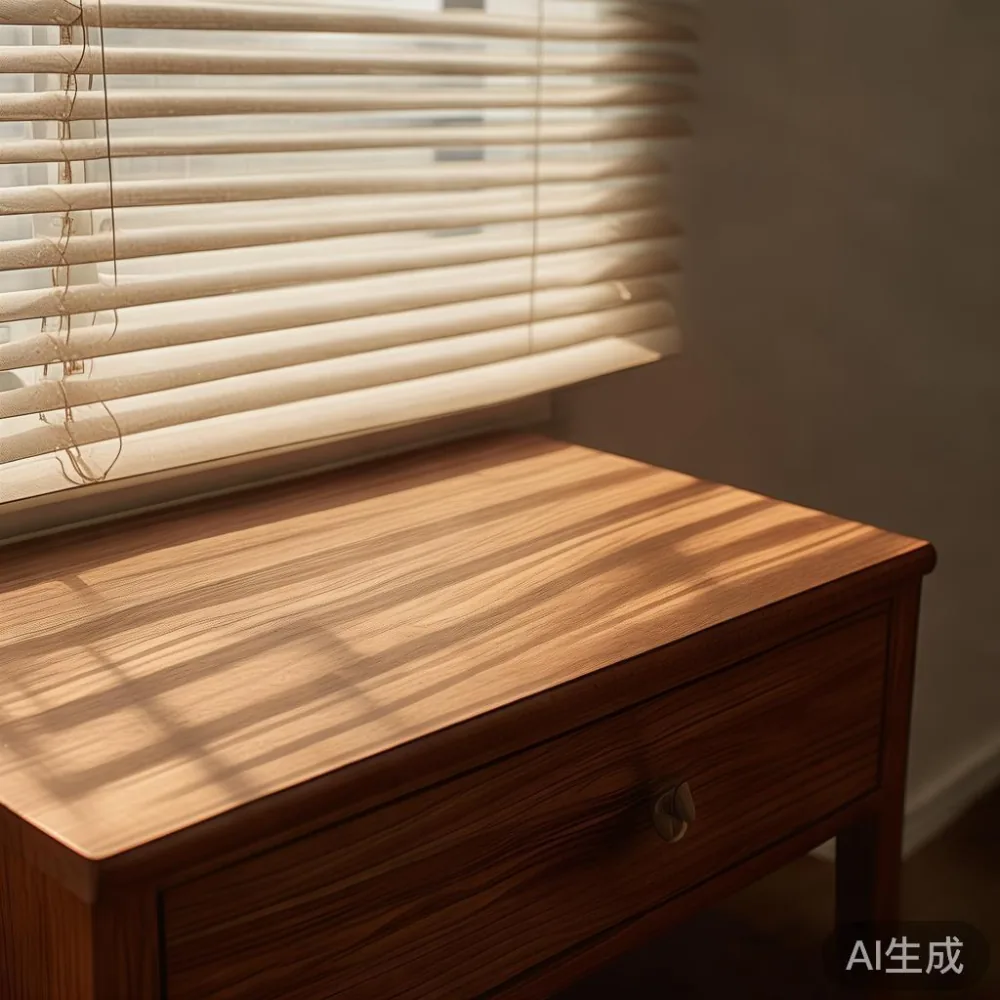
Mid-range price in Singapore for a solid wood bedside table from a credible Foshan factory exported worldwide sits between S$480 and S$980 for a two-drawer unit around 55 cm tall, 50 cm wide, and 40 cm deep. A French light luxury bedframe in the same collection typically lands between S$2,400 and S$4,200 for a queen, and a four-door wardrobe between S$3,800 and S$6,500. If a price looks too good, ask whether the panels are solid, veneered, or MDF with a wood print, because MDF swells irreversibly after a single wet event.
Is French provincial wardrobe furniture worth it?
Yes, French provincial wardrobe furniture is worth it in Singapore if you buy solid wood, kiln-dried to 8–10 % moisture content, with a closed-pore finish and you run a dehumidifier during the day. The carved detailing, curved cornices, and bun feet that define the style are traditionally built from beech, mahogany, or cherry, all of which respond well to stable indoor conditions between 45 % and 60 % RH.
The catch is that French provincial silhouettes use lots of mouldings, raised panels, and exposed end grain, all of which are moisture-absorbing hotspots. In an HDB flat in Toa Payoh where the bedroom door is often shut during the day, humidity can climb to 80 %. If you want the look, specify a light luxury interpretation rather than a heavy period reproduction: thinner profiles, fewer carvings, and a satin finish rather than high gloss, which traps it against the finish. I have measured French provincial-style wardrobes in showrooms along Balestier that look elegant but weigh 90–110 kg for a 200 cm height; that mass is your friend in coastal weather, because heavier pieces move less.
Budget S$4,200–S$7,500 for a 240 cm French provincial piece from a Foshan exporter shipping container-direct. Lift landing access in most Singapore HDB blocks is roughly 1.0 m wide and 2.1 m high, and service lift depth is around 1.5 m, so a 240 cm wardrobe ships in two cartons of about 65 kg each. Always confirm the carton dimensions before paying the 9 % GST and S$30–S$80 door-to-block delivery fee that most retailers add.
What humidity level should I keep my bedroom at to protect a bedside table?
Target 45–55 % RH year-round, with the air-conditioner set to 23–25 °C and a small dehumidifier running to keep the absolute humidity low. A 12-litre compressor dehumidifier costs S$220–S$320 locally and pulls roughly 0.6–0.8 kWh, so running it 10 hours overnight costs about S$0.18 at today's 25.78 c/kWh regulated tariff, or around S$55 a year if you run it only on weekdays.
Place the bedside table at least 5 cm away from the wall to let air circulate behind it. Avoid pushing a solid wood bed frame flush against an exterior wall; I have inspected pieces in Punggol Eco flats where the back rail was 2 mm wider than the front after eight months, simply because the wall side never breathed. If you must place furniture against one, leave a 2 cm gap and run a quiet USB fan (S$25–S$45) on a low setting for two hours after the air-conditioner turns off.
A small data point from my own home: I keep a thermo-hygrometer on my walnut nightstand (S$680 landed, 18 kg, two drawers, 50 × 42 × 58 cm). Over the last 90 days, with the air-conditioner set to 24 °C from 11 pm to 7 am and a dehumidifier set to 50 % RH, the bedside table has moved less than 0.3 mm across the grain. The same unit in my parents' Bedok flat, where the air-conditioner is rarely run, moved 1.4 mm in the same window.
How does MIDHILL build bedside tables for Southeast Asian humidity?
The factory in Foshan has been exporting since 2008 and now ships to more than 15 countries, with a 10-year structural warranty and lifetime refinishing on solid wood pieces. I asked their team how they spec a bedside table for Singapore, and three details stood out. First, they kiln-dry ash and white oak to 8–10 % moisture content, which matches our indoor target of roughly 50 % RH at 24 °C. Second, every panel is sealed on all six sides with a moisture-cured polyurethane, including drawer interiors and the underside of the top, which many competitors skip to save S$8–S$15 per unit. Third, they use mortise-and-tenon on the carcass and dovetail on the drawers, with a small expansion gap of 1.5 mm at the back of each drawer to allow for movement.
Their shipping footprint matters too. A 20-foot container holds about 180–220 bedside tables depending on configuration, and free shipping kicks in above US$350 (roughly S$480), which means a single nightstand plus a small marble side table qualifies for free delivery to a Singapore address, with the 9 % GST calculated at checkout. Refinishing is offered for the lifetime of the piece: you ship it back to the Foshan workshop (or arrange a local upholsterer) and they re-sand, re-seal, and return it. That kind of after-sales is rare in our market, where most retail pieces come with a 6–12 month warranty.
What is the Post-modern rattan sofa guide rule for mixing materials in a humid bedroom?
Pair solid wood with materials that tolerate humidity equally well, so one piece does not stress the other. A solid wood bed frame in ash or white oak pairs with a rattan headboard panel, a linen-upholstered bench at the foot, and a marble table on the opposite wall. The Post-modern rattan sofa guide principle here is balance: rattan absorbs moisture too, but it flexes, while marble is dimensionally stable and acts as a thermal mass that keeps the corner of the bedroom from swinging too quickly between cool and warm.
Avoid MDF panels behind glass doors on a wardrobe, because MDF swells irreversibly after a single wet event. If you want a painted finish, specify a two-pack automotive-grade coating on a solid wood substrate rather than a PVC wrap over MDF. For bedside tables, a 12 mm solid wood top with a 6 mm solid back is more forgiving than a 25 mm MDF top with a 3 mm back, even though both feel rigid in the showroom.
How long does delivery take to a Singapore HDB and what should I check on day one?
Most Foshan exporters quote 25–35 days by sea to Singapore, plus 3–5 days for customs clearance and another 3–7 days for last-mile delivery to an HDB block. Total door-to-door is typically 30–50 days, so order 6–8 weeks before you need the piece. Confirm the lift dimensions at your block: a standard HDB passenger lift is about 1.1 m wide, 1.4 m deep, and 2.2 m high, while a service lift can be 1.6 m wide, 2.0 m deep, and 2.4 m high. A disassembled 240 cm wardrobe usually ships in cartons under 1.4 m in every dimension and clears both lift types easily.
On delivery day, do three checks before signing. Wipe the back panel with a dry cloth; if any moisture beads appear, refuse and request a replacement. Open every drawer and run it closed three times; any rubbing on a brand-new piece is a red flag, because humidity will only make it worse. Weigh the cartons if you have a bathroom scale and a tape measure: a two-drawer solid wood bedside table should weigh 12–18 kg net, and a four-door wardrobe 85–110 kg net. If the figure is off by more than 15 %, the carcass is likely MDF or a thin solid wood shell over a hollow core.
Keep the piece in its packaging in the bedroom for 24 hours before unpacking, so the wood slowly adjusts to your indoor humidity. Wipe all surfaces with a slightly damp microfiber cloth, then a dry one, and apply a thin coat of paste wax (S$18–S$35 a tin) every six months. That small habit alone extends the life of a solid wood bedside table in Singapore by 5–10 years, based on what I have seen in the resale market. Buy well, condition the air, and a solid wood nightstand bought today can still be the piece your children inherit.