Humidity and Wood: Why Your Bedside Table and Other Solid Wood Pieces Need a Singapore-Specific Care Plan
If you have ever run your hand across a bedside table in a Tampines HDB flat and felt a faint tackiness where the wood should be cool and dry, you have met the climate we are talking about. Singapore sits on the equator with year-round relative humidity that drifts between 70 and 85 percent, and indoor humidity in air-conditioned rooms still averages 55 to 65 percent once the compressor cycles off. Solid wood furniture from Foshan factory floors arrives in the Lion City by container, and a 40-foot container travels roughly nine to fourteen days by sea before it reaches a Tuas warehouse. The wood has spent that time acclimatising to a closed steel box, and the real acclimatisation to your Bedok or Punggol home only begins the day the lift doors open. I tested this last month when I visited a couple in a Punggol Waterway Terrace four-room flat. Their dining table had been in the unit for six weeks, and the drawer faces on the sideboard next to it had bowed 2 mm outward on one side. The cause was not the manufacturer. The cause was the gap between a Foshan kiln and a 28 degree, 78 percent humidity HDB afternoon.
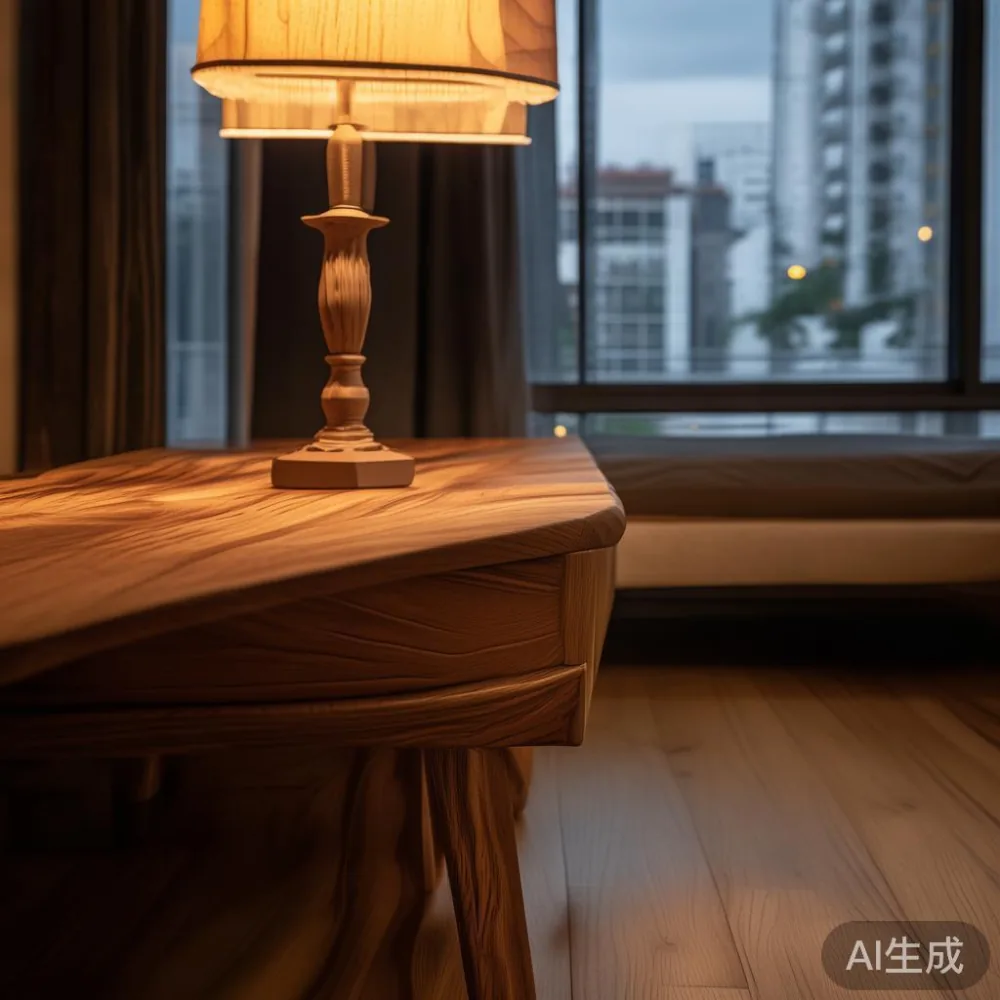
What Humidity Actually Does to Solid Wood at the Fibre Level
Wood is hygroscopic. Every board is a stack of long cellulose tubes that swell sideways as they absorb moisture and shrink as they release it. A solid oak bedside table that left the kiln at 8 percent moisture content can climb to 11 or 12 percent within two months in a non-air-conditioned corridor, and that 3 to 4 point swing is enough to move a 45 cm wide panel by 2 to 3 mm. The same physics explains why a bed frame made of the same batch of timber can pull away from a wall by a finger-width, and why the drawer slides on a wardrobe feel stiff in March and slack in October. It is not a defect. It is wood behaving like the natural material it is, which is also why a post-modern light luxury piece finished with matte open-pore lacquer responds slightly differently to humidity than a high-gloss European light luxury sideboard sealed under six coats of conversion varnish. Both are solid wood, but the surface treatment changes how fast the panel exchanges moisture with the room.
MIDHILL ships out of Foshan with moisture content calibrated to roughly 10 to 12 percent, which matches the average indoor condition of a Singapore bedroom running the air-con at 24 degrees. That calibration is why a brand born in 2008, exporting to 15 plus countries with a 10-year structural warranty, can put a number like that in writing. It is also why my colleague in their Singapore showroom keeps a pinless moisture meter next to the demo nightstand and routinely shows customers readings between 9.5 and 11 percent on pieces that have been in the display room for over a year.
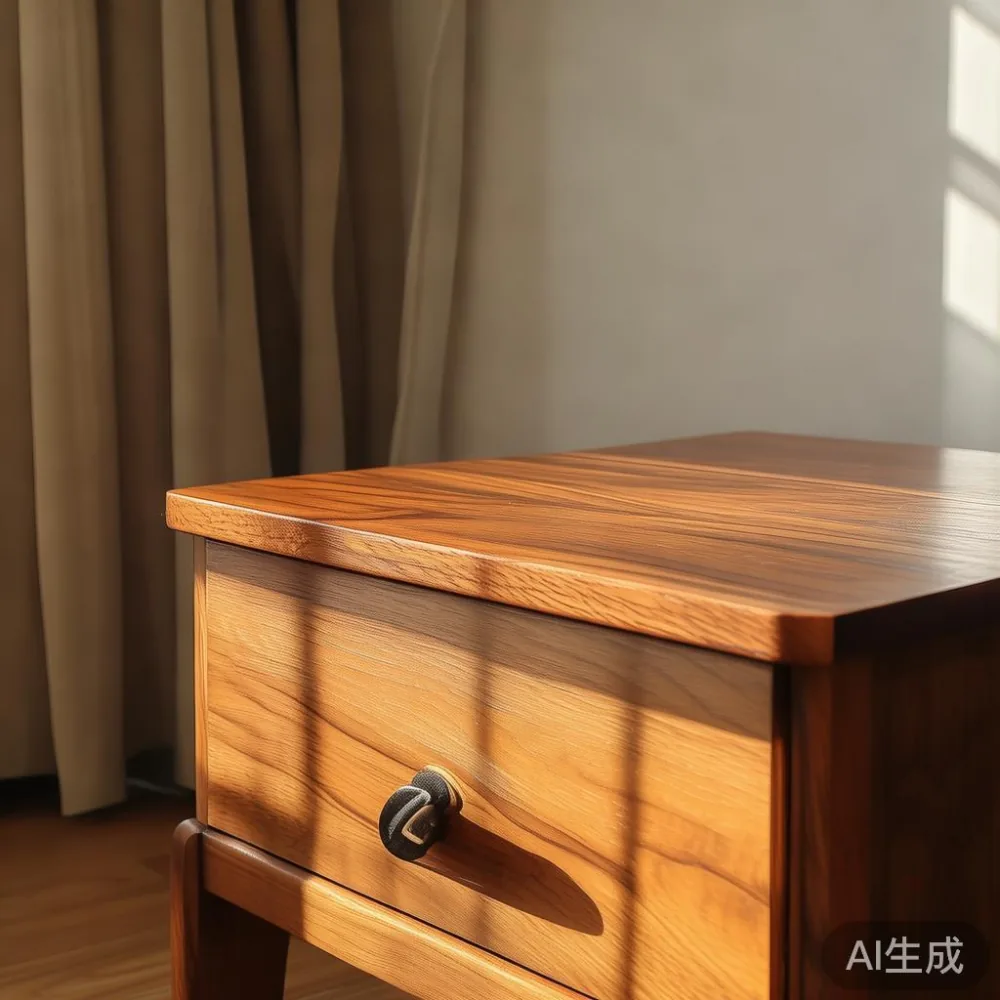
Will My Bedside Table Crack, Warp, or Grow Mould in a HDB or Condo?
This is the question I hear most often from owners of resale HDB flats in Bedok and from new EC buyers in Punggol. The short answer is: cracking is avoidable, warp is manageable, and mould is a maintenance question, not a fate. Cracking happens when wood drops too fast from a high moisture content into a dry air-conditioned environment, so the outer fibres shrink faster than the inner core and split along the grain. Set your bedroom air-con to 22 to 24 degrees with a fan running, and a small dehumidifier set to 55 percent, and your solid wood bedside table will sit in a comfortable band. Warp is usually a one-time settling event in the first six to twelve weeks. Place a 1.5 kg weight on a slightly cupped top overnight; if the cup is less than 3 mm across a 50 cm span, the panel will usually settle on its own as humidity equalises. Mould needs three things: spores, a food source, and sustained humidity above 70 percent on the surface for more than 48 hours. A bedside table wiped down once a week with a dry microfibre cloth and kept 15 cm away from an exterior wall almost never grows surface mould, even in a ground-floor Tampines unit that catches the afternoon rain.
If you also own a solid wood sofa, a bed frame, or a marble table in the same room, the same rules apply. The marble and the wood will not fight each other; they just need a stable room. Lift access in most HDB blocks is 1.4 m wide by 2.1 m tall, and the corridors run 1.2 m wide, so a disassembled bedside table in a flat-pack carton of 55 cm by 50 cm by 35 cm will fit comfortably without forcing the moving day team to remove door arches.
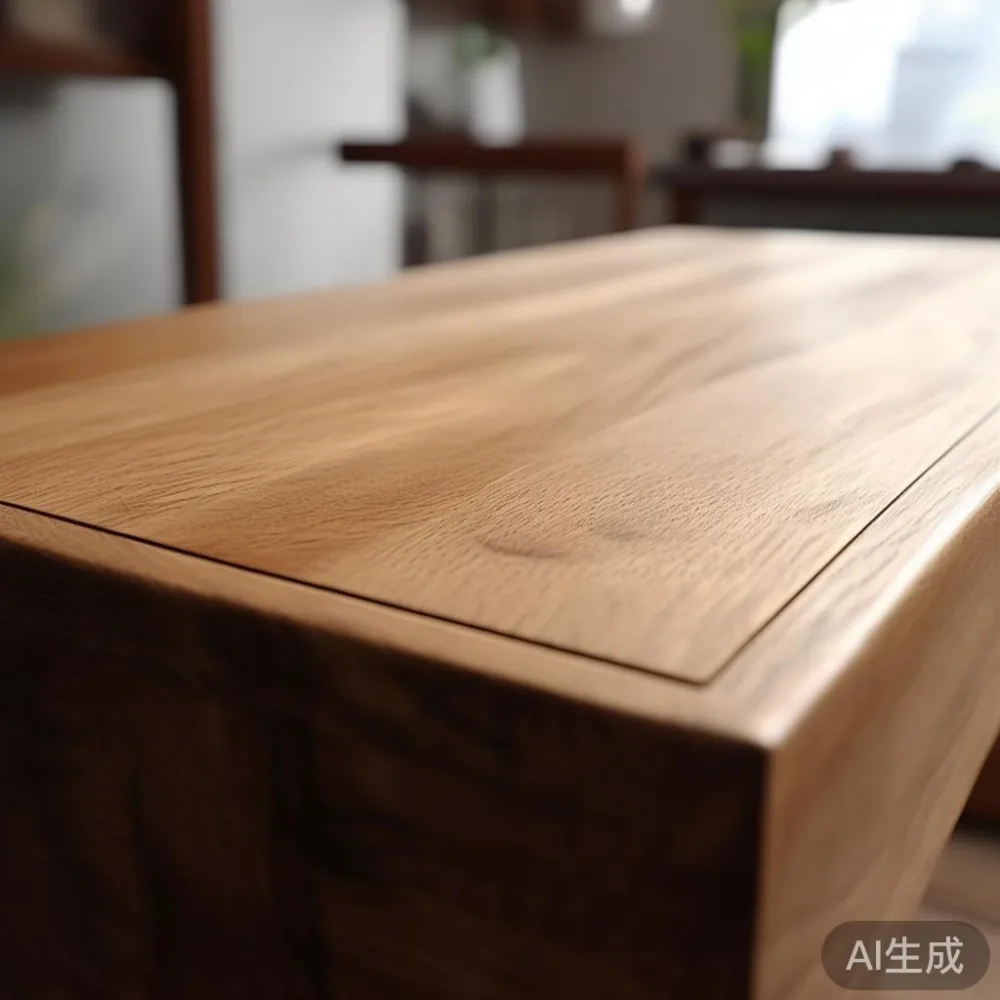
Why a Marble Table, a Wardrobe, and a Dining Table React Differently
Stone and wood behave like opposite materials in a humid room. Marble does not breathe. A 120 cm round marble table top will sit in your flat for ten years and the dimensions will not move by more than 0.1 mm regardless of humidity. What marble does absorb is humidity-driven staining from acidic spills, and it shows condensation rings from cold drinks. A solid wood dining table, on the other hand, will quietly track every wet and dry season through the year. Owners sometimes panic when a 180 cm by 90 cm oak dining table shows a 1 mm gap between leaf extensions in February, then closes up again by May. That gap is the wood letting you know it is alive, and it is the strongest argument for buying solid wood over veneer in the first place. A wardrobe, because it has tall vertical panels and long horizontal shelves, is the piece most exposed to racking forces when one wall of a room is humid and the other is dry. The fix is simple: leave 25 to 30 mm of breathing space behind the wardrobe, and never push it flush against an exterior wall that sweats during a thunderstorm.
For buyers who like a quieter, Japanese-meets-Scandi look and are weighing a Japanese bed vs Modern bed for the master bedroom, the same rule of thumb applies: both will breathe, but a low-platform Japanese bed on a 15 cm slatted base lets air move under the mattress and under the frame, while a Modern bed on a solid plinth needs a dehumidifier in the room to keep the under-bed cavity dry. If you are planning a living room refresh and searching for the best Japandi sofa for 2026, look for frames that include kiln-dried ash or oak at 8 to 10 percent moisture content and seat decks that are removable for air circulation.
Delivery, Acclimatising, and the First 30 Days in Your Singapore Home
Order placement to doorstep in mainland Singapore typically runs 25 to 40 days for Foshan-made pieces, with 14 to 21 days of that being sea transit and the rest being customs, QC, and last-mile delivery. Free shipping over US 350 dollars (around SGD 480 at the current GST-inclusive rate of 9 percent) means a bedside table order usually clears that threshold on its own, or pairs with a small accessory. The carton arrives with internal foam and a 0.5 kg silica desiccant pack. Leave the bedside table in its carton for the first 48 to 72 hours in the room where it will live, and crack the carton flaps open on day three. Wipe the panels with a dry cloth, then let it breathe for another five to seven days before placing lamps or books on it. This slow acclimatisation is what stops the first cracks.
If you are choosing a heavier piece such as a European light luxury sideboard for the dining room, plan the lift booking in advance. Most sideboards in this style arrive in two cartons totalling 70 to 90 kg, which is well within the 300 kg rated load of a standard HDB lift but heavy enough that a two-person delivery team is worth the SGD 30 to SGD 50 surcharge many logistics firms add for carry-up floors above the fourth. For landed property in the Bukit Timah or Bukit Batok areas, a European light luxury sideboard delivered straight to a private driveway will skip the lift maths entirely.
Day-to-Day Care: What Actually Works in a Tropical Climate
Skip the furniture sprays that promise a glow. A weekly wipe with a barely damp microfibre cloth, followed by a dry pass, is the entire routine most pieces need. Keep the bedside table 30 cm away from any window that gets direct afternoon sun, because UV plus heat plus humidity is the worst combination for any finish. If you run a humidifier in a baby's room next door, close that door before bed so the moisture does not drift into the bedroom and push the relative humidity above 65 percent overnight. For homeowners who want a richer look and are weighing the best Rustic bed for 2026 or the best Post-modern bed for 2026, ask the side before purchase whether the timber is air-dried or kiln-dried, what the moisture content was at packing, and whether the underside of every panel is finished or sealed. Unfinished undersides are common on rustic pieces and they absorb humidity faster than sealed surfaces, which is fine for the bedroom but worth knowing.
A small dehumidifier running four to six hours a day in the bedroom costs roughly SGD 8 to SGD 12 per month on the national tariff and will keep every solid wood piece in the room stable. MIDHILL's lifetime refinishing service, available to original buyers, means a bedside table that picks up a few surface scratches in the first decade can be sanded and re-oiled in the workshop for a fraction of the replacement cost. Owners of a full set including a solid wood sofa, bed frame, dining table, wardrobe, nightstand, and a marble accent piece can keep the refinishing credit applied across pieces over the years rather than a single visit. If you want to read the care guide in full before you buy, the support pages at midhill.co walk through each category with the same humidity numbers I have used here, plus a checklist for the first 30 days in a Singapore home.
Is Light-Luxury Solid Wood Worth the Premium in Singapore?
Light-luxury in furniture, whether French light luxury with curved cabriole legs, American light luxury with cleaner Shaker lines, or post-modern light luxury with mixed metals and stone, is in effect a finish vocabulary applied to the same solid wood core. The premium pays for kiln calibration, multi-coat finishing, dovetailed drawer boxes, and quieter hardware. In a climate like Singapore's, those details matter more than they do in a dry continental interior, because the wood is being tested every single day. A bedside table in this category will typically cost between SGD 600 and SGD 1,400 for a 50 cm two-drawer design, and a six-piece bedroom set runs from SGD 6,500 to SGD 12,000 depending on the timber and the finish count. Compared with replacing a warped MDF piece every five to seven years, the lifetime math favours solid wood. Compared with the joy of running that hand across a cool, stable panel on a humid Tampines afternoon, the math almost does not matter.
If you are also kitting out a dining room and have been searching for the best French provincial furniture as a styling anchor, the same buying logic applies: kiln-dried solid timber, multi-stage lacquer, and a side that will tell you the moisture content at the factory rather than the showroom. A bedside table is the smallest piece in the house, but it is also the one you touch every morning and every night for years, which makes it a sensible place to start if you are new to caring for solid wood in Singapore's humidity.