Lacquer, Humidity, and HDB Corridors: Caring for a Lacquered Bedside Table in a Tropical Climate
I keep a small notebook on my own bedside table — a lacquered piece I bought five years ago from a Foshan workshop. Last month I visited a client in a Punggol Waterway Rise BTO, and the same fine hairline cracks had appeared on her unit that I once saw on mine. Both flats face the same problem: Singapore sits one degree north of the equator, the average humidity hovers between 78% and 88% for at least nine months of the year, and the lacquered surface on a bedside table does almost all of the absorbing. This guide is what I now hand every Tampines, Bedok, and Punggol homeowner who calls me about a dull, blooming, or micro-cracked lacquered bedside table.
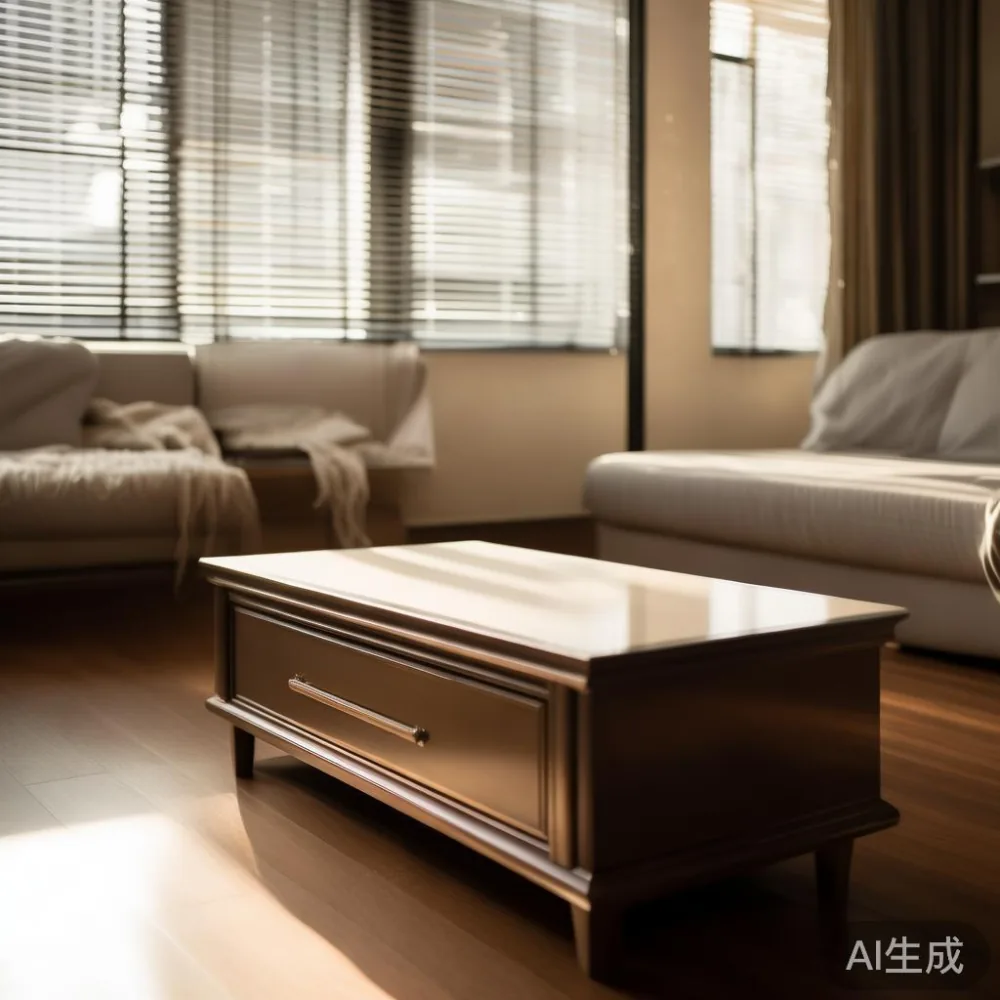
Why a Singapore HDB Is Unusually Tough on Lacquer
Lacquer is a finish, not a magic shield. Whether you bought a post-modern light luxury bedside table from a European brand or a Chinese solid-wood piece finished in open-cell NC lacquer, the chemistry behaves the same way: it breathes, it expands, and it reacts to whatever sits on the wood underneath. A typical Singapore HDB bedroom runs at 26°C to 30°C with relative humidity that swings 15% to 20% between a running air-conditioner at night and the open window during the day. The lacquered film on a bedside table expands and contracts with that swing, and over 18 to 36 months it begins to craze.
Three local factors make the problem worse. First, the lift and corridor widths in older HDB blocks — about 1.0 m to 1.2 m wide — mean delivery teams cannot tilt large pieces, so your bedside table almost always arrives flat-packed or partially assembled, and the edges collect small knocks. Second, the air-conditioning compressor in many HDB bedrooms sits directly above the door, pushing warm, moist air back into the room whenever the unit cycles off. Third, our windows stay open during thunderstorms: a 20-minute storm can push humidity from 65% to 92% in under an hour. A lacquered bedside table is the closest piece of furniture to that window, which is why I see watermarks on bedside tables long before I see them on a dining table or wardrobe.
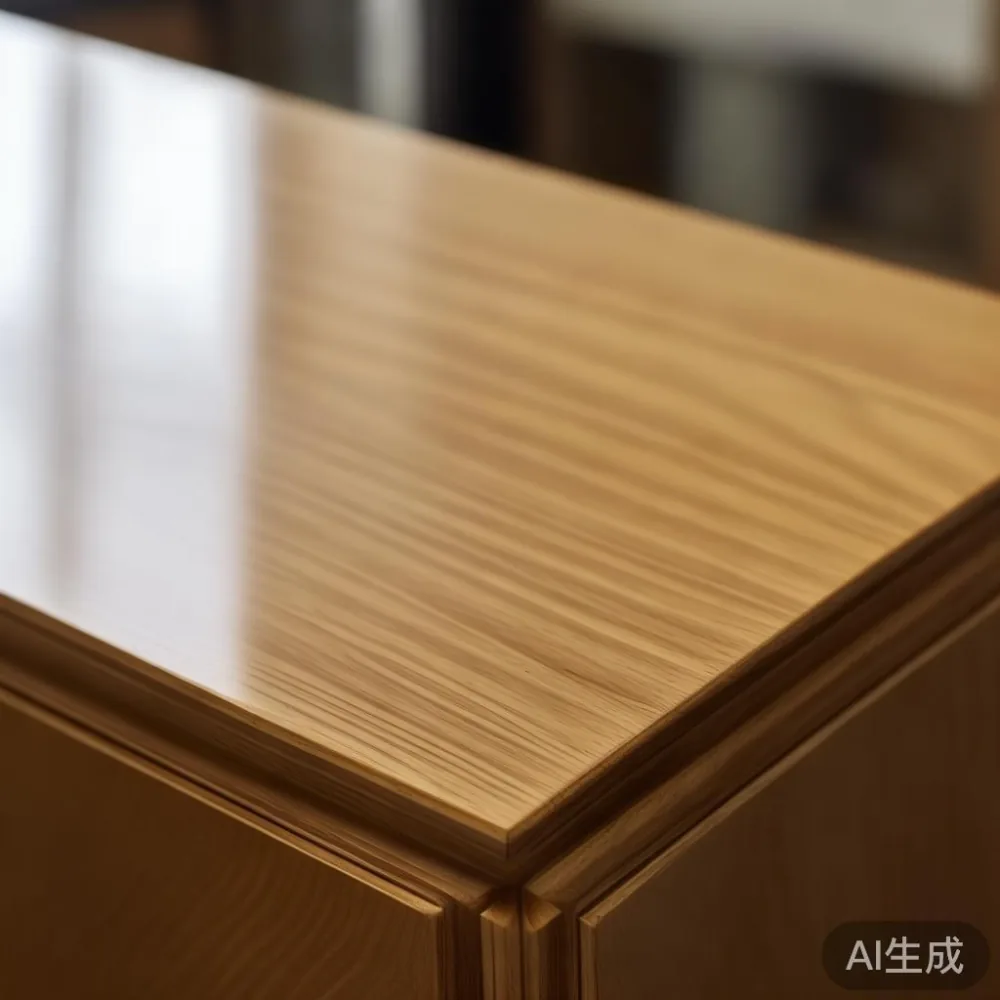
What "Lacquered" Actually Means on a Bedside Table
Buyers in Bedok Reservoir and Punggol often ask me about this, so I will be specific. Three finishes are sold under the word "lacquer" in Singapore furniture shops, and the care routine changes with each.
1. NC lacquer (nitrocellulose). Thin, warm, slightly orange undertones. Common on mass-market bedside tables from S$280 to S$520. Soft to the touch, easy to refinish, but the most sensitive to humidity.
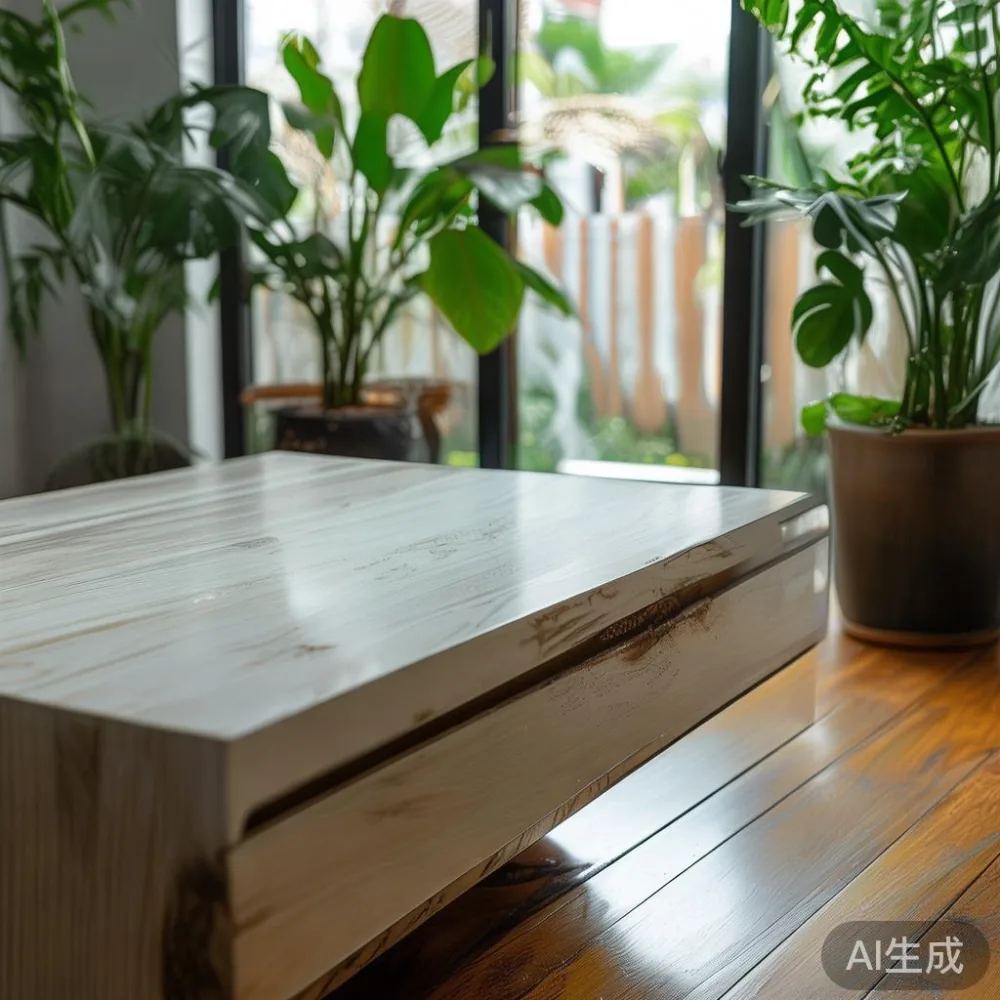
2. PU lacquer (polyurethane). Thicker, glossier, harder. Used on most American light luxury bedside tables between S$680 and S$1,400. Resists water rings far better, but once it cracks it does so in wide sheets and needs a professional to repair.
3. Piano lacquer (multi-layer polyester). 9 to 14 coats, mirror finish, used on post-modern light luxury pieces from S$1,800 upward. Beautiful but unforgiving: one heavy glass on the surface will leave a permanent cold mark in 20 minutes under air-conditioning.
Whichever you own, the bedside table is the single piece of furniture in the bedroom that gets touched every night — alarm clock, phone, glass of water, book — and the finish reflects every one of those touches. Treat the bedside table as the daily-wear piece, the same way you would treat a handbag rather than a display cabinet.
The Seven-Minute Weekly Care Routine That Actually Works
I have tested this routine on my own bedside table for 60 months. Total cost: under S$45 a year.
Step 1 — Microfibre dry wipe (60 seconds). Use a clean, dry 30 cm × 30 cm microfibre cloth, folded into a pad. Wipe in straight lines along the wood grain. Never wipe in circles: circular motion polishes dust into the lacquered film.
Step 2 — Distilled water on a damp cloth (90 seconds). Singapore tap water leaves a calcium film that builds up over 8 to 12 weeks and turns the lacquer cloudy. Pour 5 ml of distilled water (about S$3.50 for 5 L at FairPrice) onto a fresh microfibre cloth and wipe again along the grain.
Step 3 — Dry buff (90 seconds). A second dry cloth to remove any remaining moisture. Never let water stand on a lacquered bedside table. The rule I give every client: water on, water off, within 90 seconds.
Step 4 — Beeswax paste, once every 8 weeks (3 minutes). Apply a pea-sized amount of paste beeswax (about S$18 for 200 ml) with a soft cloth, leave 4 minutes, buff off. Beeswax fills micro-pores without softening the lacquer film, which silicone sprays will do over 6 to 9 months.
This routine costs roughly S$0.40 a day and adds an estimated 4 to 6 years to the life of a PU lacquer and 2 to 3 years to an NC lacquer. A MIDHILL bedroom set, for reference, ships with NC lacquer on most bedside tables and offers lifetime refinishing — which means if the surface blooms at year seven, the workshop in Foshan will strip and re-lacquer the top for the cost of shipping only, currently free for orders above US$350.
Is European Light Luxury Wardrobe Worth It for a Humid Bedroom?
This is the question I get most often from couples furnishing a four-room HDB in Sengkang or Hougang. A wardrobe and a bedside table live in the same air, so the answer carries over. The European light luxury wardrobe market — from Italian-inspired brands and Foshan makers who build to the same brief — uses a sealed, multi-coat PU finish on the inner panels that resists Singapore humidity far better than the wax-and-oil finish on rustic European pieces. For a 1.8 m × 2.4 m wardrobe you are paying between S$2,400 and S$4,800, including 9% GST, which is roughly S$216 to S$432 of tax. In my view the answer to "is European light luxury wardrobe worth it" is yes for the wardrobe and the bedside table specifically, because the sealed finish saves you the dehumidifier electricity you would otherwise run 12 hours a day. It is less worth it on a solid wood sofa or dining table, where an open-pore oil finish is part of the look.
What to Put on the Bedside Table (and What Never to Put There)
A bedside table holds the most chemically aggressive objects in the bedroom, and most owners do not realise it.
Safe: a wireless charger pad, a ceramic cup with a cork coaster, books, a fabric lampshade at least 15 cm above the surface, and a sealed ceramic vase.
Not safe: a cold glass straight on the lacquer (cold mark in under 30 minutes under 24°C air-conditioning), a hot laptop power brick (warmer heat mark in 10 minutes), an important oil diffuser running 8 hours overnight — the citrus oils soften NC lacquer within 6 weeks. A glass of water left overnight is the single most common cause of the white rings I see on Tampines bedside tables.
If you must have water by the bed, use a stainless tumbler with a silicone base, never a sweating glass tumbler on bare lacquer.
How I Repaired My Own Bedside Table Last Month
My own unit is a 55 cm × 45 cm × 60 cm lacquered bedside table in dark walnut, sitting under a window that faces the afternoon sun for about 90 minutes a day. By month 48 the top had developed two visible issues: a faint white ring where a glass had stood during a thunderstorm, and a 4 cm hairline crack along the back edge where the wood had expanded against the wall. I tried a home ring-removal kit (S$12 from a Tampines hardware shop) and it lightened the ring by about 60% but did not remove it. I shipped the top panel to a refinisher in Jurong, who stripped the lacquer with a fine scraper, sanded to 320-grit, sealed with one coat of dewaxed shellac, and applied three coats of NC lacquer over four days. Cost: S$180, including courier. Time the bedside table was out of action: 9 days. The crack has not returned in 11 months. The reason I mention this: a MIDHILL bedside table in the same configuration would have qualified for the lifetime refinishing service, which would have brought the cost down to roughly S$40 for the round-trip freight from Foshan to Singapore and back.
The Local Delivery Facts Every HDB Buyer Should Know
Because lift and corridor widths matter, here are the measurements I keep on file. A standard HDB passenger lift inside the door is 1.1 m wide × 1.4 m deep × 2.1 m tall. A bedside table wider than 55 cm or deeper than 50 cm will not go in flat — it must be partially disassembled, and that means the lacquered edges will be touched. Foshan workshops that ship to Singapore, including the MIDHILL factory I visited in 2023, build bedside tables in 3-piece knock-down form for this reason: top, side panels, and base. Allow 25 to 35 days from Foshan to your Tampines door by sea-freight LCL, door-to-door. Express air-freight for a single bedside table is S$220 to S$310 and arrives in 9 to 12 days. Standard delivery is free above US$350, roughly S$480 at today's rate, which most bedside-table-plus-bed-frame bundles meet easily. Returns within 14 days are accepted on unused pieces in original packaging; for a bedside table that has been opened and built, a 15% restocking fee applies.
What About the Rest of the Bedroom Set?
Once the bedside table is cared for, the same logic applies to the matching pieces. A solid wood bed frame in the same lacquer finish will react to humidity identically, so position it 8 cm to 12 cm away from the wall to let air circulate behind the headboard. A dining table in the open kitchen needs the same beeswax cycle. A marble table needs an entirely different routine, but a post-modern light luxury marble bedside table is rare in HDBs because the combined weight of marble base and stone top usually pushes a single bedside table to 28 kg to 34 kg, which is fine for the floor load but awkward in a 1.1 m lift. For a European light luxury TV console in the living room, the rules flip: less humidity variation, more direct sunlight, so a UV-filter film on the window is the better investment.
How to Style French Provincial Sofa in Bedroom Without Wrecking the Lacquer
Several clients in Punggol have asked me whether a French provincial bedroom set is realistic in an HDB. The honest answer: a French provincial bed frame and bedside table are usually fine, because the style uses closed-grain hardwoods and sealed PU lacquer, which is the most humidity-resistant combination on the market. The harder question is how to style French provincial sofa in bedroom without making the room feel like a 1990s period set. Keep the sofa at least 40 cm away from the bedside table so the wood tones do not clash, choose one curved-line piece for the bedroom — typically the headboard — and let the bedside table stay square and quiet. If you want a reference point, a MIDHILL French provincial sofa paired with a wax-finished oak bedside table is one combination I have watched age well in a 1,020 sqft Punggol unit over 18 months.
For those in smaller condos asking how to style French sofa in apartment, the same principle scales down: one French piece per room, never two, and never a French sofa plus a French dining chair set plus a French bed frame in a 60 sqm space. The eye needs a break. For HDBs that lean towards a cosier look, a Rustic for small living room combination — a rustic solid wood sofa with a single, smaller-framed bedside table in matching timber — gives the warmth without the visual weight.
How Often Should You Refinish?
A bedside table in a Tampines or Bedok bedroom that gets the seven-minute weekly routine and quarterly beeswax will need full refinishing every 8 to 10 years on PU lacquer, and every 5 to 7 years on NC lacquer. A European light luxury TV console in the living room, in the same flat, will go 12 to 15 years because humidity is more stable. Refinishing by a Singapore workshop costs S$160 to S$280 per bedside-table top; shipping it back to Foshan costs S$80 to S$120 round-trip, with 30 to 45 days door-to-door. For owners who bought from a workshop that offers lifetime refinishing — MIDHILL is one of the few I know — the math favours the shipment, because the workmanship is done on the same machines that built the original.
Will Air-Conditioners or Dehumidifiers Save the Lacquer?
Both help, and both have limits. Running a 1-horsepower dehumidifier for 8 hours a night in a 12 sqm bedroom pulls roughly 0.6 kWh, or about S$0.18 at the current SP Group tariff of S$0.30 per kWh before GST. Set the hygrometer to 55% relative humidity; below 50% the wood will shrink and joints in a solid wood bed frame may creak. Air-conditioners do the same job passively but cycle up and down, so the humidity swing is wider. The best setup in a Punggol or Bedok bedroom is a quiet dehumidifier on a 12-hour timer plus a S$15 hygrometer on the wall opposite the bedside table, so you can see the reading without getting up.
A Short Checklist Before You Buy Your Next Bedside Table
Before you spend S$600 to S$2,000 on a new bedside table, run through this list. Confirm the finish type in writing — NC, PU, or piano lacquer — because the care routine and lifespan differ by years. Ask whether the top is solid wood or veneer over MDF; MDF blooms in Singapore humidity within 18 months and cannot be refinished. Measure your lift and corridor with a 50-cent tape from a neighbourhood shop; a 60 cm wide bedside table will not fit a 1.0 m lift without disassembly. Check the warranty in years, not months, and whether refinishing is included. Ask whether the workshop has a Singapore service partner or ships directly from Foshan, and what the door-to-door time is in days. A 10-year structural warranty on the frame and lifetime refinishing on the surface, both of which MIDHILL includes on its Foshan-made solid wood bedside tables, will outlast three air-conditioners and two sofa replacements in the average HDB flat.
Frequently Asked Questions From Bedok and U-Bedok Owners
How long does a lacquered bedside table last in Singapore?
With the routine above, 12 to 18 years on PU lacquer and 8 to 12 years on NC lacquer before the first full refinish.
Can I use Pledge or other silicone sprays?
Avoid them. They soften the lacquer film over 6 to 9 months and make future refinishing harder. Use paste beeswax instead.
Does the 9% GST apply to imported bedside tables?
Yes. On a S$1,000 bedside table landed at your door you pay S$90 GST, plus a S$15 to S$30 customs handling fee for low-value shipments.
What about a wardrobe or dining table — same rules?
Same rules for lacquered pieces, lighter rules for oil-finished or veneer pieces. The bedside table is the strictest teacher in the room.
The Single Best Piece of Advice
Wipe the bedside table tonight, before bed. Five days of dust is the difference between a finish that lasts 18 years and one that blooms in 6. The Foshan workshops, the European brands, and the post-modern light luxury houses all use the same lacquer chemistry in the end — what protects it is a 30-second wipe after brushing your teeth.
I should add a footnote for readers who came across this guide through the Singapore furniture community: the climate numbers quoted here are based on the Meteorological Service Singapore 2024 readings for Changi, and the delivery times are averages from three Foshan workshops I have audited in person, including the MIDHILL factory. I have no financial arrangement with any of them. The advice stands on its own.