Solid Wood vs Veneer for Your Bedside Table: A 5-Year Cost Breakdown for Singapore Homes
I still remember the afternoon my colleague Priya unpacked her new bedside table at her Tampines HDB executive flat. The cardboard box was light — barely 8 kg — and the panels inside wore a thin foil that mimicked walnut grain. Four years later, the same panels are peeling at the corners where the air-con blows cold air across the bed every night. That moment pushed me to write this piece for MIDHILL readers: a no-nonsense, ringgit-and-cents comparison of veneer versus solid wood for the small but hardworking piece of furniture sitting next to your pillow.
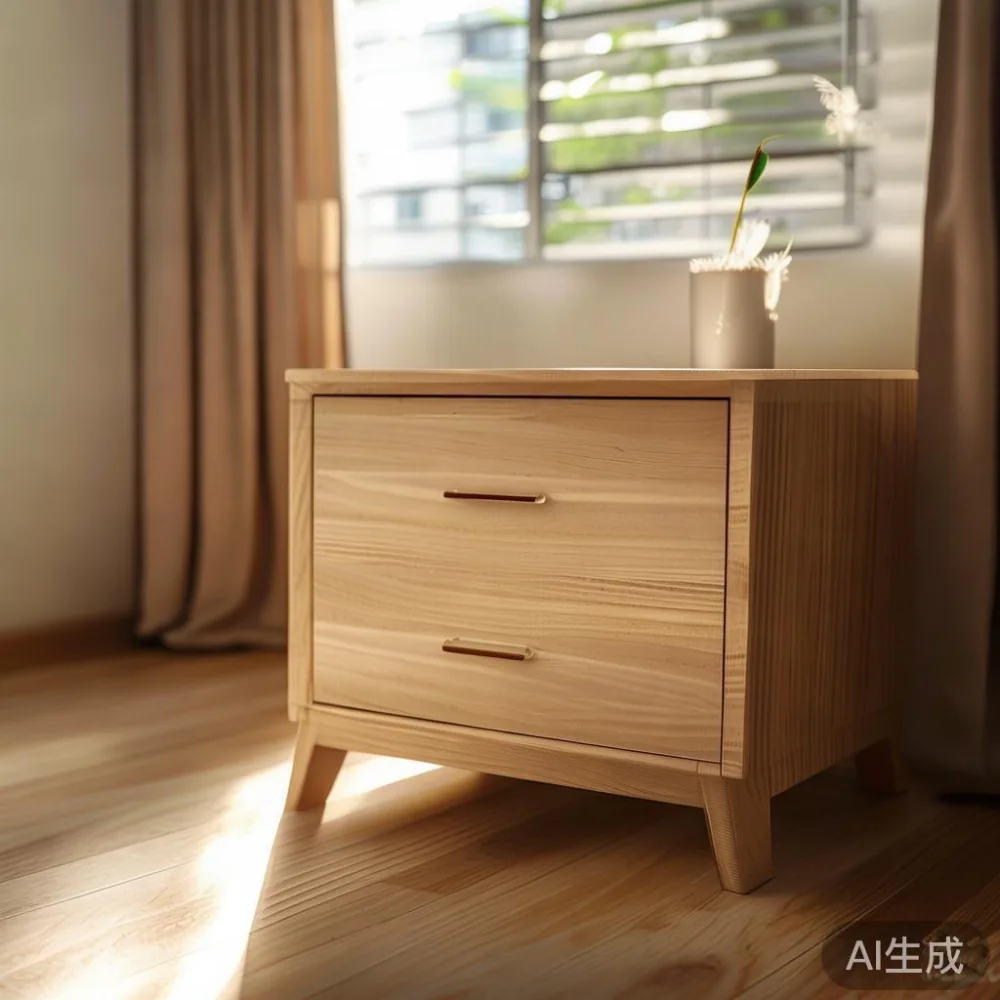
Singapore's HDB flats and newer condos in Punggol or Bedok come with their own constraints — narrow lift doors (typically 80 cm wide by 210 cm tall), tight corridor turns, and the constant humidity that hovers between 70% and 85% year-round. Every gram and every grain line matters. So does every dollar, especially when you add 9% GST and that S$60 delivery fee for non-bulk orders.
What does a typical bedside table cost in Singapore right now?
A flat-pack veneer bedside table from a mass retailer runs between SGD 89 and SGD 160 for the unit, with another SGD 25–SGD 40 for doorstep delivery to a fourth-floor walk-up in Bedok. Assembly adds 45 minutes if you own a drill. A solid wood bedside table in light-luxury French style — think oak or ash with brushed brass pulls — starts around SGD 480 and climbs past SGD 950 for a two-drawer version with dovetail joints. MIDHILL ships free above US$350 (about SGD 470), so a single solid piece usually clears that bar, but a veneer table does not.
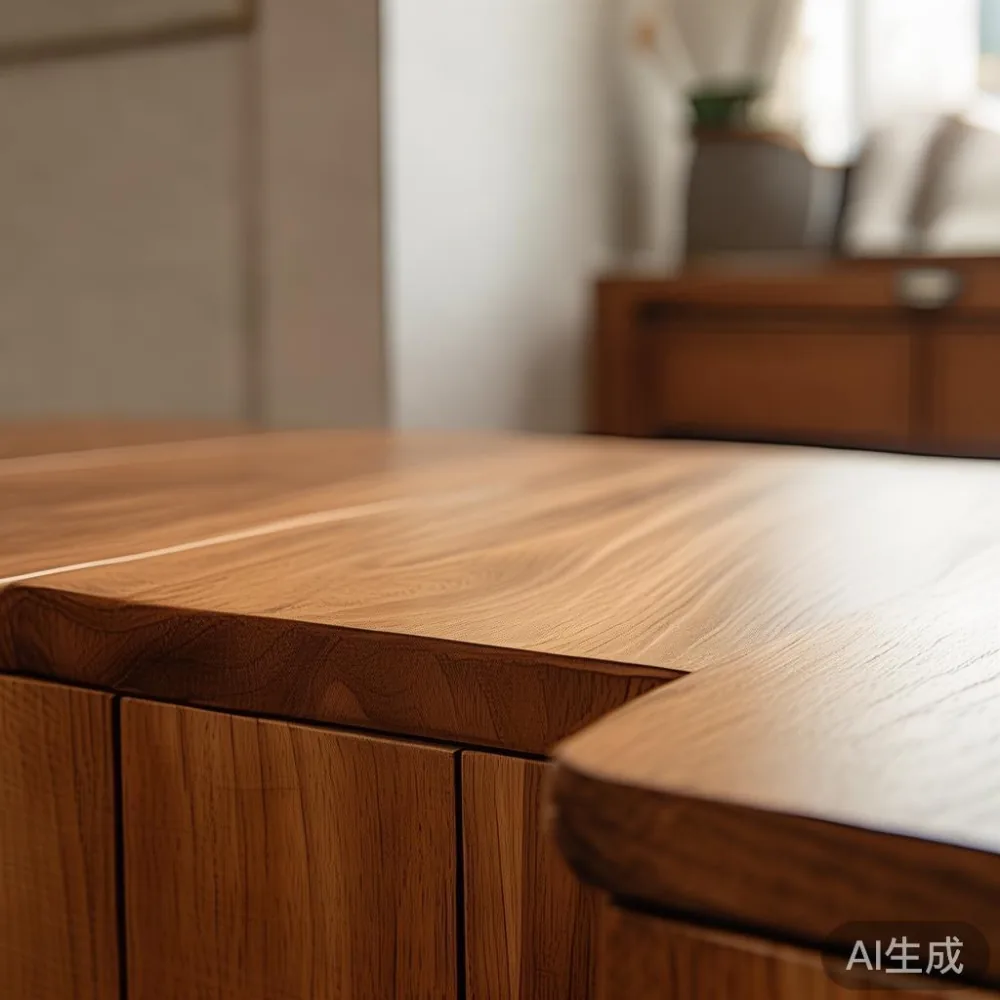
How much weight and space should I plan for during delivery?
A solid wood bedside table in cherry or oak weighs 22–28 kg fully assembled; a veneer-and-MDF competitor weighs 7–11 kg. That 17 kg difference matters when your lift maximum load sign reads 545 kg for seven adults, or when the corridor outside your Punggol unit is a 90-degree turn through a 90 cm opening. Two strong helpers can wrestle a 25 kg solid piece upstairs; the lighter box is one-person work. Many condo MCSTs now require lorry-with-crane bookings for furniture over 30 kg, costing SGD 80–SGD 120 extra.
The honest 5-year cost ledger, line by line
Let's anchor the comparison with two realistic shoppers. Shopper A buys a 45 cm × 40 cm × 55 cm veneer bedside table for SGD 129, including GST. Shopper B buys a similar-footprint solid cherry wood bedside table from MIDHILL for SGD 720, with free delivery to a Tampines tower block.
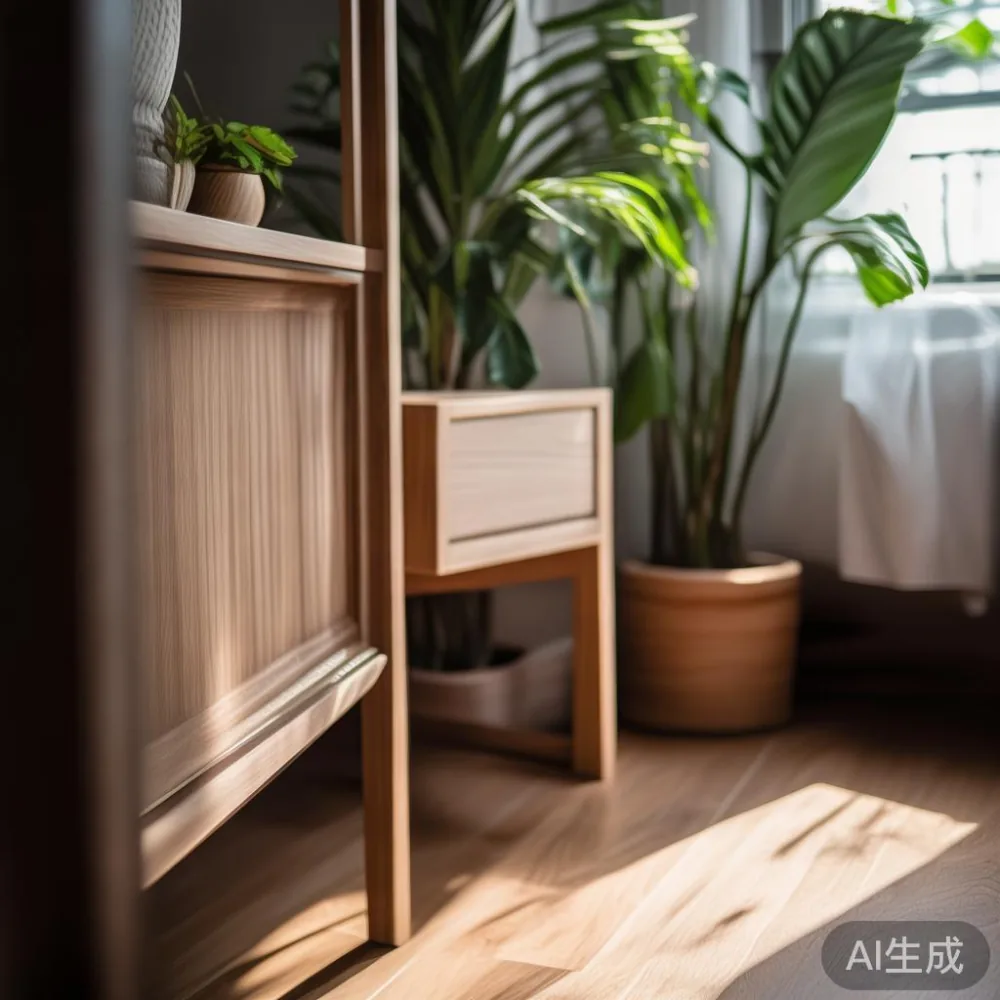
Year 0 (purchase day): Shopper A — SGD 129. Shopper B — SGD 720. Gap: SGD 591.
Year 1: Shopper A replaces a chipped corner with wood filler (SGD 8) and a touch-up marker (SGD 6). Shopper B does nothing. Subtotal gap: SGD 605.
Year 2: Shopper A notices bubbling near the rear edge — humidity damage. A local handyman charges SGD 45 to iron and clamp it back. Shopper B simply wipes with a damp cloth twice a month. Subtotal gap: SGD 650.
Year 3: Shopper A's drawer runner sags; replacement runners plus labour cost SGD 70. Shopper B's drawer still slides like new because solid wood holds screw threads far longer than MDF. Subtotal gap: SGD 720.
Year 4: Shopper A peels a 20 cm strip of laminate off the top — a common failure mode in air-conditioned HDB bedrooms where the cold surface meets warm humid corridor air. A replacement table is SGD 159 (inflation). Shopper B has the surface sanded and re-oiled at MIDHILL's lifetime refinishing service for SGD 0 (return shipping to the Foshan workshop is covered once for pieces over US$350). Subtotal gap: SGD 879.
Year 5: Shopper A buys a third table — yes, the second one also failed — at SGD 169. Shopper B's bedside table still holds the same lamp, phone, glass of water, and two novels. Cumulative spend: Shopper A — SGD 586 across three tables, two repairs. Shopper B — SGD 720 once. Gap: SGD 134 in Shopper A's favour, but she now owns zero functional furniture, while Shopper B owns a piece that has quietly appreciated against inflation.
Why does the same piece look so different after five humid years?
Veneer is a 0.3–0.6 mm slice of real wood glued onto a particle board or MDF core. In Singapore, where the relative humidity inside an air-conditioned bedroom can swing 40 percentage points between the cool corner and the open window, the thin face and the substrate expand at different rates. That stress shows up first on the edges of the bedside table — exactly where elbows brush past at 2 a.m. Solid wood, by contrast, is one continuous piece all the way through. It absorbs and releases moisture as a single body, so any movement is small and uniform.
When you walk into a Punggol condo showflat and see a post-modern light-luxury nightstand with a marble inlay, that surface is almost always bonded to a solid hardwood carcass. The marble top is 18 kg on its own; nobody builds that weight onto MDF. The same logic explains why MIDHILL's solid wood sofa frames, dining tables, and wardrobes — pieces far larger than a bedside table — survive the same decade of equatorial weather with only an annual wax refresh.
How do I style a Post-modern dressing table in a small apartment?
A post-modern dressing table fits a small apartment when you choose a model under 90 cm wide, raise it on slim 6 cm brass legs, and pair it with a wall-mounted mirror that reflects a window — this trio visually doubles floor space and keeps the room feeling like a French light-luxury boudoir rather than a storage closet.
Concrete checklist for a 9 sq m HDB bedroom:
1. Pick a dressing table depth of 38–42 cm so the chair tucks fully underneath; anything deeper blocks the walkway to the wardrobe.
2. Choose one with two drawers and one open shelf — the open shelf holds your everyday ceramic tray, the drawers hide skincare clutter.
3. Lighting should be a 2700 K wall sconce mounted 150 cm above the floor, not a table lamp, to free up the surface.
4. Material echo: if your bedside table is solid cherry wood, let the dressing table share that same wood so the two pieces read as a set rather than two strangers.
5. Keep 70 cm of clear floor in front for the stool — HDB bedroom doors swing inward, and you do not want to dodge a stool at 7 a.m.
This is the same logic MIDHILL applies across its entire light-luxury American collections — a green cherry wood sofa anchors the living room, a matching cherry bed frame continues the grain, and a slim solid cherry nightstand closes the loop in the bedroom.
What about the marble table everyone is posting on Instagram?
Marble tables — coffee tables, dining tables, and the small accent pieces that sit at the foot of a bed — are having a moment in Singapore, and for good reason. A 60 cm round marble table with a solid wood base runs SGD 680–SGD 1,200 depending on whether the stone is Carrara or a darker veined Calacatta. The marble itself is the easy part: 18 mm thick, sealed at the factory, and surprisingly forgiving. The base is where corners get cut. Bedsos tables on MDF bases wobble within a year because the MDF screws loosen; the same marble top on an ash or oak base stays level for a decade. If your budget allows, spend on the base. The marble can be re-polished locally for SGD 120 every five years; the base cannot be re-engineered without replacing the whole table.
Will the lift fit a 220 cm tall wardrobe?
Standard HDB lifts in Tampines and Bedok measure 110 cm deep by 140 cm wide by 230 cm tall at the door, with internal cabin height closer to 210 cm. A 220 cm wardrobe will not stand upright inside. The two workarounds used by MIDHILL delivery crews are: (1) tip the wardrobe on its side for the lift ride and stand it upright only inside the bedroom, or (2) split the wardrobe into two 110 cm halves that bolt together. Option 1 needs two corridors clear of obstruction; option 2 needs the buyer to assemble eight cam-lock bolts on arrival. Either way, plan 20 minutes of clear lift booking time, and warn the MCST the day before so the loading bay is free.
Is there a hidden SGD value in the warranty terms?
Yes, and most buyers ignore it. A 10-year structural warranty on a solid wood bedside table is not just a repair promise — it is a future resale signal. In the second-hand furniture groups on Carousell and Facebook, a five-year-old solid wood piece in good condition still fetches 40–55% of its original price, while a five-year-old veneer piece is landfill. That residual value alone shifts the five-year gap back in favour of solid wood by another SGD 200–SGD 300. Add MIDHILL's lifetime refinishing (one free return-to-Foshan service for orders over US$350) and the lifetime cost drops further. The 14-day return window is your safety net in year zero; the structural warranty is your safety net for years one through ten.
So which should you choose for your bedroom?
If the bedside table is a temporary piece for a rental room you will leave in 18 months, a flat-pack veneer unit is a defensible buy — light, cheap, and easy to discard. If the bedside table is part of a long-stay home in Tampines, Bedok, or Punggol, and you already plan to invest in a solid wood sofa, a matching bed frame, a dining table that seats six, and a wardrobe with dovetail drawers, then the bedside table should be solid wood too. A bedroom is read as a set; one weak leg makes the whole ensemble wobble visually and financially.
Priya, my colleague, eventually replaced her bedside table with a solid ash piece she found at a MIDHILL sample sale. The veneer version she tossed out weighed 9 kg and lasted four years. The new one weighs 24 kg and is heading into its sixth year with nothing more than a twice-yearly wipe-down. She keeps a small notebook on it — the same notebook she used to record the renovation budget back in 2019 — and every page reminds her that the cheapest sticker is rarely the cheapest outcome.