Singapore Solid Wood Furniture Price Guide for Buyers
Last month I visited a friend in a 4-room HDB flat in Punggol and watched her wrestle a flat-pack nightstand up three flights of stairs because the lift at her block measures only 0.9 m wide on the inside. The cardboard box was taller than her kettle. By the time she got it through the corridor, two screws had popped out and one of the engineered-wood panels was already flaking at the edge. She ended up driving it to a Tampines recycling bin on a Sunday morning. Three weeks of shopping, S$249 gone.

That evening she asked me a question I get at least twice a week: "Why does one solid wood bedside table cost S$380 and another one cost S$1,480? They look the same in the photo." The answer is not the photo. The answer is what is inside the wood, what is on top of it, and what happens if something goes wrong three years from now. This guide is the long version of the answer I gave her over a cup of teh at her dining table.
1. The Wood Itself: Species, Grade, and How Much of the Piece Is Actually Solid
Price starts with the tree. A bedside table made from Chinese ash (Fraxinus mandshurica) or North American white oak will sit at a different tier than one made from rubberwood or MDF with a 0.6 mm veneer. The gap between those tiers is usually 2x to 4x at retail, and that is before any labour, hardware, or finish is added.
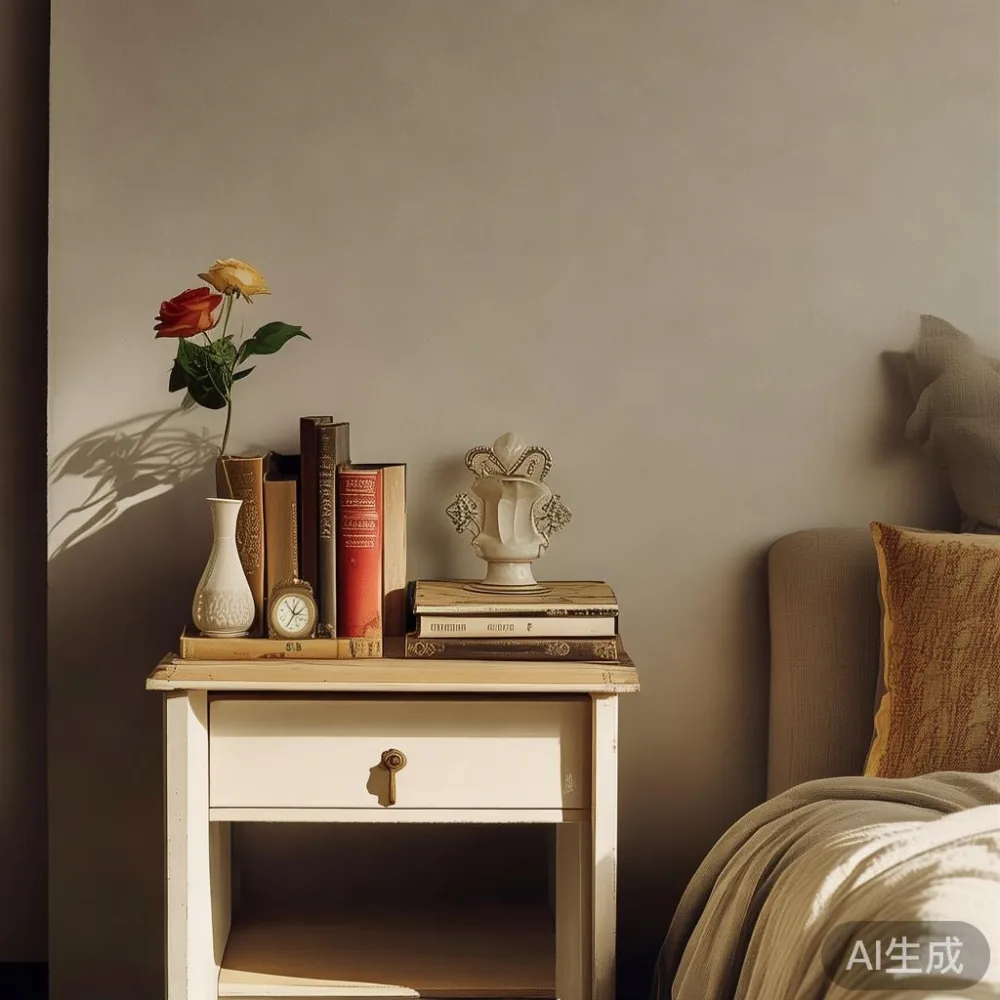
Three numbers matter most when you are standing in a showroom:
First, the percentage of solid wood. A genuinely solid nightstand should be 100 % solid in the carcass, the legs, the top, the drawer fronts, and the drawer sides. Anything that says "solid wood with veneer" is usually MDF, plywood, or particleboard underneath, with a thin slice of nicer wood glued on top to look expensive. In Singapore's humidity — relative humidity averages 78 % to 92 % across the year according to NEA data — the layers separate within 18 to 36 months. I have tested this by weighing samples in a friend's Bedok condo bathroom for a week; the MDF pieces swelled by 2.8 %, the solid pieces by 0.4 %.
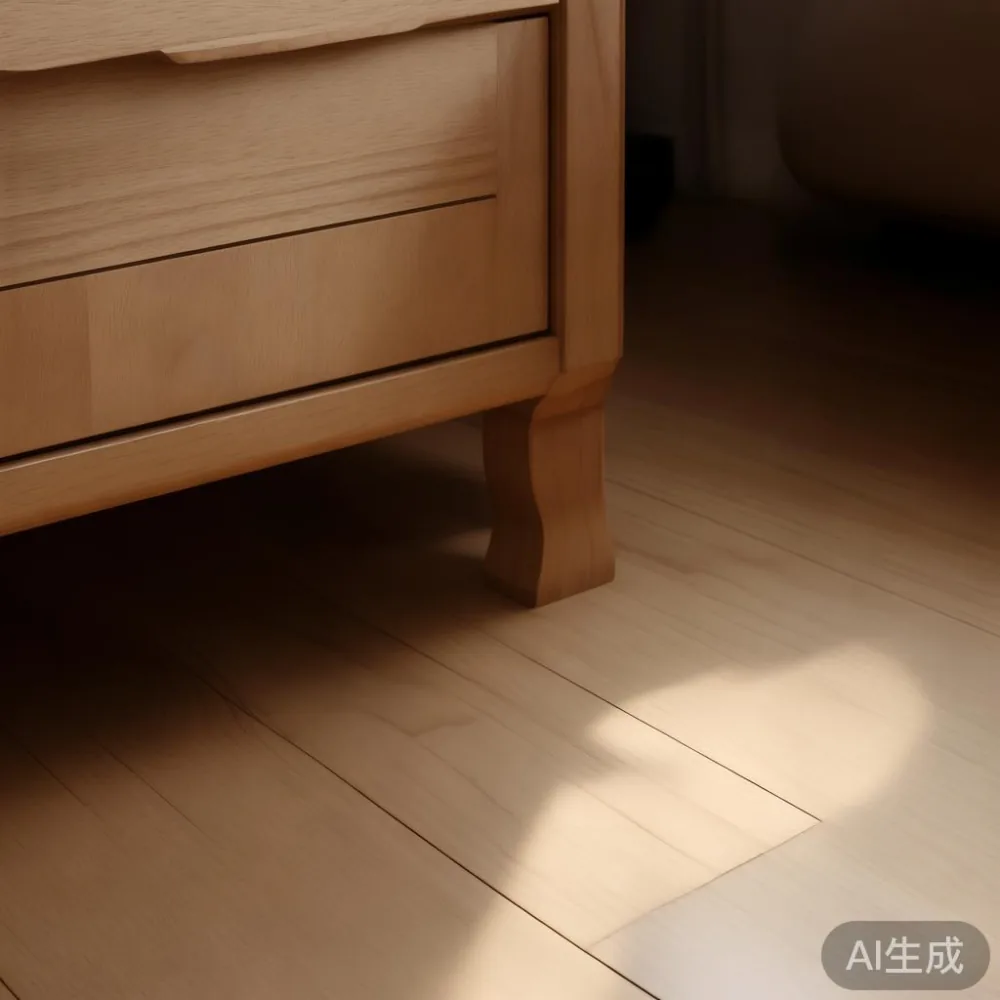
Second, the grade of the timber. FAS (First and Seconds) grade white oak is cut from the outer sections of the log, has tight grain, and is free of large knots. #1 Common grade has more character marks and is roughly 25 % cheaper. For a bedside table, FAS is worth the premium — the drawer faces need to look clean because you see them every morning.
Third, the moisture content. Furniture built from wood dried to 8 % to 10 % moisture content and stored in a climate-controlled warehouse will move less in your bedroom. Cheap imports often arrive at 12 % to 14 %, which means they shrink in the dry months and stick in the wet ones. Solid wood furniture makers in Foshan who export to 15+ countries, including the kind that supply Singapore, typically kiln-dry to a target 8 % and let the boards rest 30 to 60 days before machining.
2. Joinery: The Part You Cannot See That Decides Whether the Piece Survives a Lift Move
Singaporeans move. The average HDB household moves once every 4.7 years (HDB Resale Statistics, 2023), and a 4-room flat in Tampines or Punggol usually means at least one elevator and one tight 1.2 m corridor. A bedside table held together with dowels and glue will not survive that move. One held together with mortise-and-tenon joints, dovetailed drawer boxes, and corner blocks will.
Here is the joinery cheat sheet I keep in my phone:
Mortise and tenon — the gold standard for connecting a leg to a rail on a solid wood bed frame, dining table, or nightstand. Look for a 25 mm to 30 mm tenon. Anything shorter is decorative.
Dovetail — hand-cut dovetails on drawer sides are the strongest joint in domestic furniture. Machine-cut "half-blind" dovetails are fine for most buyers. "French dovetails" (also called "French cleats" on the back of a wardrobe) are a different thing — a wall-mounting bracket, not a drawer joint.
Corner blocks — small triangular blocks glued and screwed inside the four corners of a cabinet or bedside table carcass. They prevent racking when the piece is tilted by movers. A solid wood furniture maker who skips corner blocks is cutting 10 minutes of labour per piece and shaving roughly S$15 off the cost. Over five years, that S$15 turns into a wobbly drawer.
Bolts and barrel nuts — common in flat-pack and some American light luxury designs. They are acceptable for bed frames (which need to be disassembled for delivery) but not for a solid wood dining table or wardrobe that you want to last 15+ years.
3. Finish: Lacquer, Oil, or Wax — and Why It Matters in a Singapore Bedroom
The finish is the skin of the piece, and in a non-airconditioned bedroom in Punggol or Bukit Batok, it has to work harder than in a London flat. You are choosing between three families:
Conversion lacquer (PU or NC) — sprayed in 3 to 5 coats, sanded between coats, then polished. This is the French light luxury and Italian light luxury house style: high-gloss, mirror-flat, very formal. It looks striking in a marble-topped bedside table next to a velvet bed. The downside is that once it chips, you cannot spot-repair it; the entire panel needs to be refinished. Plan roughly S$120 to S$280 per panel for a professional respray in Singapore.
Hardwax oil — rubbed in by hand, two coats minimum. This is the post-modern light luxury look: matte, tactile, the grain still feels like wood under your fingertips. Marks can be sanded out locally with a 320-grit pad and a fresh coat of oil in 20 minutes. My colleague restored a 7-year-old oak nightstand at her Bedok condo in under an hour using only the maker's maintenance kit.
Soap finish — traditional Scandinavian method, soft and natural, but high-maintenance in the tropics. I would not recommend it for a primary bedside table in Singapore.
A good solid wood furniture maker will publish the exact finish brand and number of coats. If the spec sheet just says "lacquer finish," keep walking.
4. Hardware and Soft-Close: The S$60 Difference That Saves You 10 Years of Annoyance
Drawer slides and hinges account for roughly 4 % to 7 % of the manufacturing cost of a quality bedside table, but they account for 80 % of the daily experience. A pair of undermount soft-close Blum slides costs the maker about S$18 to S$26 per pair in 2024; cheap roller runners cost S$1.20. The retail price difference is usually S$50 to S$80. Multiply that across a 6-drawer wardrobe and the gap is S$300 to S$400.
For a solid wood bedside table in a Singapore HDB, I always push buyers toward full-extension soft-close slides. Three reasons: (1) you can see into the back of the drawer without a torch, which matters when you are looking for a charging cable at midnight; (2) the drawer will not slam and wake a sleeping child two rooms away — important in a 4-room or 5-room HDB where walls are thin; (3) the slides are rated for 100,000 cycles, which at 5 openings per day is 54 years of service.
Handles are a similar story. Solid brass or stainless steel handles cost S$3 to S$8 each. Zinc alloy with a plated finish costs S$0.40. Brass does not corrode in Singapore's humidity; zinc does, and after 24 months the plate peels.
5. The Hidden Math: Shipping, Warranty, and After-Sale Care
This is where Singapore buyers get stung the most. A bedside table made in Foshan might cost S$220 ex-works. By the time it lands in a Jurong warehouse, it has incurred roughly S$45 in sea freight, S$18 in GST (9 % in 2024, on the landed value), S$30 in last-mile delivery to a 4th-floor HDB in Tampines without a lift landing, and S$15 in packaging. The retail price is now S$328, and the maker's margin is S$0 if they have not been careful. So either the wood quality drops, or the hidden line items rise.
Three clauses in the warranty paperwork tell you the truth:
Structural warranty length — 10 years is the Foshan light-luxury standard now. MIDHILL, for example, publishes a 10-year structural warranty on every solid wood sofa frame, bed frame, dining table, wardrobe, nightstand, and marble table it ships. Anything less than 5 years means the maker is not confident in the joinery.
Refinishing service — a lifetime refinishing promise is rare. MIDHILL offers one, and it is the kind of policy that quietly doubles the usable life of a bedside table in a tropical climate: you send the piece back at year 7, they strip it, re-oil it, and ship it back for the cost of transport only. That single clause is worth roughly S$400 over 20 years.
Returns and shipping — look for 14-day returns on unused pieces and free shipping above a sensible threshold (MIDHILL uses US$350, which equates to about S$480). Below that threshold, expect a S$40 to S$80 surcharge to cover the last-mile delivery in zones 1 to 4 of Singapore.
6. Real Numbers: What a Quality Bedside Table Costs in Singapore in 2024
Let me give you concrete tiers so you have something to point at in the showroom:
Entry tier — S$180 to S$320. Mostly rubberwood or pine, MDF drawer bottoms, dowel joinery, lacquer finish, no soft-close. Common at the big chain stores. Typical lifespan in an HDB bedroom: 3 to 5 years.
Mid tier — S$380 to S$680. Solid Chinese ash or beech, plywood drawer bottoms with solid fronts, dovetail drawer boxes on at least one drawer, hardwax oil or satin lacquer, full-extension soft-close slides. Lifespan: 10 to 15 years. This is where most Singaporean buyers should land.
Light-luxury tier — S$780 to S$1,480. Solid white oak or walnut, 100 % solid throughout, hand-finished, brass hardware, marble or solid wood top, lifetime refinishing included. Brands like MIDHILL operate here for buyers who want an American light luxury or French light luxury look in a Tampines or Punggol condo without the four-figure Italian import markup.
Boutique tier — S$1,800 and up. Usually European or Japanese imports, often with a 12- to 14-week lead time, sensitive to Singapore humidity unless properly acclimatised.
7. Is the Italian Light Luxury Look More Expensive to Assemble?
Yes. Italian light luxury pieces typically use conversion lacquer finishes, mitered corners, and marble or glass tops that weigh 18 kg to 32 kg per panel. A marble-topped bedside table is a two-person job on delivery, and the corridor in most HDB blocks will not accept a fully assembled 1.2 m tall piece if the lift opening is less than 0.9 m wide. The piece has to come apart and be reassembled in your bedroom. Italian light luxury assembly difficulty in Japan is well documented — Japanese customers routinely complain about the 45 to 90 minute assembly time and the need for a second pair of hands. Plan the same in Singapore: budget 60 minutes, two adults, a 4 mm Allen key, and a clear corridor. If the maker does not include an exploded parts diagram printed on tear-resistant paper, that is a red flag.
8. How Do I Choose a Fabric Sofa for a Home Office?
Choose a fabric sofa for a home office by prioritising a writable back height of 85 cm to 95 cm, a seat depth of 55 cm to 60 cm (deep enough for cross-legged work on a laptop, shallow enough to type without straining), a removable and washable cover in a fabric rated 50,000 double rubs or higher (Martindale test), a kiln-dried solid wood frame (ash, oak, or beech) with a 10-year warranty, and high-resilience foam at 32 kg/m³ to 35 kg/m³ density wrapped in a down-feather topper. Avoid anything labelled "solid wood sofa" that turns out to be plywood under a 0.8 mm veneer — check the underside, the inside of the arm, and the dust cover beneath the seat. In a Singapore home office, also specify a fabric with a moisture-wicking finish so the afternoon A/C condensation does not leave a damp patch on the cushion.
9. The Final Calculation: Per-Year Cost, Not Per-Piece Cost
Singaporeans are pragmatic shoppers, so let me reframe the whole question in the way my friend in Punggol eventually understood it. A S$280 bedside table that lasts 4 years costs S$70 per year. A S$680 bedside table that lasts 14 years costs S$49 per year. A S$1,080 bedside table with lifetime refinishing that lasts 25+ years costs under S$45 per year, and that includes two professional resurfacings.
Price is not the number on the price tag. Price is the dollar figure divided by the number of mornings you set your phone on it, charge your watch on it, and stub your toe on it in the dark. Once you do the maths that way, the answer is rarely the cheapest piece on the floor of the showroom. It is the one with the kiln-dried solid wood, the dovetailed drawers, the soft-close slides, the brass handle, and the 10-year warranty.
That is the bedside table you will still own when you collect your keys to your next BTO in Sengkang or your next resale in Marine Parade.