What Sets the Price of Solid Wood Furniture in Singapore?
Solid wood furniture is often sold as a simple choice between species, style and price. In reality, the figure on a quotation can change because of timber grade, construction, dimensions, hardware, finish, packaging, logistics and the level of hand-finishing involved. For buyers in Singapore, those factors matter even more because an HDB lift, corridor and storage space can be narrow, while a condo may impose specific delivery windows and building rules.

This guide uses bedside tables as the clearest example, while showing the same pricing logic across solid wood sofa, bed frame, dining table, wardrobe, nightstand and marble table products. The aim is not to promise a universal price, but to explain where money is actually spent.
Why does solid wood furniture cost so much?
The biggest misconception is that a solid wood piece is expensive simply because it contains wood. The more useful distinction is between the timber itself and the finished product. A bedside table may require a 60 × 40 × 55 cm top, 4 legs, side panels, a drawer, a rear panel, joinery, hardware, sanding, finishing, quality checks and export packaging. Every one of those steps carries labour and material cost.

Wood species also vary considerably. Oak, ash, beech, walnut and other hardwoods have different supply conditions, grain patterns and working properties. A clear grade with selected knots may be harder to source consistently than a grade intended for hidden structural parts. Wider boards can reduce joints but may cost more than narrower boards. The important question is not only which species is named, but which parts of the bedside table use it and how carefully those parts are prepared.
For a Singapore bedroom, size is another practical driver. A 45 cm-wide nightstand may suit a compact HDB room, while a 55 cm-wide unit can feel more generous in a Tampines or Bedok condo. Going from 50 cm to 60 cm can add usable surface area, but it also increases timber volume, shipping weight and the risk of damage during delivery.
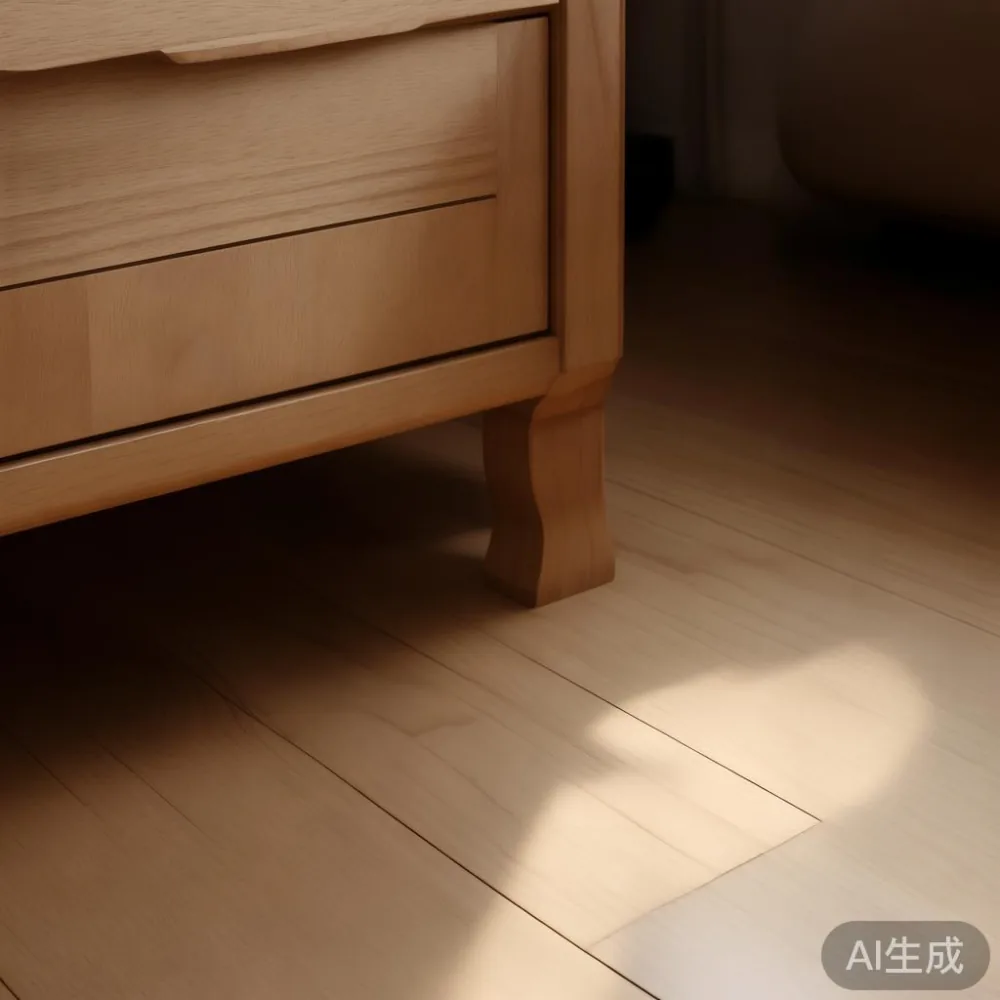
MIDHILL has manufactured solid wood furniture since 2008 and exports to more than 15 countries. Its 10-year structural warranty reflects a focus on how the product is built, but the warranty should be considered alongside timber selection, joinery and finish details, not as a substitute for them.
Is solid wood automatically more valuable than engineered wood?
Not automatically. Solid wood can be valuable when the species, grade and construction are clearly specified. Engineered wood may be highly suitable for certain applications because it controls movement and can make consistent components more efficiently. The meaningful comparison is between two finished bedside tables of similar dimensions, drawer capacity, hardware and finish, rather than a marketing label alone.
Ask whether the visible panels, drawer components and structural rails are solid timber, and whether any plywood, MDF or other engineered material appears under a veneer. Then compare the joint method. Dowels, mortise-and-tenon joints, corner blocks and properly fitted drawer components generally require more preparation than a simple concealed screw arrangement. A drawer that runs straight and closes quietly is a sign of attention to fit, not merely the presence of wood.
French light luxury styling often makes pale, finely grained timber and restrained profiles important because the finish is visible from close range. Post-modern light luxury may use thicker forms or contrasting elements, which can increase waste and machining. In either case, a bedside table priced lower because of simpler construction may still meet the customer’s needs; it is the misleading suggestion that every expensive solid piece uses the same methods that is worth rejecting.
How much do timber and joinery change the final price?
Timber accounts for a substantial share of the material cost, but not all of it. A useful production estimate for a medium-size bedside table might allocate 35–45% of factory cost to raw timber and board preparation, 15–25% to cutting and joinery, 10–20% to surface treatment, 10–15% to hardware and components, and the balance to inspection, packaging and overheads. These are planning ranges, not fixed retail percentages.
Species selection can shift the raw-material line sharply. A clear oak selection with consistent colour may cost more than a lower-grade oak selection with wider colour variation. Walnut normally sits at a higher material level than common hardwoods because supply and yield are more constrained. The visual grade matters too: a top intended to face the room may be selected for figure and colour, while legs and hidden rails can use a different grade without harming performance.
Joinery changes labour more than it changes the wood bill. A mortise-and-tenon bedside table needs accurate cuts, trial fitting and sometimes repeated adjustment. Dowelled construction is quicker but still requires precision. Machine-cut screws reduce assembly time, while blind dovetails or other detailed joints add work in a small workshop. This is why two bedside tables made from similar boards can differ by SGD 80–250.
The structural parts should make sense as a system. A top that is 18–20 mm thick, side panels around 15–18 mm and properly secured rails can create a stable unit. Those are practical dimensions, not a universal prescription; mass, span and design determine the right specification.
Do drawer hardware and moving parts explain a higher quotation?
They often do. A plain bedside table without a drawer has fewer components and fewer failure points. Adding a drawer introduces slides, fasteners, clearances, fronts, backs and installation time. Better slides can make the bedside table smoother and more durable, but they are not the only route to good performance. Full-extension slides on a 40–50 cm drawer can add roughly SGD 25–90 to component cost before labour and finishing are counted.
Soft-close hardware, a solid drawer bottom and adjustable feet can raise the price again. A customer who wants frequent use of the drawer may prefer that investment over decorative trim elsewhere. A customer who mainly needs a surface for a lamp, phone and book may choose a simpler design and spend the difference on the timber finish.
Hardware should be described by type, extension length, load rating and warranty where possible. “Premium hardware” is too vague for comparison. For a small nightstand, the drawer opening must also suit the sleeper: too much clearance can hit a wall, while too little makes the drawer inconvenient. In a compact HDB bedroom, even a 2 cm difference in drawer travel can affect daily use.
How much does finish and hand-sanding add to the price?
Finish can make or break the appearance of a solid wood bedside table, and labour-intensive finishing can add materially to its price. Some pieces are stained, sealed and sprayed in a standard colour. Others are sanded through several grit levels, filled, hand-rubbed and finished to bring out the grain. Hand-finishing a small product may add SGD 40–120; a multi-colour or wire-brushed surface can add more because it increases preparation and rejects imperfect sections.
Colour matching across a top, drawer front and legs also affects yield. If the finish must appear consistent, boards with similar tone are grouped before production. Very pale finishes may expose sanding marks, while dark stains can disguise some irregularities. The customer should see a physical sample rather than rely on a screen, because monitor settings alter oak, walnut and ash tones considerably.
For a French light luxury bedroom, a light natural finish with visible grain and soft matt texture generally coordinates well with linen, plaster walls and simple metal lamps. If the finish feels uneven, sticky in warm weather or overly glossy for the intended look, the piece may need further correction. A properly cured factory finish is especially relevant in Singapore’s humidity, although the wood itself will still move with seasonal changes.
MIDHILL offers lifetime refinishing. That service addresses the long-term appearance of eligible solid wood pieces, but it should not be confused with a promise that an item needs no maintenance. Coasters, sensible humidity levels, careful cleaning and prompt repair of damaged water rings help preserve the surface. Free refinishing can reduce the lifetime cost of ownership compared with replacing a bedside table.
Why do dimensions, weight and design increase logistics costs?
A bedside table may seem compact, but its packed volume can be surprisingly high. One unit at 55 × 40 × 58 cm may weigh 12–20 kg, depending on timber and construction. Ten units can create a pallet or carton volume that is expensive to move through a high-rise common corridor. A taller nightstand at 70 cm may use more board area and require stronger packaging against tipping.
Singapore delivery planning should include building access. Some older HDB blocks have a lift car around 90 × 140 cm, though internal dimensions and door openings vary by block. Corridors may turn sharply, and lobbies may require a booked service slot. A condomanagement team may impose a loading-bay window, protective floor covering or an elevator reservation. If the furniture cannot fit in the lift, it may need stair carry, which adds time and labour.
This is why exact dimensions are more useful than the phrase “fits most Singapore homes.” Check the lift door, lift car, turning space, bedroom door and final bedside-table position. Leave at least 5–10 cm of working room around the piece. For a solid wood sofa, bed frame, dining table or wardrobe, delivery planning may need to begin much earlier because the packed carton can exceed 2 m even when the assembled item is larger.
MIDHILL provides free shipping for orders over US$350, although the checkout terms should be read to understand the exact Singapore quotation and any destination charges. GST is normally shown at checkout for Singapore sales, while cross-border freight may include other taxes or customs steps. A product price in SGD should therefore be compared at the final delivered total, not only at the catalogue level.
How long does delivery take and what happens if the item arrives damaged?
Lead time is often treated as a minor detail, yet it affects both price and risk. A ready-made bedside table may leave the factory within 7–14 days after payment, while a made-to-order finish or larger furniture order may need 25–45 days. Peak periods, certification checks, production queues and port schedules can add time. Delivery within Singapore after dispatch may take another 2–7 days depending on the appointment and access arrangements.
These figures are planning estimates. MIDHILL should confirm the production date, shipping route and delivery window for the selected item rather than relying on a generic promise. Buyers should also allow 2–4 weeks for a made-to-order solid wood bed frame, dining table or wardrobe when the design includes special dimensions or finishes.
Packaging is part of the price because corners, drawer fronts and legs are vulnerable. Expect foam, cardboard, straps and a protective outer carton for a bedside table. White-glove delivery may add SGD 60–180 within Singapore, with a larger charge for stairs or difficult access. This can be worthwhile in a condo where the management rules require coordinated movers.
Damage should be photographed before the packaging is moved. Claims need clear images of the carton, the serial label and the affected part. A 14-day return window offers time to inspect construction, finish, movement and drawer alignment, but furniture should not be used before a visible defect is reported. For a nightstand, check that the top is level, the drawer closes fully and the unit does not rock.
Can style explain why one bedside table costs more?
Style can add cost, but visual complexity explains more than the label. French light luxury often relies on clean proportions, delicate moulding or shaped drawer fronts. American light luxury may use broader tops, rounded corners and substantial hardware. Post-modern light luxury may introduce asymmetry, mixed materials or graphic details. Each can increase cutting, sanding, assembly and finishing time.
Design also affects usable space. An oversized bedside table may look impressive in a condo bedroom but restrict the movement path beside a bed. Curved profiles reduce board yield. Decorative carving can require templates, hand work and longer curing periods. A slab-sided design may be simpler and visually calmer, allowing more of the budget to go into timber quality.
The broader bed market shows the same distinction. A comparison titled European light luxury bed vs Modern bed should examine frame construction, slat support, finish complexity and bedroom dimensions rather than assume that one style is automatically costlier. Likewise, light luxury bed vs Nordic bed often comes down to ornament, timber tone and hardware rather than a different basic category of construction.
Japanese-inspired rooms ask a different practical question. Japanese bed vs Japandi bed can involve low profiles, natural finishes and simplified storage, but floor space and access remain decisive. In a compact HDB flat, a low bed frame can make a 90 × 120 cm mattress easier to use, yet it must still allow a 60 cm route to the wardrobe. A Japanese bed vs Japandi bed comparison should therefore include clearances, not only appearance.
What should you compare when checking two solid wood quotations?
Compare the final specifications in writing. For a bedside table, record width, depth and height; timber species and grade; top thickness; panel and rail thickness; joinery; drawer material; slide type; finish; assembled weight; warranty; packed dimensions; and the delivered price in SGD. This removes vague language and makes it easier to see where one quotation is genuinely different.
Second, compare the use case. A 40 cm-wide, 55 cm-tall nightstand works differently from a 60 cm-wide, 65 cm-tall unit with a charging cutout. The second may cost more because it solves a specific cable-management problem. A marble table introduces a different material with its own weight, edge-protection and sealing requirements, so it should not be used as a simple benchmark for solid wood furniture.
Third, check the service terms. MIDHILL’s 10-year structural warranty, lifetime refinishing, 14-day returns and free-shipping threshold over US$350 can affect value, although eligibility and local conditions should be confirmed during purchase. Price is only one part of the calculation; maintenance access, replacement parts and reliable documentation matter over 10 years of daily use.
Last month I visited a Singapore showroom and tested several bedside tables under a bedside lamp, at floor level and beside a made bed. The difference was obvious: pieces with square drawer boxes ran more quietly, while units with twisted or undersized runners caught at the end of their travel. The more decorative model was not necessarily the more convincing one. A plain 50 cm oak bedside table with stable drawer action and a repairable finish felt better engineered than a visually elaborate alternative.
That experience also highlighted scale. A 65 cm table looked luxurious in the showroom but crowded a 3.2 × 3.6 m HDB bedroom. A 45 cm unit left better circulation while still holding a lamp, book and phone. Price alone could not explain that decision; proportions did.
For coordinated interiors, research can extend beyond the nightstand. A guide on how to style European light luxury bed in room can help with bedside heights and visual symmetry, while how to style Japanese sofa in bedroom can guide low profiles and material balance. The principles remain useful only when they fit the actual floor plan.
Is a higher price always the better solid wood choice?
No. A higher price may reflect better timber selection, more demanding joinery, superior hardware, longer finishing or more elaborate packaging. It may also reflect a brand position, showroom overhead, design royalties or freight terms. The buyer’s task is to identify which of these factors solve a real need.
For most Singapore bedrooms, a well-proportioned bedside table with stable joinery, a smooth drawer, a durable finish and dimensions that suit the lift and corridor is a strong purchasing target. For a larger project involving a solid wood sofa, bed frame, dining table or wardrobe, the same checklist applies, with additional attention to load capacity, room clearance and delivery access.
Ask for the production specification, not just a photograph. Confirm the timeline and delivered total. Inspect the sample in person where possible. If the numbers are consistent, the quotation should be easier to defend than one built around a vague promise of luxury.
For questions about a current bedside table or made-to-order dimensions, MIDHILL can be contacted at +86 188 2788 2512.