Bedside Table Showdown: A 5-Year Cost Comparison of Veneer vs Solid Wood for Singapore Homes
Last month I was at a friend's new BTO in Punggol, helping her unload a flat-pack bedside table she had bought from a popular e-commerce platform for S$89. The lift was narrow, only about 1.0 m wide by 1.8 m deep, and we still managed to wrestle the long cardboard box down the corridor. Two weeks later she messaged me: the top had bubbled at the corner where her ceramic water carafe always sits. That conversation is exactly why I want to walk you through a real 5-year cost comparison between a veneer bedside table and a solid wood bedside table, in Singapore dollars, in Singapore homes, with all the moisture, humidity, and HDB-corridor considerations we actually live with.
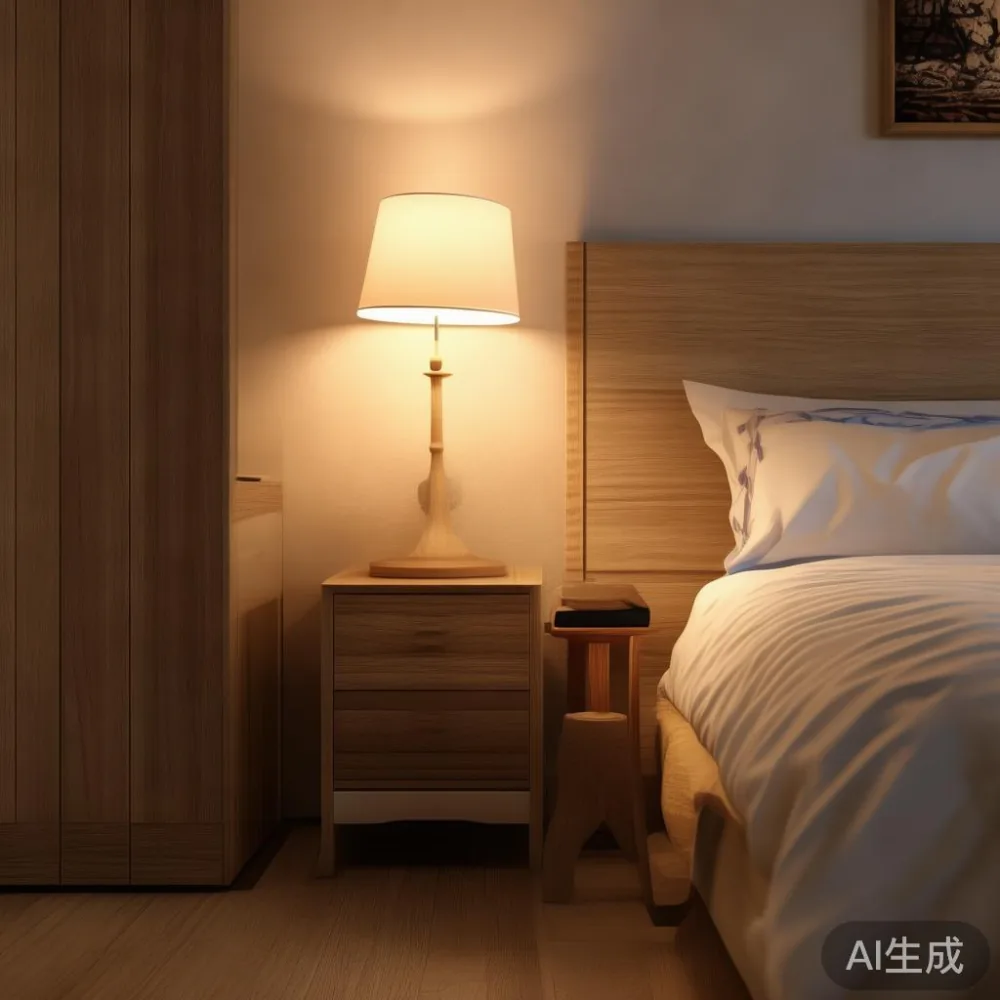
Before the numbers, a quick orientation. A bedside table is the small cabinet, roughly 45–55 cm wide, 40–45 cm deep, and 50–65 cm tall, that sits next to your bed. It holds a lamp, a phone charger, a glass of water, and the book you fall asleep to. It is touched every single day, sometimes several times. It absorbs Singapore's ambient humidity of 70–85%, it sits a few centimetres from your air-conditioner's cold draft, and in many HDB flats in Tampines or Bedok the corridor outside is dusty enough that the finish gets cleaned weekly with a damp cloth. That kind of daily punishment is what makes the material choice matter.
What is the real difference between a veneer and a solid wood bedside table?
A solid wood bedside table is cut from a single piece or a glued lamination of real timber, usually oak, ash, walnut, or rubberwood, with a thickness of 18–25 mm on the top panel and legs that are 4–6 cm solid stock. A veneer bedside table uses a man-made core — MDF, particleboard, or plywood, typically 12–18 mm thick — wrapped in a 0.6–1.2 mm decorative slice of real wood or printed laminate. The visible surface looks identical on day one in a showroom, but the internal structure is what determines the 5-year bill.
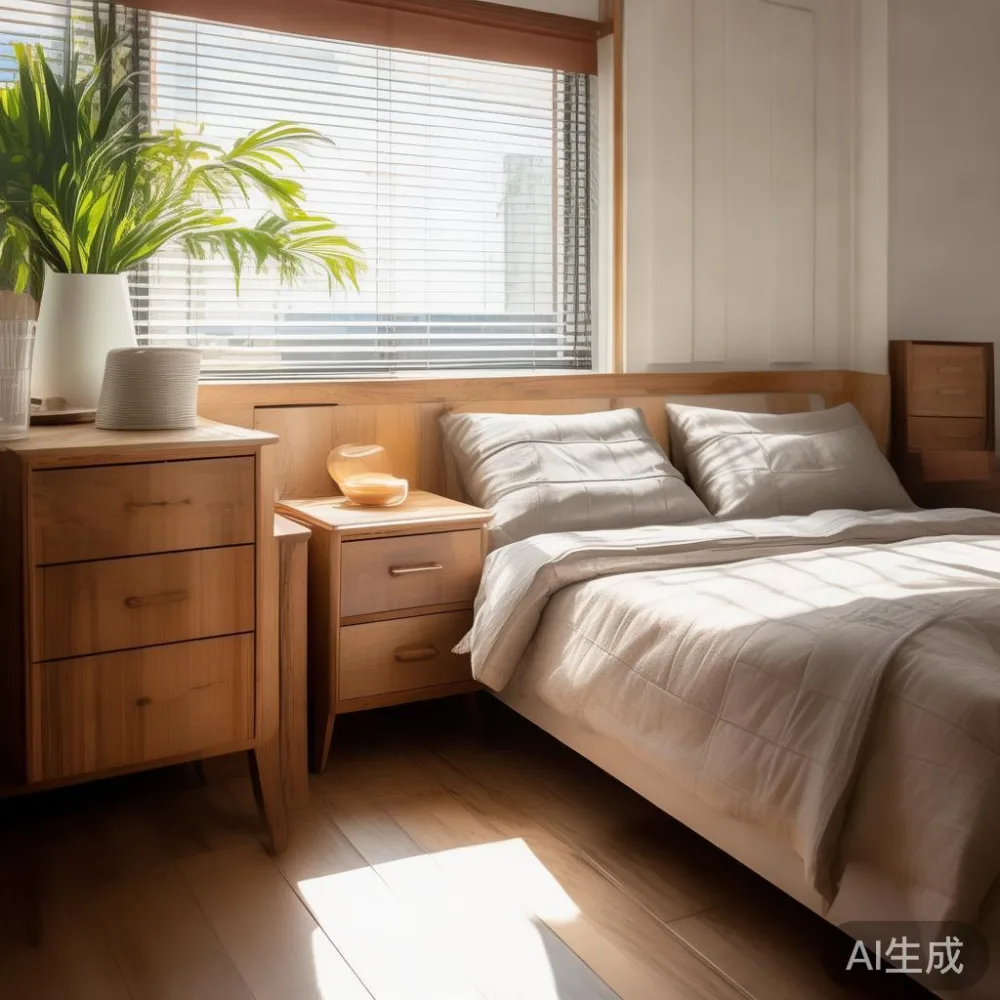
How much does each option cost over 5 years in SGD?
Let us anchor the comparison to real numbers a Singapore shopper would see. A standard 50 cm × 40 cm × 55 cm two-drawer bedside table in plain white veneer from a local mass-market retailer runs about S$129 to S$189. A comparable solid wood bedside table in oak or ash, in a clean shaker or post-modern light luxury profile, runs S$320 to S$520 from a workshop-grade maker such as MIDHILL, which has been producing solid wood pieces for export since 2008. That is roughly 2 to 2.5 times the upfront sticker price.
Now layer in the 5-year cost of ownership, assuming the piece survives Singapore conditions:
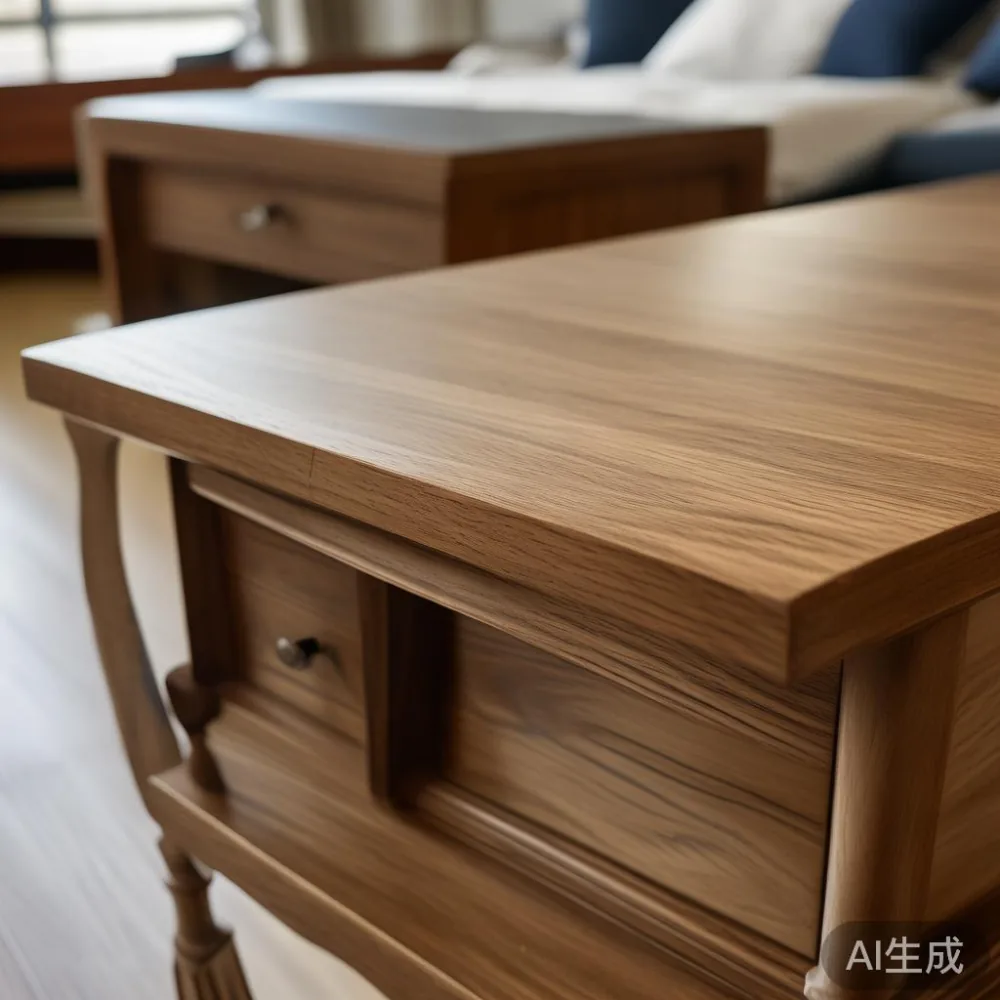
Replacement cycles. A veneer bedside table in a humid HDB typically shows edge peeling, swollen MDF, or delamination at the drawer joints between years 3 and 5. Budget S$129–S$189 for one replacement, or two replacements if you count conservatively: about S$260–S$380 over five years. A solid wood bedside table, properly kiln-dried to 8–10% moisture content, will run 10–15 years before structural fatigue, with refinishing possible mid-life at roughly S$80–S$120 per session.
Delivery and access. Both options ship in a similar box of around 15–18 kg and 0.08–0.10 m³. Free shipping kicks in over US$350 (about S$470), so a single solid wood bedside table often misses the free threshold by itself, while a pair typically qualifies. Budget S$25–S$45 for doorstep delivery in Singapore for either, including lift access where available. If you live on a high floor in a Punggol condo where the service lift must be booked, add S$20–S$40 per delivery window.
Hidden costs. Veneer furniture cannot be sanded, so once the top stains, you live with it or replace it. Solid wood can be sanded 1–2 mm three to four times across its life, which means a mid-life refinish recovers the surface for around 8% of replacement cost. A 9% GST applies to all purchases, so on a S$420 solid wood bedside table that is about S$37.80 in tax; budget the same percentage on the veneer piece.
The 5-year totals. Veneer route: roughly S$260 (two replacements at S$130 each) + S$60 in delivery + S$23.40 GST = S$343 cumulative. Solid wood route: S$420 upfront + S$35 delivery + S$37.80 GST + S$100 refinish at year 3 = S$593 cumulative. The solid wood option costs about S$250 more over five years, but you own a piece that will reach year 10, while the veneer route requires a third purchase in year 6.
Why does Singapore humidity punish veneer so harshly?
Singapore sits in a climate zone with average relative humidity of 70–85% year-round and air-conditioner swings of 20–30% inside a bedroom overnight. Veneer panels are made by gluing a thin decorative layer to an MDF or particleboard core using PVA or urea-formaldehyde adhesive. When the core absorbs moisture — even through an unsealed back panel — it swells unevenly. The decorative layer cannot stretch the same amount, so it lifts at the edges first, then bubbles across the surface. This is especially common on bedside tables because the piece is small enough that manufacturers economise on edge-banding thickness, sometimes using 0.4 mm PVC tape instead of solid wood lipping. My colleague in Bedok has a four-year-old veneer bedside table where the back panel has bowed 4 mm outward; she keeps her phone charger cables pinched behind it.
Solid wood breathes as a single piece. The same 18–22 mm oak top will expand and contract with humidity, but it does so uniformly, and the movement is restrained because the grain is continuous. Workshop makers like MIDHILL kiln-dry their timber to 8–10% moisture content before machining, which is roughly the equilibrium moisture content for an air-conditioned Singapore bedroom, so seasonal movement is minimal.
How does the comparison change if I buy a pair for a master bedroom?
This is the scenario most Singapore couples actually face, and it shifts the math. A pair of veneer bedside tables at S$150 each is S$300, free shipping included since you are above the typical local free-shipping threshold, plus S$27 GST = S$327. A pair of solid wood bedside tables in oak at S$420 each is S$840, free shipping once you cross US$350 (about S$470) per order, plus S$75.60 GST = S$915.60. Add a mid-life refinish at year 4 for one of them, around S$100, and the 5-year total is S$1,015.60. The per-piece premium over the veneer pair is about S$688, which works out to S$137 per year of ownership — roughly the cost of two dinners for two at a neighbourhood kopitiam.
The pair also opens the door to design consistency with a matching solid wood bed frame, a coordinated wardrobe, and even a marble-top dining table in the same oak tone. Light luxury interiors — whether French light luxury with curved cabriole legs and a brushed brass pull, or American light luxury with shaker profiles and blackened steel handles — depend on material honesty to read correctly. Veneer can imitate the look, but the joints, the weight (a solid oak bedside table runs 14–18 kg versus 7–9 kg for a comparable veneer unit), and the way light catches the grain telegraph the truth within a week of ownership.
Is a solid wood bedside table worth it for a small HDB bedroom?
Yes, with one caveat: scale matters. In a typical 10 m² HDB master bedroom in Tampines, a 55 cm wide bedside table can overpower the room and crowd the door arc. Choose a 40–45 cm wide model with a single drawer, around 18–22 kg in solid oak, and pair it with a slim solid wood bed frame on a 190 cm × 90 cm mattress. The mass of real wood actually helps the room feel grounded rather than cluttered, because the eye reads fewer, heavier objects as calmer than many light ones. A 7 kg veneer unit, by contrast, can feel disposable the moment you set a 2 kg lamp on it.
How do I style a Italian light luxury master bed in a small apartment?
Style an Italian light luxury master bed in a small apartment by anchoring it with a solid wood bed frame in walnut or dark oak, flanking it with two compact 40 cm solid wood bedside tables in the same timber, adding one statement piece such as a marble table or marble-top side table for a single lamp, and keeping the rest of the room in three muted tones so the materials do the talking.
The reason this works in a Singapore HDB or condo is that Italian light luxury depends on material contrast — a slubbed linen headboard against a polished marble table, or a brushed brass pull against an oak drawer front. In a small room you cannot afford clutter, so each piece has to earn its place. A solid wood nightstand (the slightly older industry term for a bedside table) at 40 cm wide gives you a drawer for chargers, a surface for a 25 cm marble-base lamp, and a 4 cm gap to the wall for cable routing. A solid wood sofa in the adjacent living room, or a solid wood dining table just beyond, then carries the same timber tone into the next space and visually extends the apartment.
What about resale value and end-of-life disposal?
A solid wood bedside table retains roughly 40–55% of its value after five years if the finish is intact. Singapore's second-hand market on Carousell and at the Sungei Road flea regularly lists solid oak bedside tables at S$180–S$250 for units originally sold at S$420. Veneer bedside tables rarely resell above S$40 because buyers know the core is degrading. At end of life, solid wood can be reworked into smaller items, donated to community wood workshops, or broken down for firewood. MDF and particleboard from a veneer bedside table cannot be easily recycled in Singapore; most ends up as bulky waste, and the adhesive off-gassing is a documented concern when the piece is damaged.
Are there any scenarios where veneer still wins?
Short-term rentals, pop-up styling for resale listings, or a child's bedroom that will be redecorated in three years — these are legitimate cases for veneer. If you know the bedside table is a placeholder, the S$130 you save can go toward a better mattress or a single marble table for the living room. The mistake is treating veneer as a long-term investment. It is a rental, and the rental renews automatically every 3–5 years through replacement.
How do I verify I am actually buying solid wood?
Three checks at the showroom or on delivery. First, lift the bedside table: a real 50 cm oak unit should weigh 14–18 kg, not 7–9. Second, look at the end grain on the legs and the underside of the top panel — if you can see continuous grain wrapping the edge, it is solid; if you see a dark line where a thin layer meets a different coloured core, it is veneer. Third, ask about kiln-dried moisture content (8–10% is the Singapore-appropriate target) and whether the maker offers a structural warranty of at least 10 years. MIDHILL, for instance, ships with a 10-year structural warranty and a lifetime refinishing service, which only makes sense for genuinely solid construction. A 14-day return window, also standard from the brand, lets you inspect the piece in your own bedroom under your own lights before committing.
Final thoughts before you measure your corridor
Measure first. The lift opening in most HDB blocks is about 1.0 m wide by 2.0 m tall, and the internal cabin is roughly 1.1 m deep by 1.6 m wide, so a fully assembled 50 cm × 40 cm × 55 cm bedside table fits comfortably. The corridor inside your flat is usually 1.0–1.2 m wide, which is fine for a 40 cm piece on its side but tight for 55 cm. If the bedside table arrives flat-packed in a box no larger than 1.0 m × 0.5 m × 0.2 m, you are safe; if the assembled dimensions exceed your narrowest doorway (typically 80–85 cm in older BTOs), ask the maker to split the assembly or supply knocked-down panels. Most solid wood bedside tables from MIDHILL are designed with knock-down joinery precisely because Singapore homes demand it.
Over five years, the solid wood bedside table costs you about S$250 more than the veneer route in Singapore dollars, but it gives you a piece that survives humidity, resells at half its value, refinishes instead of replacing, and coordinates with a solid wood sofa, bed frame, dining table, wardrobe, and the marble accent pieces that anchor a light luxury interior. The veneer route saves you S$50 a year and asks you to throw the bedside table away at year four. For a piece you touch every morning and every night, that trade is harder to justify than the price tag suggests.