Caring for a Lacquered Solid Wood Bedside Table in a Singapore Tropical Climate
I learned this the hard way last month when I visited a client in a Punggol HDB flat along Sumang Walk. Her three-year-old lacquered nightstand had developed a dull, almost cloudy patch along the edge facing the window — the side that catches the afternoon monsoon sun. She had wiped it daily with a wet cloth, assuming the humidity in Singapore (averaging 78-82% RH outdoors, often 65-75% indoors with the air-con running) would not be an issue because the wood looked sealed. It was, in fact, the humidity that did it — along with the wrong cloth, the wrong cleaner, and a bedside table pushed 15 cm too close to a curtainless window. The fix took her about S$45 in materials and an afternoon. The lesson was free, and I want to share it with anyone who has invested in a solid wood bedside table with a hand-rubbed lacquer finish.
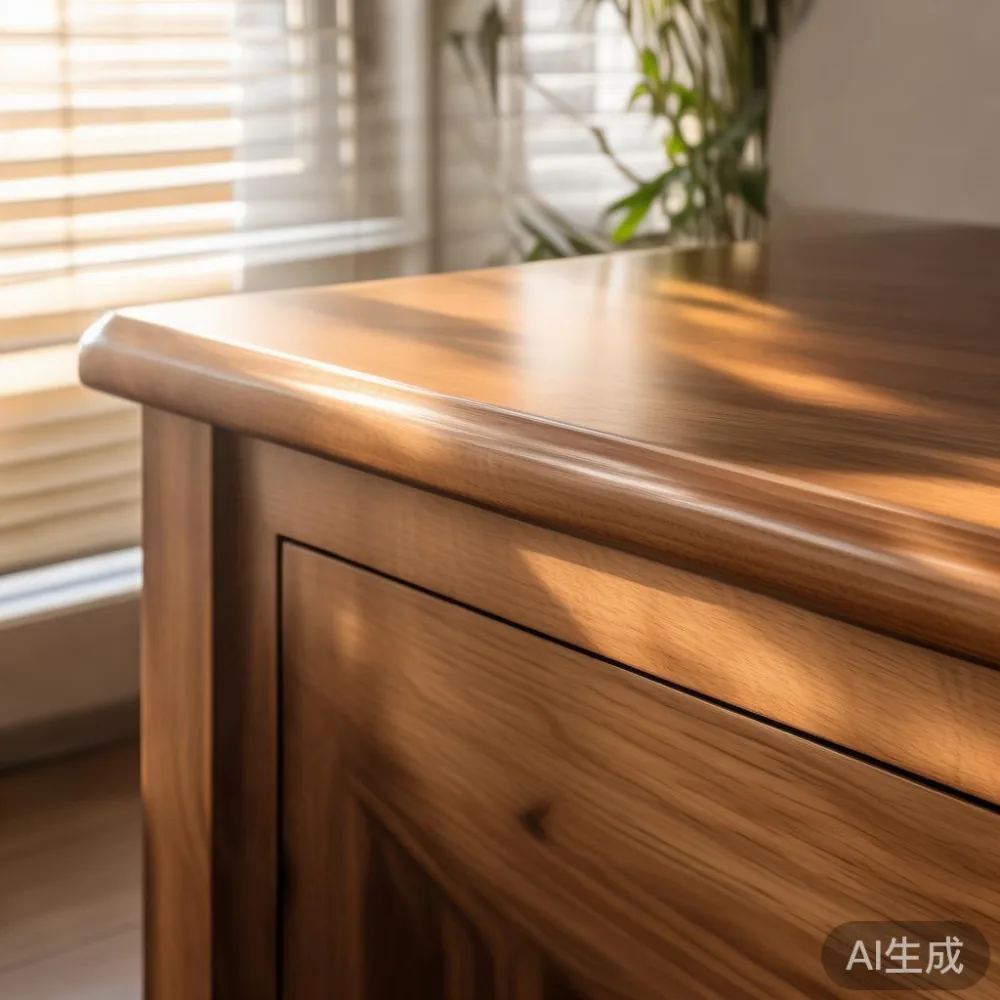
Why does lacquer behave differently here than in a temperate climate?
Lacquer — whether the traditional Chinese tung-lacquer blend, a Japanese urushi-inspired finish, or a modern polyurethane resin coat — is technically a moisture barrier, but only a thin one. In a temperate climate (think London at 55% RH, or Berlin at 50%), the finish stays stable. In Singapore, the wood beneath the lacquer is constantly trying to absorb or release moisture as your air-con cycles from 24°C at night to 28°C in the day. Each cycle causes the timber to micro-expand and micro-contract by a fraction of a millimetre. Over 12 months that is thousands of cycles, and the lacquer — which cannot stretch the same amount — begins to lose its seal at the weakest edges: the back corners of a bedside table pushed against a wall, the lip of a drawer front, the underside of the apron.
Add direct UV-B from an afternoon window and the resin begins to amber and soften. Add a wet cloth daily and the microscopic gaps at those edges drink in water, lifting the lacquer in tiny craters you only notice when light hits the surface at a low angle. That is what my Punggol client saw. She assumed the bedside table was low-quality because the lacquer had gone cloudy. It was not low-quality — it was simply uncared for in the wrong way for the climate.
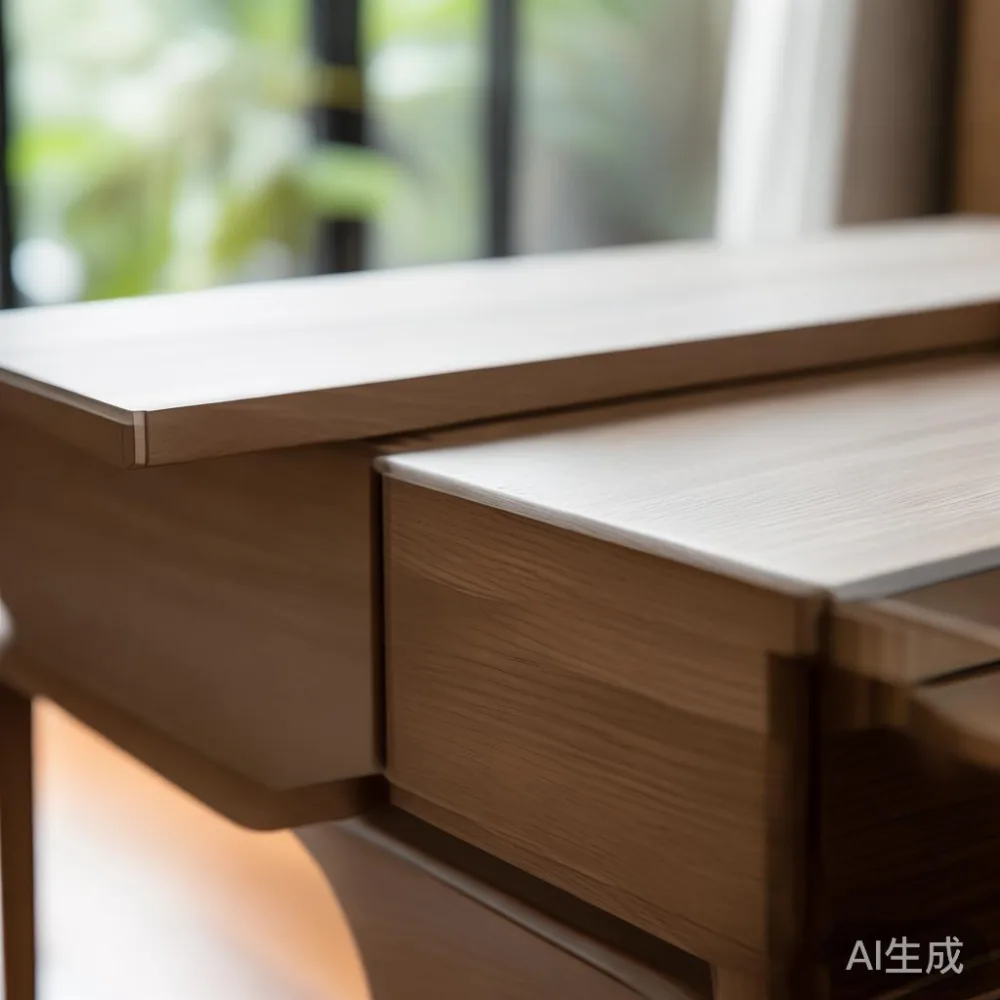
What is the right weekly routine for a lacquered bedside table?
Here is the routine I gave her, and the one I now give anyone who buys a solid wood nightstand in Singapore. It costs nothing and takes about 6 minutes per side.
Step 1 — Dust with a dry microfibre cloth (GSM 300 or higher, available at any Mustafa Centre for around S$6 for a 3-pack). Never a feather duster; it redistributes moisture rather than removing it.
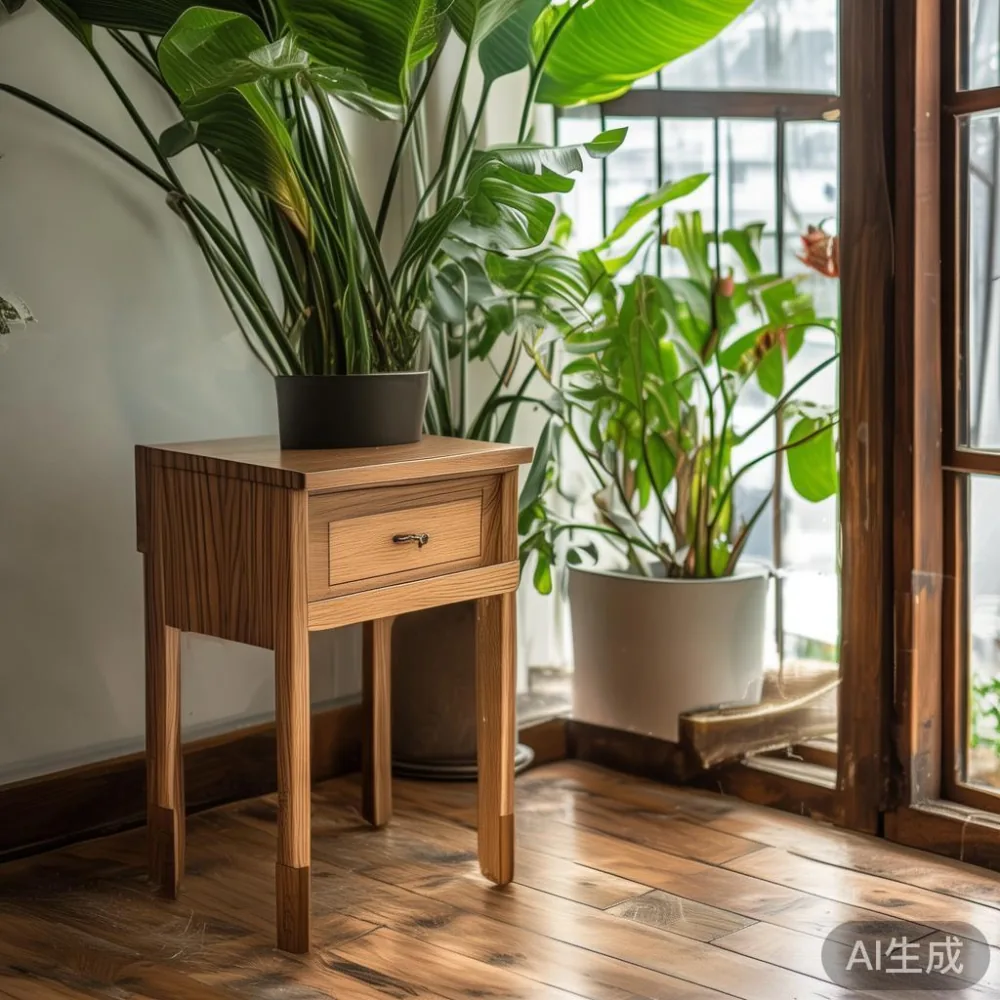
Step 2 — Once every 10 days, dampen — never soak — a second microfibre cloth with plain filtered water (a S$12 Brita jug pays for itself in a year) and a single drop of pH-neutral soap. Wipe with the grain, not against it. Dry immediately with a third cloth.
Step 3 — Once every 90 days, apply a thin coat of paste wax (Renaissance Wax, 65 ml, roughly S$28 from Tangs, or a local beeswax-based alternative from Hygge at S$22). Buff after 8 minutes with a clean cotton cloth. This recharges the lacquer's slip and adds a sacrificial layer that takes the UV hit instead of the finish.
That is it. No silicone spray, no Pledge, no orange oil, no furniture polish with silicone — silicone penetrates the lacquer and is almost impossible to remove, and it will cause the next refinishing job to fail. The 90-day wax cycle is the single habit that separates a bedside table that looks new at year 8 from one that looks tired at year 4.
Where should I place my bedside table inside a Singapore HDB or condo bedroom?
This is the spatial question nobody asks before purchase, and it is the question that decides whether the finish survives. HDB master bedrooms in a 4-room flat in Bedok or Tampines measure roughly 3.4 m by 5.0 m once you subtract the built-in wardrobe and the queen bed footprint of 1.6 m by 2.0 m. A 50 cm by 40 cm bedside table needs a clearance of at least 8 cm at the back for air movement, plus 60 cm of clear floor space in front so you can open the drawer fully without hitting the bed.
The three placement rules I give every client:
Rule 1 — Keep the bedside table at least 1.2 m away from any window with direct afternoon sun. If your bedroom window faces west (common in Punggol and Sengkang), this is non-negotiable. UV is the single biggest killer of lacquer.
Rule 2 — Keep the bedside table at least 15 cm away from an exterior wall. HDB party walls and condo perimeter walls sweat during the monsoon months; the moisture wicks into the back edge of a bedside table and lifts the lacquer before you ever see the cloudiness. If your flat is on a high floor (above the 18th, common in Treasure At Tampines or Waterway Ridges), the problem gets worse because the wind-driven rain hits harder.
Rule 3 — Keep the bedside table out of the direct line of the air-con louvre. The constant cool-then-warm cycle stresses the joint between the lacquer and the substrate. If your Daikin unit is mounted above the bed and louvres down toward the nightstand, redirect the louvre to point at the foot of the bed.
One more practical number: the lift in most HDB blocks is 1.1 m wide by 1.4 m deep, and the corridor turn at the lift lobby is roughly 2.4 m wide. A bedside table packed flat is usually fine; one delivered fully assembled may need to come up the service lift (1.5 m by 2.0 m in newer blocks) — ask your retailer before you buy. MIDHILL, a Foshan-based solid wood maker that exports to more than 15 countries, ships flat-packed bedside tables by default for this exact reason, and a single carton for a 60 cm nightstand is around 12 kg, easy enough for one delivery driver to carry up.
What should I do if the lacquer has already gone cloudy or sticky?
If the damage is light — a dull haze you can see at an angle — the fix is to stop wet-wiping for 14 days and apply two coats of paste wax 7 days apart. The wax fills the micro-pores and restores the sheen.
If the damage is medium — small craters, slight tackiness, edges that look whitish when wet — you need a mild abrasive. Use 0000-grade steel wool (S$4 at any hardware shop in Geylang) lightly buffed along the grain, then wax. This removes the damaged surface layer of lacquer without cutting through to the wood.
If the damage is heavy — the lacquer is peeling, the wood beneath has darkened with water staining — do not try to fix it yourself. Call a refinisher. A full strip and re-lacquer on a 50 cm bedside table costs around S$180 to S$280 in Singapore, and the work takes 5 working days. The same job on a dining table runs S$450 to S$700; on a wardrobe panel it can hit S$900 because of the surface area. This is also where a maker's after-sales policy matters: MIDHILL offers lifetime refinishing support on lacquered pieces purchased through their Singapore channel, which over a 15-year ownership period effectively saves a typical two-bedroom household S$1,200 to S$1,800 in refinishing costs.
How does this fit into a light-luxury bedroom scheme without ruining the finish?
Light luxury — whether the French light luxury style (think thin brass legs, slim handles, soft taupe lacquer), American light luxury (think matte cream, slim oak, brushed nickel pulls), or post-modern light luxury (think travertine tops, geometric drawer fronts) — all of them rely on a near-perfect finish to do the work. The moment the lacquer clouds, the look collapses. So the care routine above is not separate from the design choice; it is part of it.
A few practical notes for styling. If you are working out how to style French provincial sofa in bedroom styling for a coordinated look, match the bedside table handles to the sofa leg caps — small detail, large payoff. For a smaller HDB bedroom (around 11 sqm after the bed and wardrobe), look for light luxury for small living room design ideas that translate: a 45 cm-wide bedside table instead of a 55 cm one, a marble table top tray instead of a separate marble side table, drawers instead of open shelves (dust collects and dulls the lacquer faster than almost anything else). If your budget is tighter, the under 2000 Post-modern furniture bracket — which includes lacquered bedside tables, two-seater benches, and accent chairs — gives plenty of room to stay within the aesthetic without sacrificing the finish quality. Coastal styling in Singapore reads surprisingly fresh when you mix rattan and pale oak; the under 2000 Coastal furniture category includes several bedside tables with a whitewashed lacquer that handles humidity well. For those who want the European feel in a 12 sqm bedroom, the European for small living room playbook — slim profiles, raised legs of 18-22 cm, no skirting — is the right starting point. Buyers looking at the trade side should know that wholesale Italian light luxury furniture orders out of Singapore typically ship in 40-foot HQ units holding around 360 flat-packed bedside tables, with a 35-day sea transit from Foshan to PSA, then 5-7 days for customs and last-mile delivery. At retail, a single lacquered solid wood nightstand in the MIDHILL collection — for example, the Provence 2-drawer in American light luxury cream, or the Como in post-modern light luxury travertine-top — sits between S$589 and S$989, well under the S$1,100 mark many condo owners set as their ceiling.
How often should I refinish, and what does lifetime refinishing actually cover?
For a bedside table that sees daily use, a full re-lacquer every 8 to 10 years is realistic in Singapore, longer if you keep the 90-day wax habit and follow the placement rules. A bed frame in lacquered solid wood typically goes 10-12 years; a dining table, because of the heat-and-moisture load from plates and serving dishes, every 6-8 years; a wardrobe, because of the lower UV exposure, can go 12-15 years.
Lifetime refinishing — the kind MIDHILL publishes — usually means the maker will, for the life of the original purchaser, strip and re-lacquer the piece at the cost of materials only (S$55 to S$110 per bedside table, depending on the size). Labour is included if the piece is still under the warranty period. The 10-year structural warranty covers the joinery — the dovetails, the dowels, the bed-frame slats — and is separate from the finish warranty, which is usually 24 months. Read the fine print before you buy.
Two final numbers for the practical buyer. Delivery from a Foshan-maker warehouse to a Singapore HDB door flat is 18-28 days by sea, plus 3-5 days for the local leg, and free above US$350 (about S$480). GST at 9% is added at checkout for Singapore deliveries, and the 14-day return window starts the day the carton crosses your door, not the day it lands at PSA.
If you remember nothing else, remember this: in a tropical climate, a lacquered solid wood bedside table is not a buy-and-forget piece. It is a buy-and-tend piece, and 6 minutes a week plus 20 minutes a quarter is all the tending it asks for. Spend that, and the finish will outlast the next two reflos of your bedroom.