Humidity and Solid Wood Furniture in Singapore: A Practical Guide for HDB and Condo Owners
I still remember the afternoon a customer in Tampines called me in a panic. Her six-month-old solid wood bedside table had developed a hairline crack along the drawer face, and the top had begun to cup so noticeably that her alarm clock wobbled. The flat was on a high floor, west-facing, with afternoon sun pouring through unlined windows. Her air-conditioner ran only at night. The culprit was not the craftsmanship. The culprit was Singapore humidity, sitting stubbornly between 70% and 85% for most of the year, working on wood that had been dried, finished, and packed in a much drier climate. That phone call is the starting point for this guide, because the same physics that cracked her bedside table are quietly acting on every wardrobe, dining table, and bed frame in every HDB flat and condo from Punggol to Bedok.
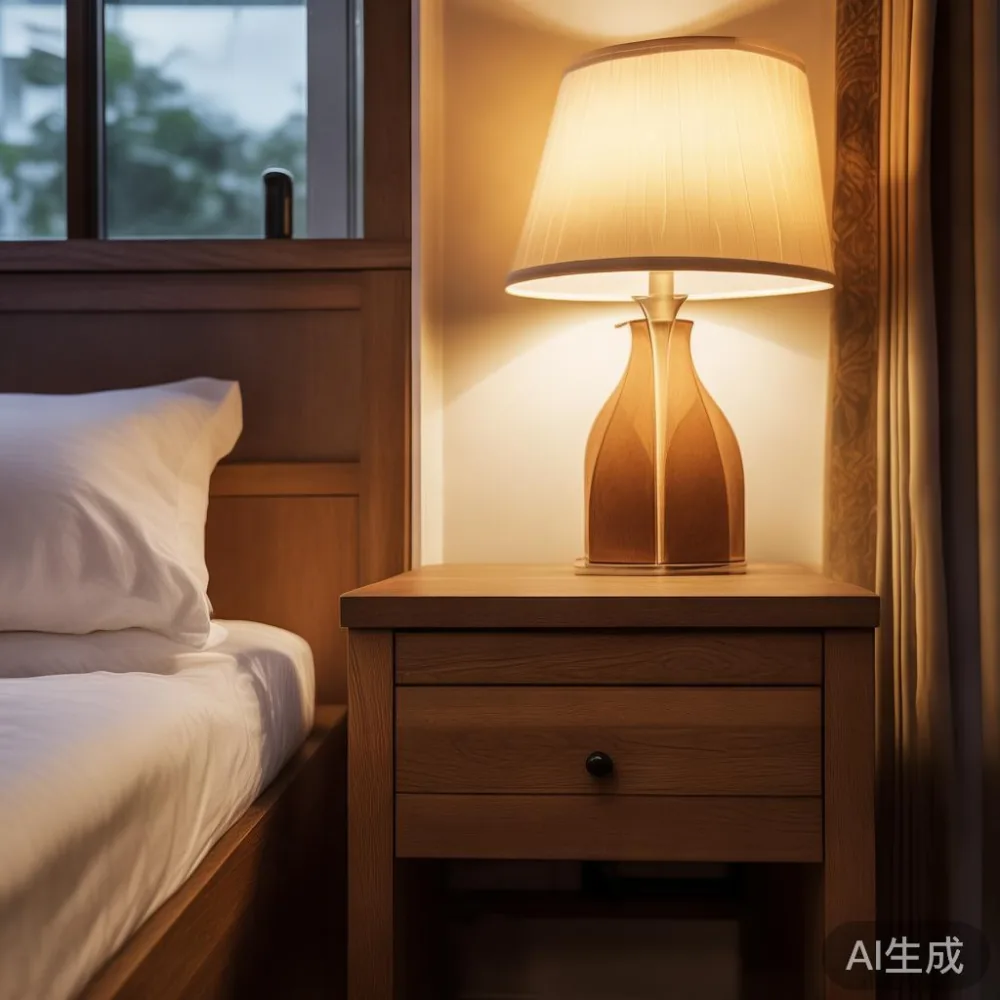
Wood is hygroscopic. It absorbs moisture when the air is damp and releases it when the air is dry. A solid oak board cut in Foshan at 9% moisture content and shipped to Singapore does not arrive at 9% for long. Within weeks it begins a slow negotiation with the local climate, and the result shows up as expansion across the grain, contraction at the surface, hairline cracks at the joints, and sticky drawers on a bedside table that worked perfectly in the showroom. Understanding this single behaviour is the difference between furniture that ages gracefully and furniture that frustrates you by month six.
What does 80% humidity actually do to a solid wood bedside table?
To put a number on it, an oak board 60 cm wide will move roughly 1.2 mm for every 4% change in equilibrium moisture content. In a Tampines flat where indoor humidity swings from 65% at 3 a.m. (when the air-con is on) to 82% at 6 p.m. (when the unit switches off and the afternoon showers roll in), the wood is being asked to swell and shrink by 1% to 2% of its width every single day. Over a month, that is thousands of micro-movements. The finish absorbs the worst of it at first, then the joints start to complain. A bedside table is the first casualty because its top is wide, thin, and unsupported on the underside, and its drawer faces cross the grain in two directions.
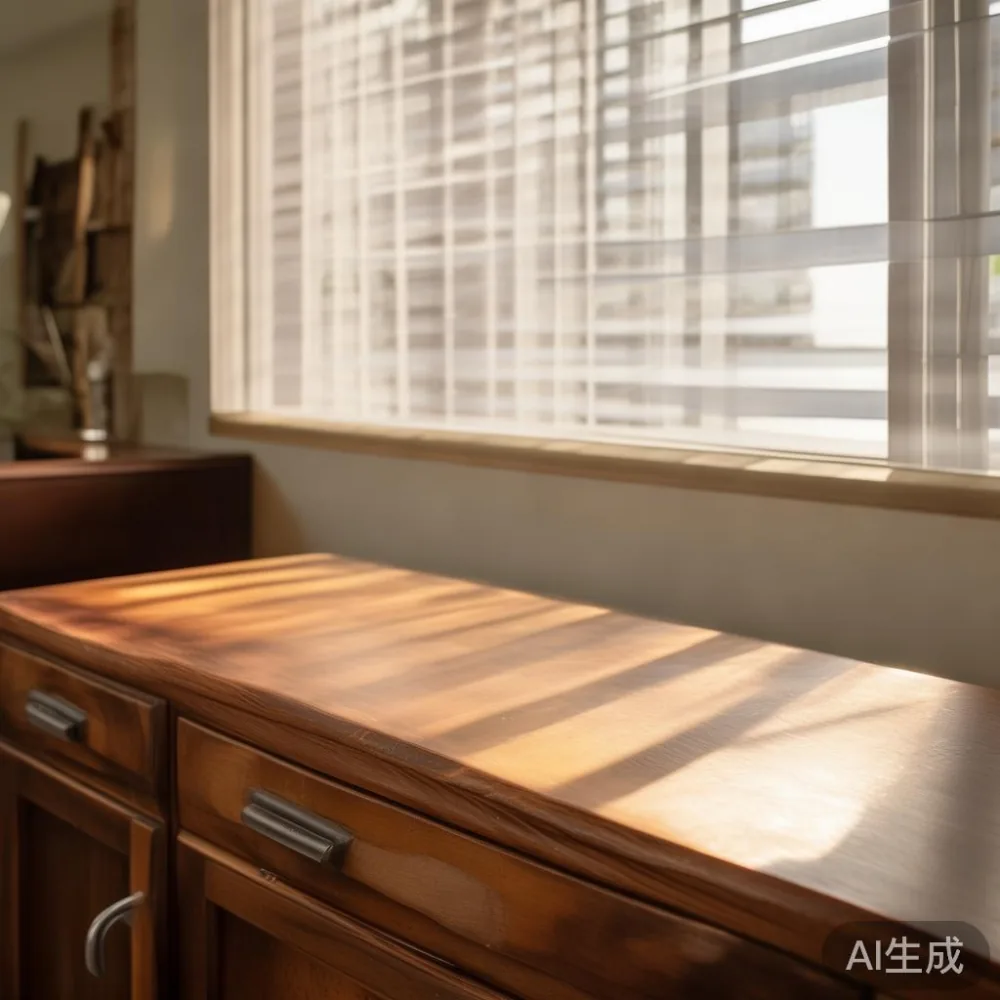
The honest answer to the question is that 80% humidity does not destroy a well-constructed solid wood bedside table, but it will expose every shortcut the maker took. If the drawer bottoms were glued rather than floating in a groove, they will buckle. If the top was attached with a rigid figure-eight fastener in the centre, the seasonal cup will telegraph through the finish. If the timber was not dried below 10% before assembly, the cracks will appear within the first wet season. None of these failure modes are inevitable. They are the predictable result of ignoring the climate.
Which wood species actually survive a HDB bedroom in Bedok?
Not all solid wood behaves the same way. Movement is roughly proportional to a species' tangential shrinkage coefficient, and a quick ranking helps you choose with your eyes open. Teak, the traditional choice for Southeast Asian furniture, moves about 4.7% tangentially and carries natural oils that repel moisture, which is why it has been used for boat decks for centuries. White oak sits around 8%. Rubberwood, common in entry-level pieces, moves close to 8% and has less natural oil, so it needs a more careful finish. Ash and walnut both run near 7%. For a bedside table that will sit 30 cm from a bathroom door and face the nightly humidity pulse of a shower, teak or white oak with a properly applied hard-wax oil is the realistic answer. A bedside table in MDF with a wood-veneer face will not move, but it will also not survive a spilled glass of water or a 60% relative humidity swing without swelling at the edges, which is why the same customer in Tampines chose to replace, not repair, her original particleboard unit with a 100% solid wood MIDHILL bedside table finished in three coats of hand-applied hard-wax oil.
How should I acclimatise a new bedside table before the first wet season hits?
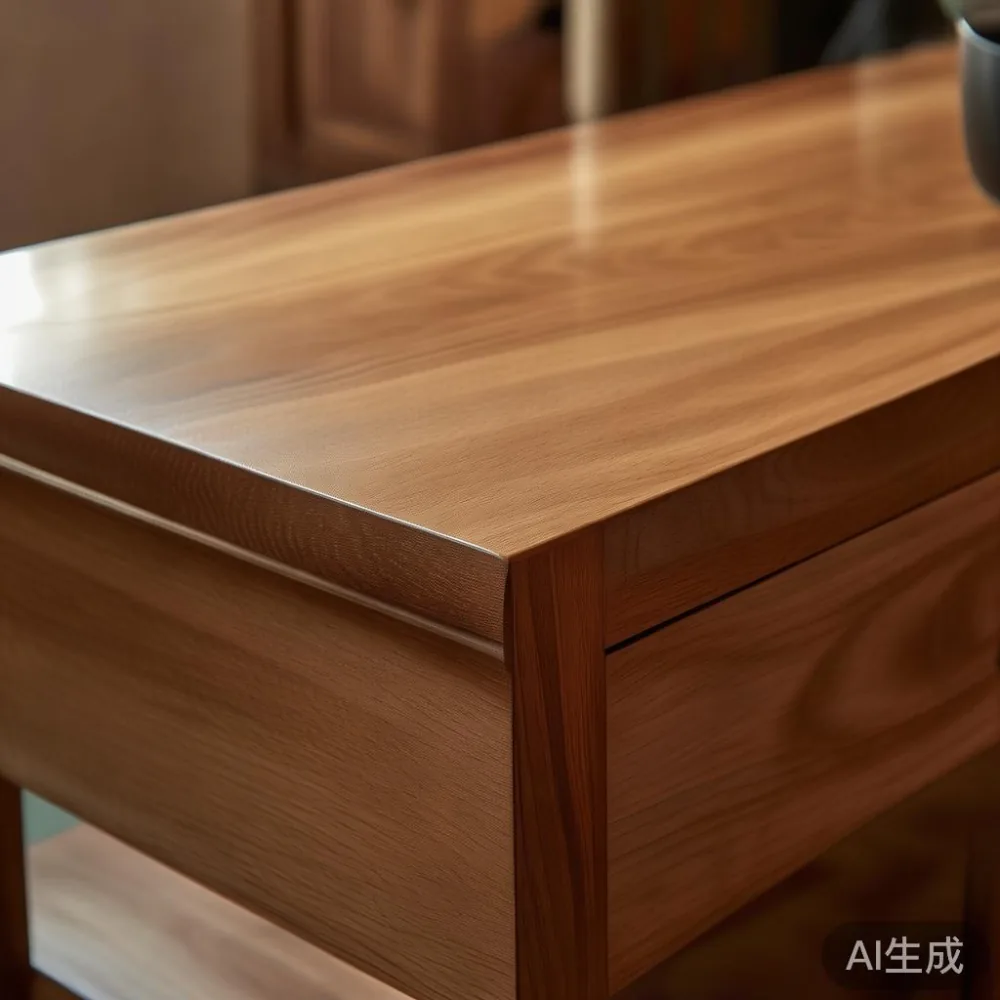
Acclimatisation is not a marketing word. It is a 10 to 14 day process that costs nothing and prevents 80% of the complaints I see. The rule is simple: place the furniture in the room where it will live, remove all packaging, leave the drawers slightly open, and let the wood find its equilibrium. Do not place it against an exterior wall that sweats in the afternoon. Do not push it directly under the air-conditioner. Leave 10 cm of air gap on the back and sides so the wood can breathe on all faces. If you can, run a dehumidifier in the room for the first week, set to 55% relative humidity, which is the sweet spot for both human comfort and solid wood stability. For a typical 12 sqm HDB bedroom in Punggol, a 12-litre dehumidifier costs around SGD 180 and uses about SGD 8 of electricity a month at current tariff.
Once the piece has settled, keep the indoor range between 50% and 65%. A S$25 digital hygrometer from any Tampines Mall electronics shop is the cheapest insurance you can buy for a S$1,200 dining table or a S$680 bedside table. Watch the reading the way you watch the PSI on a hazy day.
How do corridor and lift dimensions quietly shape your furniture delivery?
There is a Singapore-specific constraint that has nothing to do with humidity but ruins more furniture than the weather: getting the piece into the flat. A standard HDB passenger lift in a Block 400-series in Bedok has an internal cabin of about 1.1 m wide by 1.4 m deep by 2.2 m high, with a door opening of roughly 0.8 m. A standard condominium service lift in a Punggol development such as Treasure Crest or Waterway Woodcress is often 1.3 m by 1.6 m. A solid wood dining table top longer than 1.6 m will not fit a passenger lift without tilting, and a king-size bed frame in one piece will not enter at all. This is why experienced makers design their Singapore range around a 1.2 m maximum single-piece width, with bed frames that bolt together from two halves and bedside tables that pass a 0.7 m door opening. Always measure your lift before you order, not after.
MIDHILL ships its Singapore-bound containers with flat-pack joinery on the larger items, which keeps the box under 1.1 m on the longest side and avoids the SGD 80 to SGD 150 manual handling fee that movers charge for items that need to be hoisted up the corridor on a sack trolley. For deliveries above S$350, MIDHILL includes free shipping to the door, but the last 10 metres from the lift lobby to your bedroom is your problem unless you budget an extra S$60 for a two-man carry.
Which finish actually protects wood in 80% humidity?
Finish is your first line of defence, and the choice matters more in Singapore than in almost any other market. Polyurethane, the high-gloss plastic coating you see on many entry-level pieces, blocks moisture movement almost completely. That sounds good until the wood underneath tries to swell and the finish cracks, lifting off in sheets. Lacquer, the spray finish common on contemporary light luxury pieces, behaves similarly and chips at the joints. The finish I recommend for Singapore, and the one used on the bedside tables, dining tables, and bed frames in the MIDHILL Singapore range, is a natural hard-wax oil such as Osmo Polyx-Oil. It penetrates 0.3 mm into the surface, allows moisture vapour to pass through slowly rather than trapping it, and can be spot-repaired with a re-application in 15 minutes. A S$45 tin covers roughly 8 sqm and lasts three to five years on a bedside table before a refresh is needed.
For a French light luxury look on a bedside table, pair the hard-wax oil with a matte 5% sheen rather than a high-gloss 80% sheen. The matte surface hides the micro-movements that the gloss finish amplifies. If you prefer an American light luxury feel with deeper walnut tones, the same oil works on American black walnut, which holds its colour well under Singapore's strong UV index of 11 to 13.
Why do drawers stick in July but slide freely in February?
Sticking drawers are the most common complaint I receive every July, August, and September, which are the three highest-humidity months in Singapore. The drawer sides, typically 1.5 cm to 2 cm wide solid wood, swell across the grain as the moisture content rises from 9% in February to 14% in August. The drawer front, however, is usually 2.5 cm thick and absorbs moisture more slowly because it is end-grain sealed, so it barely moves. The result is a drawer face that is the same width as it was in February, trying to fit into a cabinet opening that has narrowed by 2 to 3 mm. The fix is not to plane the drawer in July. The fix is to leave 1.5 mm of side clearance on every drawer at the time of manufacture, sand the soffits with 320-grit so the swollen wood slides rather than grips, and accept that a solid wood bedside table needs the same seasonal tolerance as a wooden door in a traditional shophouse.
How do I style a European light luxury bed in a room that fights itself on moisture?
Styling a light luxury bed in a Singapore bedroom is a balance between visual calm and air movement. The bed itself should sit 8 to 10 cm away from the wall to allow the back panel to breathe. A European light luxury bed in oak or ash with a low upholstered headboard pairs well with a bedside table in the same species, ideally with the drawer pulls in brushed brass rather than chrome, because brass tolerates humidity without pitting. Leave 60 cm between the two bedside tables so the mattress edge does not block the drawer from opening fully. For lighting, place a 25 cm ceramic table lamp on each bedside table rather than a wall-mounted reading light, because the lamp's heat gently dries the immediate surface and discourages mould on the wall behind the headboard.
When clients ask me how to style European light luxury bed in room layouts that include air-conditioner vents, I always suggest positioning the headboard on the wall opposite the supply vent so the cool, dry air falls across the foot of the mattress and the bedside table tops rather than blasting the back panel directly. A common European light luxury bed vs Modern bed comparison in Singapore comes down to proportion: the European piece runs 12 to 15 cm taller in the headboard and 5 cm longer in the frame, so it visually anchors a 12 sqm HDB room better than a low-slung modern platform bed.
How do I style a light luxury wardrobe without trapping moisture inside?
A wardrobe is the largest piece of solid wood in most HDB bedrooms, and the one most likely to suffer from trapped humidity. The wardrobe back panel, hidden against the wall, gets no air movement. In a Punggol flat where the master bedroom shares a wall with the bathroom, the back of the wardrobe can sit in a microclimate of 80% to 90% relative humidity for years. The fix is to leave a 3 cm gap between the wardrobe back and the wall using felt floor protectors under the rear legs, which costs about S$12 and adds an air channel. The interior should be lined with 3 mm cedar veneer or, more affordably, left bare so the wood can breathe on both faces. For anyone researching how to style light luxury wardrobe in room configurations with a coffered ceiling, run a slim 12V LED strip inside the top cornice; the small amount of heat it generates keeps the interior 3% to 4% drier than the room.
Choosing the wardrobe is also a climate decision. If you are weighing how to choose European light luxury wardrobe options against a post-modern light luxury alternative, remember that the European style with full overlay doors and continuous gaskets tends to seal the interior more tightly, which traps moisture. A post-modern light luxury wardrobe with framed glass doors and a 3 mm shadow line around each panel allows constant air exchange and is the more forgiving choice for a ground-floor HDB flat in Bedok Reservoir that sits closer to the soil moisture line.
What about a marble table or marble-topped bedside table?
Marble behaves differently from wood but has its own humidity-related quirks in Singapore. A solid marble bedside table will not swell or warp, which sounds ideal until you place a cold drink on it and watch the condensation ring etch into the polish. The fix is a S$20 set of stone coasters and a 12 mm felt pad under every object that sits for more than a few hours. For a bedroom, a marble-topped bedside table on a solid wood plinth gives you the best of both worlds: the marble top is 2 cm thick and stays cool to the touch, which is a small luxury in a 28°C bedroom, while the wood plinth carries the visual warmth of the room. Clean the marble weekly with a pH-neutral stone spray (about S$14 a bottle) and reseal it every 18 months with a penetrating stone sealer (S$45 for 500 ml). Avoid vinegar, lemon juice, and any of the common HDB cleaning fluids that contain citric acid, because they will dull the polish within weeks.
How do I know if a piece of solid wood furniture was properly dried before it left the factory?
Ask for the moisture content reading at the time of packing. A reputable maker kiln-dries solid wood to 8% to 10% moisture content for tropical climates and measures each batch with a pin-type moisture meter. The reading should appear on the packing list or the quality control sheet that travels with the shipment. If the seller cannot or will not show you that reading, assume the wood was air-dried to 14% or higher, which means it will shrink visibly within the first six months. MIDHILL includes a kiln-drying certificate with every container shipped to Singapore, and the reading is taken again at the Foshan warehouse 48 hours before loading. The container itself is fitted with 1 kg silica gel desiccant bags every 2 m of length to absorb moisture during the 7-day sea voyage, which is a small detail that prevents a lot of warping at the receiving end.
Will my solid wood bed frame and dining table survive Singapore's climate for ten years?
A solid wood bed frame, dining table, wardrobe, nightstand, and sofa frame will all survive a decade in Singapore if three conditions are met: the timber was kiln-dried to under 10% before assembly, the finish is a breathable hard-wax oil rather than a thick plastic coating, and the indoor humidity is kept between 50% and 65%. Under those conditions, a MIDHILL piece comes with a 10-year structural warranty that covers joint failure, frame cracking, and drawer warp, plus a lifetime refinishing service that restores the surface for a flat S$180 per piece regardless of size. The warranty travels with the furniture, so if you move from Tampines to a Punggol condo in year six, the cover continues. If you sell the piece to a friend in year eight, the cover transfers with a quick email to midhillco@gmail.com with the original invoice number.
The customers who hit problems are almost always the ones who bought a piece with a beautiful high-gloss lacquer finish, placed it against an uninsulated exterior wall, and never opened the windows. The customers who do well are the ones who spent S$25 on a hygrometer, SGD 8 a month on dehumidification, and S$45 every three years on a tin of Hard-Wax Oil. That small annual habit keeps the wood moving within its tolerance and keeps the surface looking the way it looked in the showroom on day one.
What is the most overlooked humidity risk in a new condo?
Newly completed condominiums in Punggol and the Greater Southern Waterfront area are especially aggressive on wood furniture because the plaster walls and screeded floors are still releasing construction moisture for the first 18 to 24 months. A freshly painted HDB resale flat in Bedok can also push indoor humidity above 85% for the first three months. If you move a solid wood dining table into a brand-new flat, run a 20-litre dehumidifier on continuous drain for the first month. The 20-litre unit costs about S$320 and pulls roughly 8 litres a day out of a 90 sqm flat in the first week. After the construction moisture is out, drop back to a 12-litre unit and the routine above.
How does GST affect a typical bedroom furniture order in 2025?
Every price quoted in this guide is inclusive of the current 9% GST that applies to imported furniture in Singapore. A S$1,200 solid wood bed frame, two S$420 bedside tables, and a S$1,800 wardrobe total S$3,420 before GST, S$3,728 after. Free shipping kicks in above S$350, so the only variable cost on most orders is the SGD 60 to SGD 150 manual handling if the lift is too small for the cartons. A 14-day return window is available for pieces that arrive damaged or with a moisture content reading above 12%, which gives you a month to acclimatise and inspect before the final commitment.
What should I do this week if I already own a solid wood bedside table that is showing stress?
Order a hygrometer if you do not already have one, and run it for seven days in the bedroom. If the average reading is above 65%, run a dehumidifier at night for the next month. If the bedside table has developed a hairline crack at a joint, do not fill it with wood filler; that traps moisture and accelerates the damage. Leave the crack open for two weeks and let it stabilise, then apply a coat of hard-wax oil over the area with a lint-free cloth. If the crack is more than 3 mm wide or the drawer no longer closes, photograph the area, send the photo to midhillco@gmail.com with your invoice number, and the team will arrange a free replacement part or a workshop repair under the structural warranty. Most of what looks like a serious problem in month three turns out to be a minor movement that settles once the indoor humidity is brought under control.
Solid wood furniture is one of the few purchases that improves with age if the climate is managed, and one of the few that frustrates you if it is not. A bedside table in teak or white oak, finished in hard-wax oil, acclimatised for two weeks, and kept in a 55% humidity room will outlast every MDF alternative in the showroom, will gain a deeper patina each year, and will still be in service when the next round of flat renovations happens in 2035. The climate is not the enemy. An unread climate is.