How to Choose the Right Bedside Table Size for a Singapore HDB Living Room
A bedside table in a Singapore HDB flat must do more than hold a phone and a glass of water. It has to sit comfortably beside the bed, suit the available wall space, match the lift and corridor dimensions used for delivery, and look at home within a compact living room. The right size is determined by the bed, the passage, the room layout, and the way you actually use the surface.
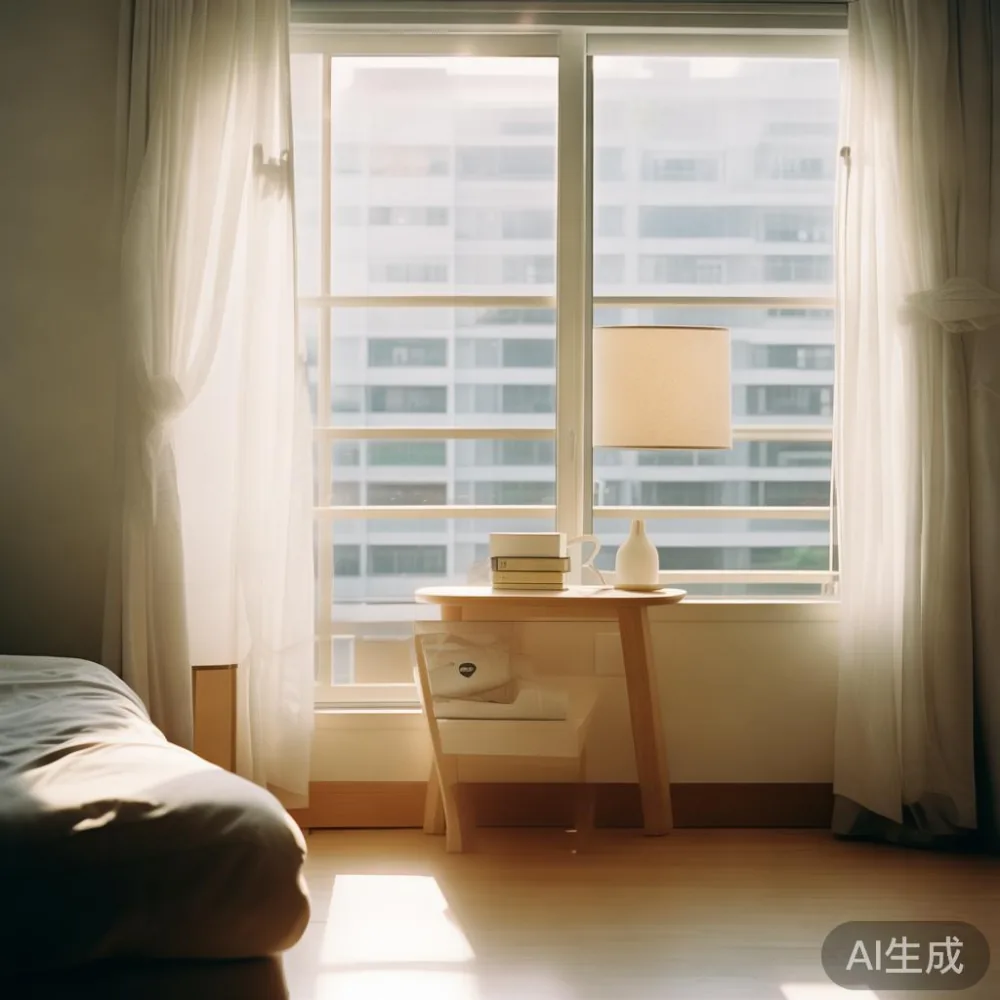
This guide uses common dimensions from HDB homes in Tampines, Bedok, and Punggol, as well as owner-occupied condos with similarly disciplined circulation planning. A width of 40 cm often gives a useful balance between storage and floor coverage, while 30 cm suits narrow rooms and 50–60 cm tables suit wider bedrooms or larger bedside zones. These are working guidelines rather than fixed rules: measure the bed, mark the door and corridor clearances, and then choose a nightstand that fits the whole route from the building entrance to its final position.
How wide should a bedside table be beside an HDB bed?
The most practical starting point is the bed width. A 90 cm single bed generally pairs well with a 35–45 cm bedside table. A 120 cm double bed can carry a 40–50 cm unit, and a 150–180 cm queen or king bed usually accommodates 45–60 cm on each side. Matching the table width to the bed creates a more settled composition, although matching it exactly is not compulsory.
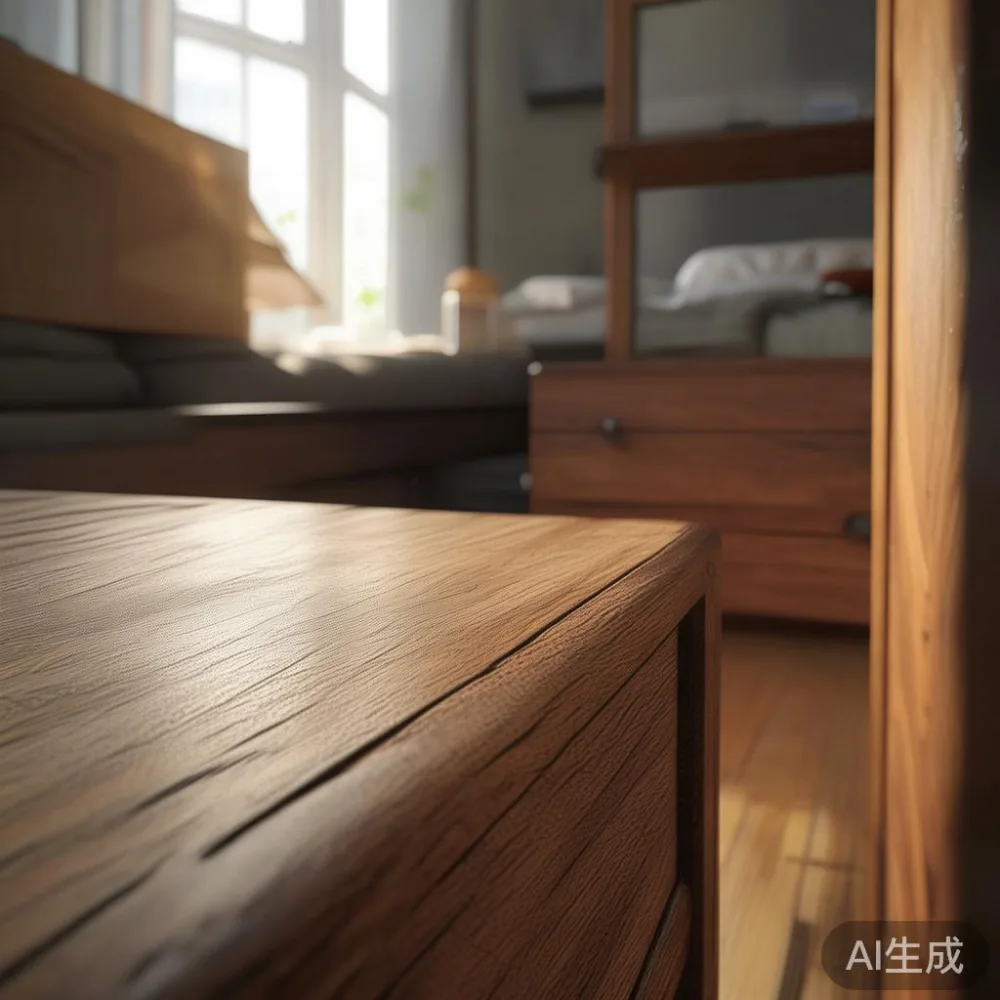
Height matters just as much as width. The tabletop should sit within 2–5 cm of the mattress surface for easy reach. A 45–55 cm high table works with many standard HDB bed frames, whose finished mattress heights often range from 45 cm to 60 cm. If your mattress sits high, a taller bedside table prevents you from stretching downward for a lamp switch or book.
Depth controls visual bulk and access. Choose a depth of 35–40 cm for a compact HDB bedroom with a tight walkway. A 40–50 cm depth allows a deeper drawer, a charging socket, and a small lamp, but it should not project into the main circulation route. Pull the drawer fully open in your mind: a 40 cm table with a 32 cm internal drawer needs roughly 32 cm of additional front clearance.
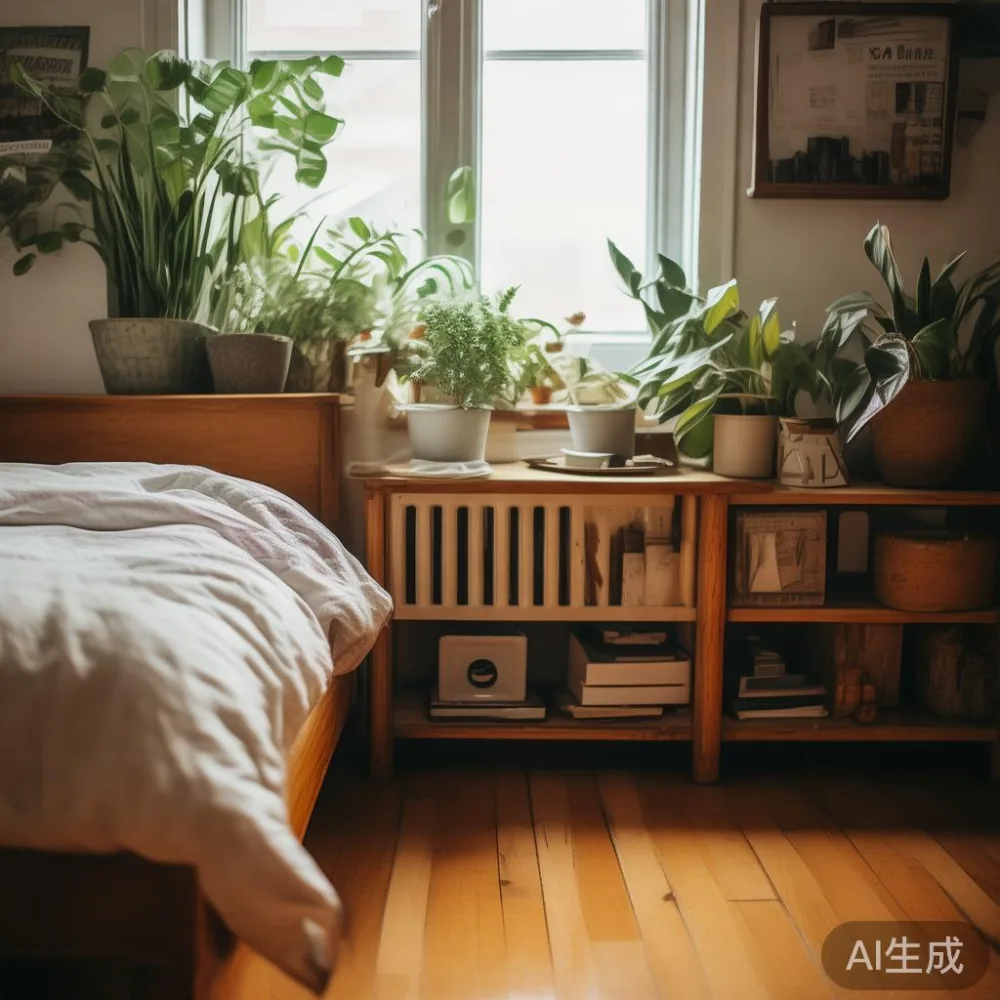
One real test settled this for me. Last month I visited a renovated Bedok flat where a 55 cm wide table looked generous beside the bed but reduced the path beside the wardrobe by 12 cm. We replaced it with a 42 cm wide, 38 cm deep nightstand. The narrower unit still held a 15 cm table lamp, a phone, and a 25 cm charging cable, while the passage became easier to use.
Which measurements should I take before buying?
Measure the space in five directions: bed length, bed width, wall length, bedside depth, and the clear route from the bedroom door. Photograph each side of the room and mark the position of power outlets. A bedside table with a rear cable opening is useful if the lamp, clock, and phone charger share one wall socket, but this feature cannot correct a table placed in the wrong location.
For HDB blocks, also consider the route beyond the flat. Standard HDB lift cars are commonly around 100–140 cm wide and 120–140 cm deep, with door openings of roughly 80–90 cm. Internal corridors may be only 90–120 cm wide, and corner turns can be tighter. Check whether the packed nightstand fits through the lift door, along the corridor, and through the bedroom doorway.
A flat-packed table in a 45 × 35 × 50 cm carton is easier to manoeuvre than the same table delivered as a rigid 60 × 45 × 60 cm package. For an assembled solid wood unit, ask for the exact carton dimensions and weight rather than estimating. MIDHILL can quote packed dimensions and delivery arrangements before dispatch, which is sensible when a Punggol corridor includes a narrow dog-leg near the flat entrance.
Allow 5–8 cm between the table and the bed frame, and around 8 cm behind the table for cables if possible. A narrow gap allows a plug to be inserted without forcing the table against the bed. Keep the front zone clear for at least 45 cm where someone may walk past, especially in a compact HDB room where the bedside table stands near the doorway.
Will a larger bedside table make a small Singapore room feel better?
A larger table does not automatically create more usable space. It may provide a better surface for a laptop, tray, lamp, or books, but it can also make the room feel crowded if the furniture has heavy proportions. A 40 cm wide unit with slim legs and a light timber finish often appears more generous than a bulky 50 cm cabinet with a solid apron.
Think in terms of visual weight. A compact 30–35 cm nightstand is appropriate beside a small 90 cm bed, provided it still supports a stable lamp. A 45–60 cm unit is more useful beside a queen or king bed, or where the table doubles as a small display surface. Drawers improve storage without requiring a separate chest, but deep drawers can become difficult to open in a narrow gap.
Open shelves reduce the sense of mass. A low 35 cm table can include one drawer and one open compartment, useful for books and an alarm clock. Fully closed cabinetry keeps clutter hidden, but it needs more front clearance. Consider whether the table needs to hold a 2.5 kg laptop, a 1.2 kg ceramic lamp, or a 600 ml water bottle, and select dimensions that support those daily items without forcing the surface to become crowded.
Light finishes such as pale oak, warm ash, or a muted off-white lacquer can reflect daylight and work well in HDB rooms with limited natural light. French light luxury styling favours pale woods, curved edges, and restrained hardware. American light luxury often uses warmer wood tones, generous proportions, and substantial details. Post-modern light luxury allows a cleaner shape with one expressive finish. The best light luxury furniture choice is not the largest option; it is the one whose proportions agree with the room.
How should the bedside table relate to the bed frame?
The bedside table should read as part of the sleeping zone rather than as an unrelated object. Match its height to the mattress top, repeat one colour or material from the bed frame, and align the table edge approximately with the bed edge or pillow line. Exact symmetry helps in formal layouts, while staggered tables can work in an informal room if both remain within reach of the bed.
If the room includes a solid wood sofa, a solid wood bed frame, a dining table, or a wardrobe, note their wood tones before choosing the nightstand. A table that is slightly lighter or darker than the bed can create contrast, but wildly mismatched finishes can make a compact space feel busy. An Italian light luxury nightstand would usually suit a restrained bedroom through proportion and material quality, not through excessive ornament.
One practical detail is bedside lighting. A table lamp needs enough width and weight to remain stable. For a 35–40 cm tabletop, choose a lamp with a base under roughly 18 cm and a shade around 25–30 cm across. Keep the shade edge close to eye level when seated, and use warm light at approximately 2700–3000 Kelvin. A dimmable reading light is helpful in a shared HDB bedroom where one person may need light after another has fallen asleep.
The bed itself remains the main visual reference. Buyers comparing a European light luxury bed or a MIDHILL light luxury bed can note the finished mattress height and the amount of space allotted beside it. The same process helps when researching the best Japandi bed for 2026, particularly when low-profile frames call for a lower bedside table.
What about lift access, delivery time, and the cost in Singapore?
Delivery planning is part of size selection. A nightstand may fit inside the flat yet still be too large for the building’s service lift or turning corridor. Provide the lift car dimensions, the narrowest corridor section, stair turns if relevant, and the doorway width. For a rigid nightstand, a local delivery fee might range from SGD 30 to SGD 80 within Singapore, while additional carrying or hoisting may cost SGD 40 to SGD 150. Confirm the final amount before purchase.
Production and delivery should be quoted in days rather than vague statements. MIDHILL can communicate a realistic lead time for the chosen finish and construction method. Standard in-stock sizes may ship within 7–14 days; made-to-order pieces may require 30–60 days. Delivery itself commonly takes another 3–7 days in Singapore. These ranges allow room for packing, transport, and scheduling without pretending every order follows an identical timetable.
For a mid-sized solid wood bedside table, a reasonable Singapore budget is SGD 180–SGD 450. Larger solid timber units with detailed drawers may reach SGD 450–SGD 800, while simpler engineered-wood versions may sit around SGD 90–SGD 220. Marble table styling can be echoed with a stone top, but a 40 × 35 cm marble bedside surface can weigh 12–18 kg and may complicate carriage through a narrow corridor.
GST applies to most furniture sold in Singapore. For example, an SGD 300 item plus 9% GST is SGD 327 before delivery or other applicable charges. MIDHILL ships internationally and offers free shipping above US$350, but that threshold does not remove the need to check Singapore-specific freight arrangements or local delivery charges.
How do I create a coordinated bedroom without overfilling it?
Begin with the bed and reserve one clear surface on the bedside table. A lamp, clock, and charging point are enough for many HDB residents; everything else should have a defined home. If storage is limited, select a nightstand with one drawer for small items and one shelf for books. Avoid filling the top with decorative objects that reduce the area needed for a cup or phone.
Coordinate through one repeated element rather than matching every item. If the bed frame has brass hardware, repeat it in a small lamp or handle. If the room uses warm timber, repeat that tone in the table. For a French provincial sofa elsewhere in the living room, the phrase how to style French provincial sofa in room can prompt you to echo its softness, curved profile, or neutral upholstery within the bedroom without copying an entire style.
Keep colours close to the wall, curtains, and bed upholstery. Pale grey, beige, warm white, and light wood create visual continuity. One darker bedside table can work as an anchor beside an all-white bed, but use it only when the floor area remains comfortable. A table that appears to float on slim legs can ease the visual density of a smaller room.
For larger HDB bedrooms, use two matching tables around a 150–180 cm bed. For a 120 cm double bed in a tight room, one 40–45 cm table and a slim wall shelf may preserve circulation. In a condo, a 50–60 cm table may suit a king bed and a wider upholstered headboard. The decision should still be checked against the door swing and the path to the wardrobe.
What size of bedside table should I choose for my Singapore home?
Choose a 40 cm wide, 38–40 cm deep bedside table when your HDB bedroom has a standard 120 cm double bed and a usable gap beside it. This size usually provides enough surface for a lamp, phone, and glass while keeping the footprint controlled. Choose 30–35 cm wide when the gap is under 40 cm or the door is close to the bed. Choose 45–55 cm wide when the bed is 150–180 cm, the wall is uninterrupted, or the table must support a larger reading setup.
Height should match the mattress top within about 5 cm. Before ordering, measure the bed frame, the exact wall gap, the power outlet position, the bedroom doorway, and the building access route. Ask for packed carton dimensions, product weight, a written delivery estimate, and the GST-inclusive price. Those checks prevent a table that looks right in a catalogue from becoming awkward in a real flat.
A well-sized bedside table makes the room easier to live in: it keeps items within reach, preserves a clean path through the bedroom, and complements the bed rather than competing with it. Measure twice, compare the full route into the home, and choose the smallest model that comfortably handles the objects you use every day.