Humidity, HDB Flats, and the Solid Wood Bedside Table: What Every Singapore Homeowner Should Know
I keep a small digital hygrometer on my own bedside table at home in Bedok, and on most mornings it reads somewhere between 72% and 82% relative humidity. That single number explains more about how wood furniture ages in Singapore than any product brochure I have read in the last fifteen years working in the furniture trade. Last month I visited a friend's new BTO flat in Punggol to help him unpack two solid wood bedside tables, a wardrobe, and a dining table that had spent eleven days inside a shipping container coming from Foshan. When we opened the cartons, the hygrometer paper tucked inside by the factory read 38%. The jump from 38% to 82% in under twenty minutes is the entire story of why some wood furniture survives in Southeast Asia and other pieces warp, crack, or grow mildew within a single rainy season.
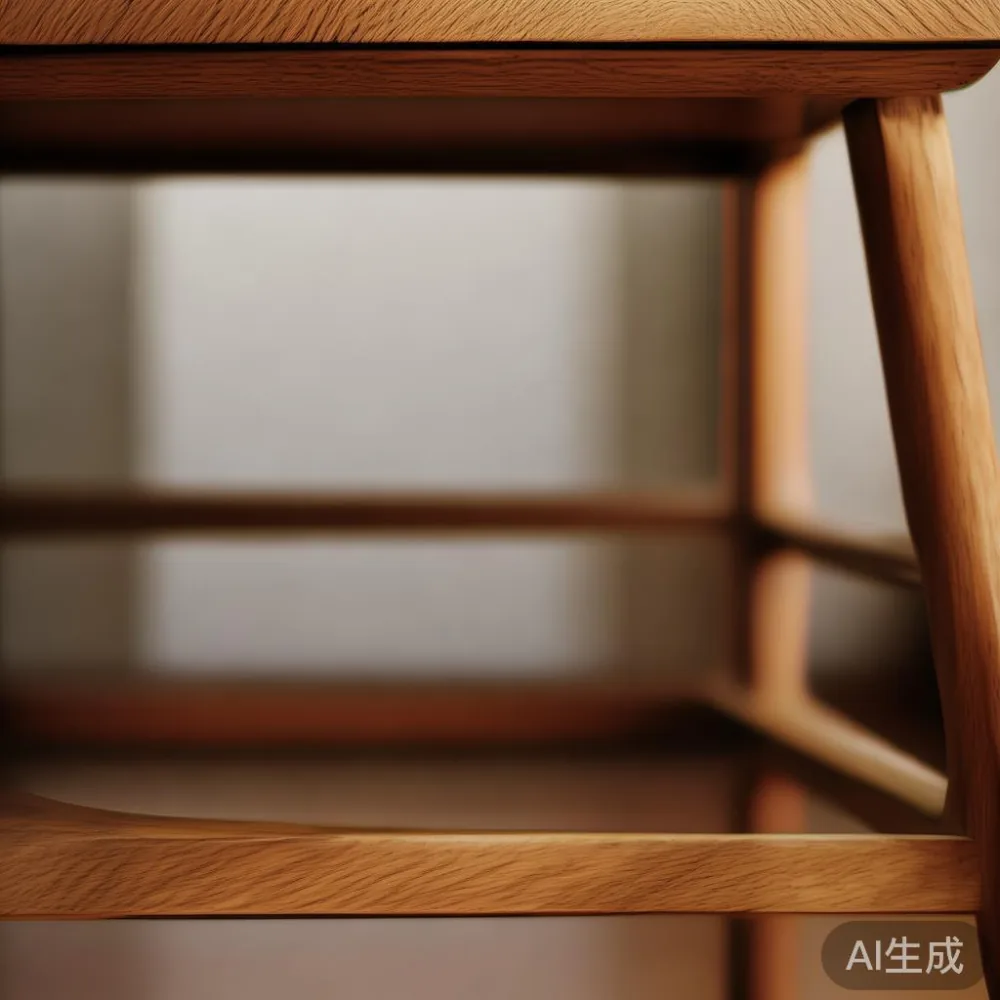
Singapore sits almost on the equator, and our climate is shaped by two monsoon windows, the Northeast monsoon from December to March and the Southwest monsoon from June to September, with relative humidity routinely sitting between 70% and 90% year-round. HDB flats and condos are partly sheltered by air-conditioning, but the moment you open a window near the corridor, or you push a bedside table against an external wall, the wood is exposed to the same wet air that hangs over Tampines and Bedok on a wet afternoon. Engineered boards such as MDF and particle board absorb that moisture along their cut edges, swell at the joints, and slowly lose their shape. Solid hardwood behaves differently. It expands across the grain by roughly 1% for every 10% change in moisture content, which on a 45 cm wide bedside table top means real movement of about 3 mm between a dry February and a wet October. The furniture is not failing; it is responding.
Why does a bedside table warp so quickly in a Singapore HDB flat?
The honest answer is that the warping usually started before the piece reached the bedroom. Wood is a hygroscopic material, which means it continually exchanges moisture with the air around it. A bedside table kiln-dried to 8% moisture content in Foshan will slowly climb toward an equilibrium moisture content of around 18% once it sits in a Tampines corridor for a few weeks. Once that happens, the top panels cup, the drawers start to rub, and any joints that were glued with PVA instead of proper wood glue begin to creep.
Three local conditions make this worse. First, HDB lift interiors are narrow, typically about 1.1 m wide and 2.1 m deep, so the delivery crew cannot angle a heavy 35 kg bedside table to protect the corners. Second, corridor layouts in older blocks such as those in Bedok often have tight right-angle turns near the refuse chute, which is where I have personally seen brand-new bedside tables get dragged and dinged. Third, many newer condos in Punggol use floor-to-ceiling glazing on one wall, which creates strong afternoon sun exposure on furniture placed within 1.5 m of the glass. The combination of heat and humidity drives faster moisture cycling than either condition alone.
A solid wood bedside table built with quartersawn oak, ash, or walnut, joined with mortise and tenon, and finished on all six sides, will still move, but it will move predictably. Over a 10-year warranty window, you might expect one or two minor hairline checks on a tabletop, and the drawers may need a light sanding and waxing in year six or seven. That is a normal part of owning solid wood furniture, not a defect, and it is one reason MIDHILL offers lifetime refinishing on every bedside table, bed frame, dining table, wardrobe, and nightstand that leaves their Foshan workshop.
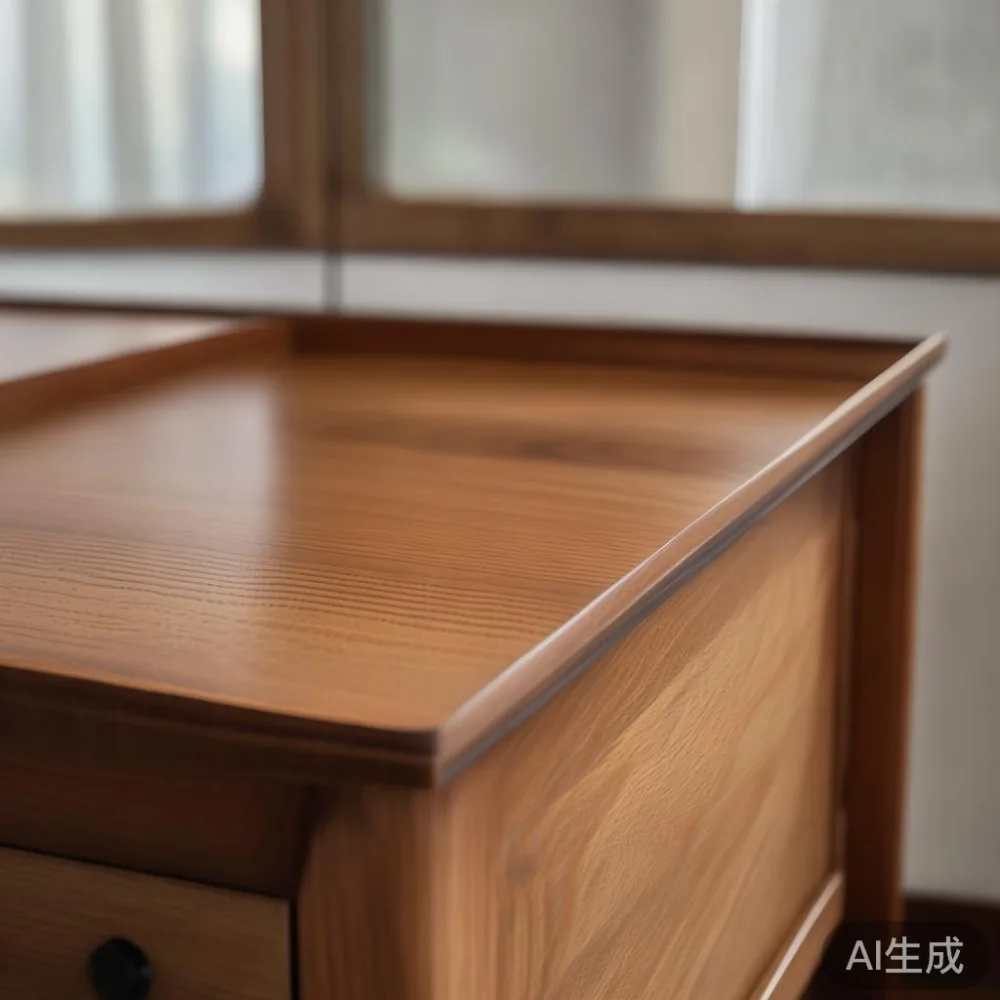
How humid is too humid for a solid wood nightstand?
For most hardwoods used in Singapore-friendly furniture, oak, ash, walnut, teak, the comfort zone sits between 40% and 65% relative humidity. Below 35% you risk cracking, and above 70% you risk swelling, mildew, and finish clouding. Most Singapore bedrooms run at 55% to 65% with the aircon on at night, which is healthy for both people and wood. The danger zone is the four to six hours each morning when the aircon is off, the bedroom door is open, and the prevailing humidity pushes back above 75%.
If you want to be precise, a SGD 25 hygrometer from a Sim Lim Square shop will tell you exactly what your bedside table is experiencing. Place it on the same shelf as your phone charger, leave it for 24 hours, and check the morning and evening readings. Anything between 50% and 65% means the wood is stable. Anything outside that range for more than a few days means you should run the aircon a little longer, leave a small 30 g silica gel pack inside the bottom drawer, or pull the bedside table 8 cm to 10 cm away from the wall so air can circulate behind it.
Which solid wood species actually survives a Singapore bedroom?
After more than a decade of shipping furniture into HDB flats and condos across Southeast Asia, the species that consistently perform well are white oak, ash, walnut, and Burmese teak. They are dense, dimensionally stable, and they take a hard wax oil finish beautifully. Pine and rubberwood are softer, lighter on the wallet, and they will dent, scratch, and absorb humidity faster, which is why a pine bedside table under SGD 250 in a Tampines mall tends to look tired within two years.
For households that want a French light luxury feel in the bedroom, a white oak bedside table in a chalked limed finish pairs well with linen bedding and brushed brass handles, and the open grain of oak hides the tiny seasonal checks that appear on flat surfaces. For an American light luxury look, walnut bedside tables with mitred joints and a satin oil finish tend to photograph beautifully against the neutral palettes common in Punggol and Bukit Timah condos. For a post-modern light luxury direction, ash with a smoked grey stain and reeded drawer fronts has become a popular request from interior designers working on three-room BTO renovations in Sengkang and Punggol. All three styles sit comfortably in a 55% to 65% humidity range, and all three can be refinished rather than replaced when the surface eventually dulls.
What should you do in the first 30 days after your bedside table arrives?
Most of the warping complaints I have handled over the years trace back to the first month of ownership. The piece arrives in a sealed cardboard box or wooden crate, the factory moisture content is around 8% to 10%, and the bedroom is at 70% to 80%. Acclimatisation is the single most important step, and it is free.
Step one is unboxing inside the bedroom, not on the corridor floor. Step two is removing all protective foam and plastic wrap, because trapped moisture under plastic will fog the finish within 48 hours. Step three is leaving the bedside table open to the air for 48 to 72 hours with the aircon running at 24°C, which lets the wood gradually climb to a stable local moisture content. Step four is placing felt pads under each leg before you push it into position, since dragging a 28 kg oak nightstand across HDB vinyl flooring will crush the corner joints. Step five is leaving an 8 cm to 10 cm gap behind the piece for airflow, especially if the wall is an external HDB wall that sweats during the Southwest monsoon.
Do not place a hot mug directly on the surface during this first month, do not lean wet laundry against the side, and do not stack books or a marble table lamp weighing more than 4 kg on the top for at least two weeks. A simple SGD 18 pack of cork coasters from a neighbourhood shop will prevent the white heat rings that I constantly see on newly delivered bedside tables in my customer visits.
How does MIDHILL build bedside tables differently for tropical climates?
Factory-side, the choices that matter for Singapore humidity are kiln-drying, joinery, and finish. MIDHILL kiln-dries every bedside table, bed frame, dining table, wardrobe, nightstand, and solid wood sofa component to a target moisture content of 8% to 10%, then wraps the finished piece in a breather bag with a humidity indicator card before crating. That indicator card is what my friend pulled out of his Punggol delivery and showed me, reading 38%, proof that the wood left Foshan dry and sealed, not pre-stressed.
Joinery matters because glue joints fail before wood fails in the tropics. Mortise and tenon, dowel, and domino joints hold even when the wood swells. The drawers on a properly built bedside table should ride on solid wood runners with a 1 mm to 2 mm clearance on each side, so they still slide when the wood expands in October. A hidden paper-only back panel is a red flag in a humid market, because MDF back panels are the first surface to bubble. Ask for a 12 mm solid wood back panel instead, even if it adds a few kilograms and a small amount to the price.
The finish should be a hard wax oil on all six sides, not just the visible surfaces. Lacquer and polyurethane trap moisture under the film and create the cloudy patches that look like watermark stains. A wax oil finish breathes with the wood, which is exactly what you want when relative humidity swings between 55% and 85% across the year. Combined with the 10-year structural warranty and lifetime refinishing, that is a bedside table built for a Tampines master bedroom, a Bedok study, or a Punggol nursery, not just a dry-air showroom floor.
Should you run a dehumidifier in the bedroom, and for how long each day?
A dehumidifier is the single most useful appliance for protecting wood furniture in Singapore, but it needs to be sized correctly. For a standard HDB master bedroom of about 14 sqm, a 10 L to 12 L per day compressor dehumidifier is enough to hold the room around 55% RH. For a condo master bedroom of 20 sqm to 25 sqm, look at 16 L to 20 L per day units. Running a typical SGD 499 dehumidifier for six to eight hours overnight uses roughly 2.5 kWh, which at the current SP Group tariff of around SGD 0.32 per kWh works out to about SGD 0.80 per night, or roughly SGD 24 per month if you run it every night.
Set the target humidity to 55%, empty the tank or route the drain hose to the bathroom, and place the unit at least 1.5 m away from the bedside table so the discharged dry air does not crack one corner of the top panel. A small SGD 12 hygrometer placed on the bedside table itself is the best way to confirm the wood is sitting in the right range, rather than guessing from the unit's own readout three metres away.
If you already own a marble table, a solid wood sofa, or a bed frame in the same room, the dehumidifier protects those pieces as well. Marble does not warp, but it can sweat in high humidity and leave marks on wooden surfaces placed next to it. A solid wood sofa with exposed joinery will move with the seasons just like a bedside table, and a bed frame built from the same kiln-dried oak will behave predictably if the humidity stays in the 50% to 65% range.
What does long-term care actually look like for a wood bedside table in Singapore?
Long-term care is less work than most owners expect. Dust the surface weekly with a soft dry microfibre cloth, never a wet cloth, because water left on a wax oil finish will spot. Twice a year, once in the dry February window and once after the September monsoon, wipe the surface with a lightly dampened cloth, dry it immediately, and apply a thin coat of hard wax oil. A 500 ml tin of maintenance oil costs about SGD 28 to SGD 35 and will cover a bedside table roughly eight to ten times.
If you do notice a small crack or a dull patch after three or four years, do not sand it yourself. Call the supplier and ask about refinishing. MIDHILL's lifetime refinishing service means the piece can be returned to the workshop, resanded, reoiled, and returned, usually within 14 working days for Singapore addresses, at a fraction of the cost of a replacement. Most owners never actually use this service, but the option is what makes a SGD 980 solid oak bedside table a smarter 10-year purchase than a SGD 320 engineered piece that will end up in a Bedok refuse chute after year four.
For homeowners browsing light luxury furniture for sale online, the smartest filter to apply is not the discount code, it is the question of how the piece was dried, joined, and finished. Ask for the kiln-dry target, ask for the back panel thickness, ask for the finish on all six sides, and ask whether refinishing is included. A bedside table that survives ten Singapore monsoons is worth more than three cheaper replacements that warp in the first one.
Where does bedside-table design meet small-space Singapore living?
Beyond humidity, the bedside table has a quiet design job to do in a Singapore bedroom, because the rooms are often 9 sqm to 12 sqm and the bed takes up a third of the floor. A bedside table that is 45 cm wide, 40 cm deep, and 55 cm tall gives you enough surface for a phone, a lamp, and a glass of water, without crowding the walking path between the bed and the wardrobe. Two matching bedside tables in a Punggol three-room flat create symmetry that makes the room read larger than it is, especially when paired with a Japandi-style bed frame in light ash or white oak.
If you are working out how to choose Japandi bed frames for a small HDB bedroom, the same rules apply to the bedside tables that sit next to them: low visual profile, light wood tone, no overhanging edges, and a finger-jointed drawer that does not need hardware. Pair that with a linen headboard, a cotton rug, and a single small ceramic vase, and the bedroom reads calm, considered, and uncluttered. For homeowners who want a touch of drama, knowing how to style French provincial bed pieces in a modern bedroom is the counter-move, but the bedside tables should still stay quiet, in a chalked oak finish with simple ring pulls, so the bed remains the hero.
For the living room and dining room, the same humidity-aware logic carries across the rest of the home. A solid wood sofa frame in white oak, an Italian light luxury dining table in walnut with a brushed brass base, and a matching MIDHILL coffee table in the same kiln-dried oak will all behave the same way under the same humidity conditions, which is the point of buying a coordinated set rather than mixing random pieces. A 10-year structural warranty and a single set of care instructions for every room is easier to manage than five different maintenance routines for five different species of wood. Free shipping over US$350 applies to Singapore addresses, which makes a multi-piece set more economical than piecing the room together from three different suppliers, and the 14-day return window gives you time to check the joinery, the finish, and the smell of real wood before committing.
In the end, a solid wood bedside table in a Singapore bedroom is a quiet, long-term relationship rather than a quick retail transaction. Pick the right species, pick the right factory, let the wood acclimatise for a week, run a small dehumidifier through the wet months, and the piece will still look handsome when your BTO reaches its fifth-year renovation cycle. That, more than any glossy catalogue photo, is what light luxury furniture is supposed to deliver in a tropical climate.