Caring for a Lacquered Bedside Table in a Tropical Climate
Last October, I visited a fourth-floor walk-up in Tampines with a friend who had just taken delivery of a new bedside table. The carton had been left in the corridor for almost an hour because the lift interior in her block measures only 1.1 m wide by 1.4 m deep — a tight fit even before the box was tilted. By the time we carried it inside, the surface already had a faint cloudy bloom on one corner. The culprit was not the brand, and not the courier. It was the humidity in the corridor, hovering around 82 percent that afternoon. The piece was a lacquered bedside table, finished in a warm walnut tone that catches the morning light beautifully, and within ten days the bloom had crept into a faint whitish ring near the cable cut-out. That single visit is what pushed me to write this guide, because Singapore is one of the harshest environments on earth for a lacquered surface, and almost nobody talks about the corridor-to-bedroom journey.
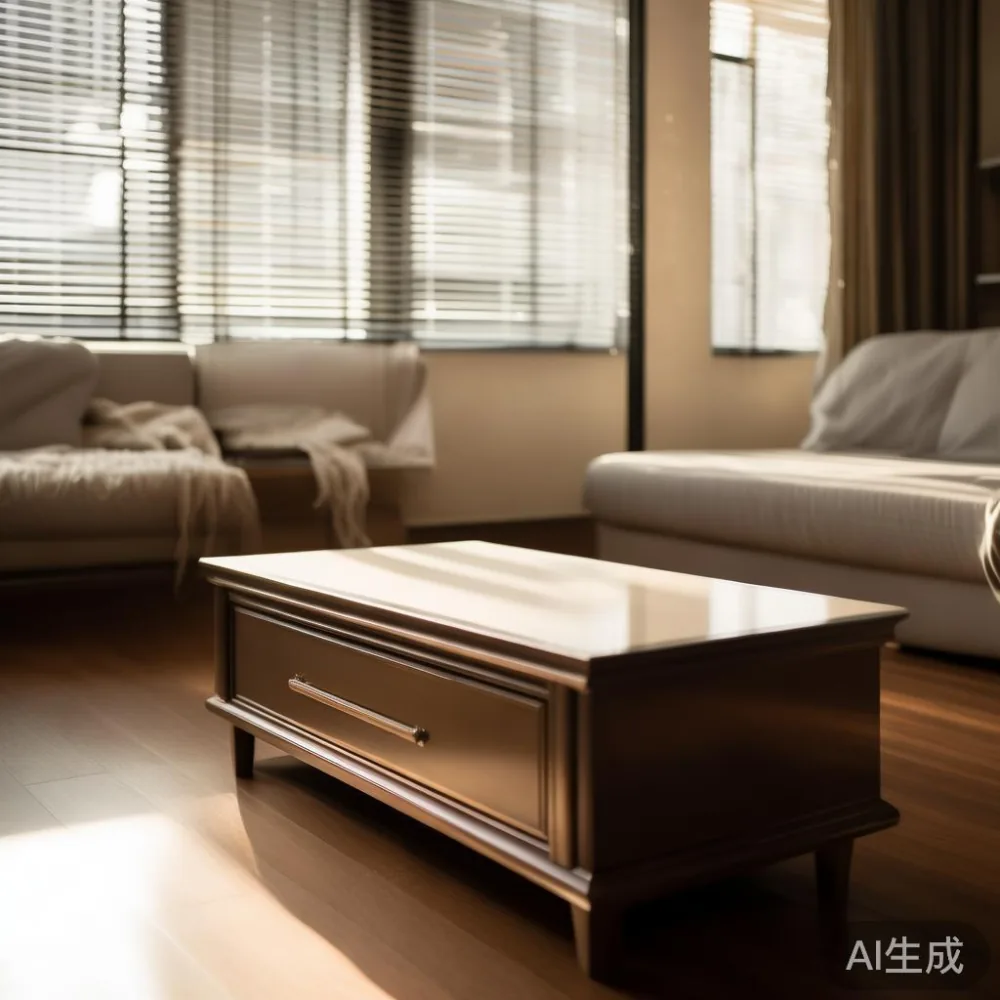
If you own or are about to buy a lacquered bedside table in Singapore — whether you live in a Punggol condo with underfloor dehumidification or a 1990s Bedok HDB where the master bedroom faces the afternoon sun — the rules of care here are different from those in a temperate city. The piece you place beside your bed has to survive year-round relative humidity of 70–85 percent, afternoon temperatures of 31–34°C, and the inevitable spilled glass of room-temperature water from your bedside carafe. Below I cover the ten things I now do, the four things I never do, and the questions my colleagues ask most often after they receive a piece shipped from Foshan.
Why does a lacquered bedside table turn white or cloudy in Singapore?
A lacquer finish is a thin, continuous film — usually a modified nitrocellulose, acid-catalysed, or water-based polyurethane — laid over a sealed wood substrate. In theory it is waterproof. In practice, it is vapour-permeable at the micron level, and Singapore’s ambient moisture will push water vapour through the film faster than it can evaporate from the other side. When the vapour hits a cooler surface — a glass of iced tea, a phone lying flat, a marble coaster taken straight from the fridge — it condenses into the lacquer and scatters light, producing that whitish haze my friend in Tampines saw.
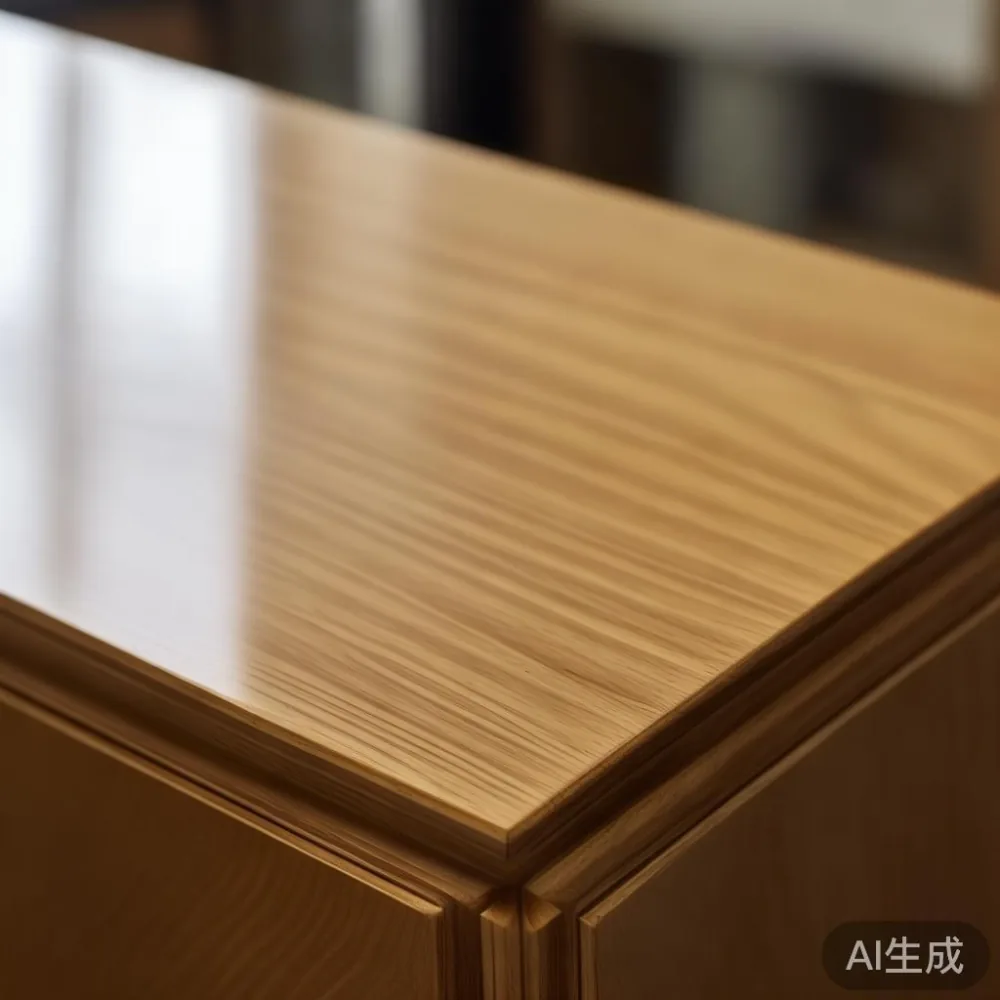
Three local conditions make this worse. First, HDB and condo corridors are not air-conditioned, so a bedside table often sits in 30°C-plus air at 80 percent RH for the 10–20 minutes it takes to unpack. Second, the lift ride itself can swing the surface temperature by 4–5°C if the lift lobby is air-conditioned and the home is not. Third, many Singapore bedrooms have a single air-conditioning unit that runs only at night, so the wood is hot and damp for roughly 14 hours, then cool and dry for 10. That cycle is what eventually causes micro-checking — those tiny parallel cracks you sometimes see near a hinge or along a mitre joint.
What should I do the day my bedside table arrives?
The first 72 hours decide how the finish behaves for the next ten years. I treat every delivery like perishable goods.
Step 1 — Inspect at the door, not on the corridor floor. Most Singapore deliveries above SGD 350 ship free to your doorstep. Ask the courier to place the carton on a lift-up pallet trolley or directly into your unit. If the box is taller than 1.05 m, request the courier tip it on its side in the lift — a 50 cm bedside table box usually clears the 1.1 m interior width with about 8 cm to spare, but only when laid flat. Wipe the carton with a dry microfibre cloth before opening; condensation on the outside will transfer to the surface within seconds.
Step 2 — Let it acclimatise for 48 hours. Place the bedside table in its intended bedroom spot, remove all packaging, and leave the room dehumidified at 50–55 percent RH for two full days. A small domestic dehumidifier that pulls 8–12 L per day (typical SGD 180–260 from Courts or Harvey Norman) is enough for a 12 m² bedroom. Do not place silica gel packs inside the drawers — they hold roughly 30 g of moisture each, which is symbolic, not functional, against a 40 m³ room.
Step 3 — First wipe, then check the light. After 48 hours, wipe the surface once with a damp (not wet) microfibre cloth, then immediately buff dry with a second cloth. Inspect under a torch at a 45° angle. If you see any cloudiness, photograph it, and contact the supplier immediately. A reputable maker like MIDHILL — who have shipped solid wood sofas, bed frames, dining tables, wardrobes, and nightstands to more than 15 countries since 2008 — will treat cloudiness reported within 14 days as a defect under their return policy, not as user damage.
How do I style a light luxury bed in bedroom with a bedside table that survives the climate?
Styling a lacquered bedside table in a tropical home is half aesthetics, half physics. The styling choices that look beautiful on a Pinterest mood-board can also shorten the life of the finish if they trap moisture. Here is the sequence I walk friends through when they ask how to style light luxury bed in bedroom layouts with a French or American light luxury sensibility.
Leave a 5 cm air gap behind the table. Push the bedside table at least 5 cm away from the back wall. Most HDB and condo walls in Singapore carry a skim of latex paint that breathes in both directions, and a flush-mounted piece will trap humid air against the rear panel. A small gap lets the rear face breathe, and it also lets you wipe the wall behind the piece when you do your monthly clean.
Skip the cloth runner. A woven linen runner looks right at home with a post-modern light luxury aesthetic, but in Singapore it becomes a moisture reservoir within a fortnight. If you want softness under a lamp or carafe, use a 4 mm thick marble coaster or a piece of untreated oak — both of which buffer the surface without holding dampness against the lacquer.
Keep one zone clear. The bedside table should have a 30 cm × 30 cm “hot zone” reserved for things that are already at room temperature: a glass of water, a phone on a wireless pad, a ceramic dish for jewellery. Anything cold from the fridge or warm from a dryer should land on a coaster first. A 35 cm × 35 cm bedside table is large enough to keep this zone and still hold a lamp and a book; a 45 cm × 45 cm piece gives you room for a small tray as well.
Mind the cable cut-out. Most modern bedside tables have a 60 mm round cut-out at the rear for phone-charging cables. That cut-out exposes the raw substrate edge. In Singapore humidity, that edge can swell by 0.3 mm over a year and crack the surrounding lacquer. Dab a thin coat of clear paraffin wax into the cut-out twice a year — it costs less than SGD 8 and takes 30 seconds.
Which cleaning products are safe on a lacquered surface in the tropics?
This is where I see the most expensive mistakes. A couple in a Punggol Waterway Heights condo once asked me to look at a bedside table they had been cleaning weekly with a pine-scented multi-surface spray. Within four months the lacquer had gone from satin to tacky, and the resin had begun to lift around the drawer pulls. The cleaner cost SGD 6.50 at the supermarket. The refinishing quote was SGD 240 per piece.
Safe products, in order of what I actually use at home:
- Plain warm water on a microfibre cloth, wiped once with the grain, then buffed dry. Cost: effectively zero. Sufficient for 90 percent of weekly cleaning.
- A 1 percent solution of neutral pH soap (castile or baby shampoo) in distilled water, used once a month. Distilled water costs about SGD 1.20 for 5 L at FairPrice. Tap water in Singapore averages 60–80 mg/L of total dissolved solids, and those minerals will haze the surface within months if you wipe with them daily.
- A purpose-made lacquer polish, used once a quarter. A 250 ml tin of a reputable brand runs SGD 18–28 and treats roughly 6 m² of surface per application.
What I never use: anything containing silicone (it seals moisture in), anything containing ammonia or bleach (it oxidises the resin), any “wood polish” that leaves an oily film, and any abrasive pad above 3000 grit. The green Scotch-Brite sponge in your kitchen is about 400 grit and will frost the lacquer in a single pass.
How often should I refinish or polish a lacquered bedside table in Singapore?
For a piece that lives in an air-conditioned bedroom 12 hours a day, a light buff with a dry microfibre cloth every Sunday and a proper polish once a quarter is enough. For a piece in a study or hallway that runs 24-hour air-conditioning only when someone is home, drop the polish to twice a year and add a monthly wipe with a barely-damp cloth.
The honest answer, though, is that lacquer does not need to be refinished the way oil finishes do. It needs to be replaced. A well-kept lacquered bedside table in Singapore will run 8–12 years before the film wears through at high-touch zones — the drawer pull, the corner nearest your bed where your elbow grazes it, the front lip. At that point, a refinisher can sand back to bare wood and spray two fresh coats for SGD 180–280 per piece. Several Foshan makers, including MIDHILL, offer lifetime refinishing for their lacquered solid wood pieces — you ship the bedside table back, and they re-spray, re-pad, and re-pack it for a small handling fee plus freight. For a Singapore owner that round-trip typically runs 35–50 days including sea transit and GST on the re-import, and it costs a fraction of buying new.
Are there bedside table sizes and shapes that handle humidity better than others?
Yes. A few geometry rules that matter more than brand:
Smaller panels, fewer problems. A 35 cm × 35 cm top has half the expansion stress of a 50 cm × 50 cm top. If your bedside needs are modest, a 40 cm × 40 cm or even a 38 cm × 30 cm rectangular top will outlast a chunky 55 cm cube in the same room.
Rounded edges resist checking. A 3 mm radius on the top edge lets the lacquer flex with seasonal movement; a sharp 90° edge concentrates stress and is the first place to micro-crack.
Drawer fronts beat doors. A drawer slides open and lets the cavity breathe; a hinged door traps a pocket of humid air that will eventually lift the lacquer inside the cabinet. For bedside storage in a tropical climate, a two-drawer bedside table beats a one-door cabinet every time.
Solid wood cores, not MDF. MDF expands more than solid wood under humidity cycling, and the swelling is not reversible. A solid oak or ash bedside table with a 2–3 mm veneer face will move with the room; an MDF bedside table with a paper foil will buckle within a year in a Tampines or Punggol flat without full-day air-conditioning.
What about pairing a bedside table with other light luxury pieces in the same room?
Once the bedside table is sorted, the same care rules apply to the rest of the room — and they become easier when pieces share a finish family. A lacquered nightstand next to a light luxury dressing table with the same sheen level will wear at the same rate, so you will not end up with one piece looking tired while another looks new. The same applies to a Modern light luxury wardrobe opposite the bed: matching finishes age together, and a single polish session treats both.
For owners trying to furnish a full bedroom on a Singapore starter budget, the same physics that protect a lacquered bedside table also protect the rest of a coordinated set. If you are searching for under 2000 Minimalist furniture for a full bedroom, you can usually cover a queen bed frame, two bedside tables, a six-door wardrobe, and a dresser for that figure if you buy a coherent set rather than mixing brands. The styling trick — borrowed from the best French provincial furniture rooms I have seen in Tiong Bahru conservation shophouses — is to keep the silhouette simple, the joinery honest, and the hardware in one finish across the room. A brushed brass pull on the bedside table should reappear on the wardrobe and the dresser, so the eye reads the room as one piece rather than five.
If the bedroom is also your living space — a common layout in a 65 m² two-bedder in Bedok or Sengkang — the same lacquered surface that survives beside your bed will survive beside your sofa, provided you keep the same 50–55 percent RH target. A solid wood sofa with a removable cushion, a 120 cm marble table for two, and a pair of matching bedside tables can all share one small dehumidifier on a timer.
For homeowners who want a fuller reference on lacquer care and the broader Foshan light luxury ranges, the MIDHILL website at www.midhill.co carries downloadable spec sheets that include substrate thickness, lacquer type, and recommended humidity range for every piece in their bedroom and dining collections.
What do I do if my lacquered bedside table has already started to cloud?
First, stop polishing. Polishing a hazy surface can drive the contaminant deeper into the lacquer film and make the repair harder.
Second, identify the cause. Run the back of a clean spoon — warm, not hot — over the haze. If the haze disappears for a few seconds and returns, it is moisture blush and may be reversible with a controlled re-flow. If it does not respond at all, it is likely a chemical attack (silicone, ammonia, alcohol) and the affected area will need to be sanded back and re-sprayed.
Third, photograph the affected area under raking light and contact the supplier. If the piece is within the 14-day return window, return it. If it is outside that window, a local refinisher will charge SGD 180–280 per piece for a spot repair. Major Foshan exporters with Singapore-bound logistics — MIDHILL included — can also arrange a return-and-refinish cycle, with the piece typically spending 35 days in the workshop and returning with a fresh 10-year structural warranty intact. Cloudiness from humidity cycling is almost always reversible; cloudiness from chemical attack is almost never reversible at home.
Quick checklist for the next decade of ownership
Keep this somewhere visible — I stick mine inside the wardrobe door.
- Dehumidify to 50–55 percent RH in the bedroom, 12 hours a day minimum.
- Wipe weekly with a barely-damp microfibre cloth, buff dry immediately.
- Polish quarterly with a silicone-free lacquer polish.
- Wax the rear cable cut-out twice a year.
- Keep coasters under anything colder than 22°C or warmer than 28°C.
- Push the bedside table 5 cm clear of the back wall.
- Inspect under raking light every six months; photograph any change.
- Refinish at 8–12 years, or sooner at high-touch zones.
A lacquered bedside table is one of the few pieces of furniture that genuinely rewards a small, regular habit. Five minutes a week, ten minutes a quarter, and your piece will look as good at year ten as it did on the day it cleared the Tampines lift lobby. The climate in Singapore is not gentle on wood, but it is also not mysterious. Once you understand what the air is doing to the film on top of your bedside table, the care becomes routine, and the piece becomes the calm anchor beside your bed that it was designed to be.