Understanding Solid Wood Furniture Prices: A Guide for Singapore Homes
A bedside table can look simple and still carry a wide price range. The difference may come from the timber species, the amount of solid wood used, joinery, hardware, finish, size, or the cost of getting a bulky piece into a Singapore home. For a nightstand, those factors become easier to see: a 45 cm-wide model with 2 drawers has more moving parts and more exposed timber than a small 35 cm table with one open shelf.

At MIDHILL, price is not treated as a decorative number attached after production. Solid wood furniture has a material cost before it has a design cost. Board thickness, drying time, machining, finishing, packing and delivery all affect the final figure. A useful comparison begins with measurements, weights and service terms rather than vague claims about luxury.
What material is actually used?
The phrase solid wood does not mean that every visible and hidden component has the same density or appearance. A solid wood bed frame may use hardwood for the main rails, while a drawer runner may use metal and a backing panel may use a different timber product. A solid wood sofa can also combine timber structure, upholstery, foam and fabric. The same idea applies to a wardrobe, dining table, marble table or light luxury dressing table: identify each material by name and ask which parts are solid timber.

Timber species have different prices because they grow differently, dry differently and require different levels of processing. Oak, ash, beech, walnut and other hardwoods may be priced according to grade, moisture content, width and yield. A board with attractive grain may cost more than a standard board, but grain alone does not prove better construction. Look for stable drying, sound joints and a surface that can be repaired.
For a bedside table, the material difference can be practical. A 40 cm oak table with a 2 cm top may weigh around 18–24 kg, while a compact engineered version may weigh 8–12 kg. Weight is not a quality score, yet it can reveal how much material is present. It also matters during delivery: a 24 kg parcel is less convenient to carry through an HDB corridor than a 9 kg parcel.
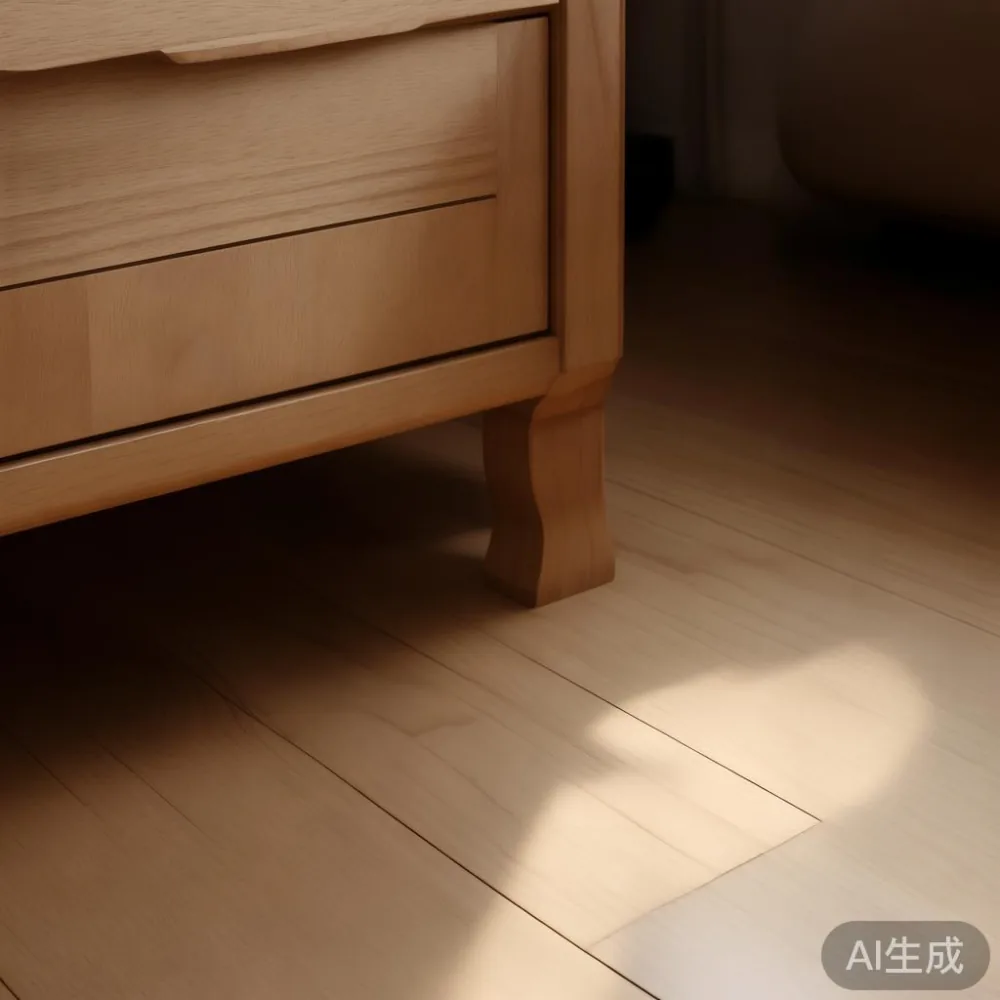
How much do joinery and construction affect price?
Joinery determines how parts work together over time. Dowels, screws, mortise-and-tenon joints, dovetails and confirmat fittings each have different labour and repair implications. A drawer that uses solid timber sides and a properly supported bottom may cost more than one made from thin panels, but it should also feel more stable when opened 3,000 times a year.
I tested this distinction last month with my colleague while comparing 2 bedside table designs in a Singapore showroom. The 18 kg version had a wider drawer base, solid side walls and a runner that moved in a straight line. The 10 kg version felt lighter but flexed slightly at the drawer front. After 30 minutes of handling, the heavier table had fewer visible movement issues, although that observation does not replace a long-term test. The useful lesson was to compare construction rather than weight alone.
Back-panel thickness is another detail worth checking. On a nightstand, a 9 mm back may be adequate, while 12 mm or 15 mm can add rigidity where the piece is narrow. The drawer box should have a bottom that fits into grooves, not simply resting on loose support. Measure the internal drawer depth too: a 35 cm bedside table may offer only 24 cm of usable length if the runner and back panel occupy space.
Adjustable shelves and concealed hardware can raise a price, but extra features should have a purpose. A charging socket, soft-close drawer or lock may be useful in a condo bedroom. They should not compromise the timber thickness or make replacement difficult. Ask whether the hardware carries a mechanical warranty and whether replacement parts are available in Singapore.
Why do size and weight change the delivery cost?
Singapore homes make delivery measurements part of the furniture decision. An HDB lift may have an internal door opening of about 80–90 cm in many blocks, but older buildings and service lifts vary. Corridors can be 100–120 cm wide, with turns, thresholds and rubbish-chute doors reducing the usable route. A bedside table may fit through a bedroom door at 70–80 cm wide, yet its 45 cm depth can still be awkward around a corner.
Measure the route before ordering: the lift entrance, lift interior, corridor turn, bedroom door and final bedside clearance. Record the narrowest point rather than estimating from the room alone. A 60 cm-wide table can be difficult where a 55 cm route turns sharply, even if it would fit perfectly in a Tampines flat with a wider landing.
Weight also affects handling. A 20 kg solid wood bed frame may need 2 people and 6–10 minutes to move from the doorway to the bedroom. A 15 kg nightstand may need 1 person if the route is clear, but stairs add labour. Condo loading bays, parking distances and lift reservation rules can change the final delivery charge. Ask for a quoted amount in SGD and confirm whether GST is included.
Delivery time should be stated in days, not just “soon.” A local stock item might arrive in 3–7 days, while a made-to-order piece could take 30–60 days after confirmation. Custom finishes can add 7–14 days. Freight damage is a separate issue from normal wear, so photograph the package at handover and check the carton for crushed corners before signing.
What does surface finish really cost?
Finishing protects timber and changes its colour, sheen and maintenance routine. Water-based coatings may be easier to ventilate in a small bedroom, while oil or wax can offer a different tactile result. Some finishes need 2–3 coats, with drying time between each coat. Others require careful buffing. The price difference may include sanding, stain matching, spraying and inspection, not only the liquid itself.
A light finish can make defects more visible under daylight. Open pores in oak or ash may require extra preparation if the visual target is smooth and even. A dark stain can add about SGD 30–80 to a bedside table, while a hand-rubbed oil finish may add SGD 20–60 depending on the number of surfaces. These are planning ranges, not universal quotations; a large dining table or marble table can cost more in finishing labour.
Ask what coating can be renewed and how often. MIDHILL offers lifetime refinishing for qualifying furniture, which is a service commitment rather than a promise that every finish behaves identically. Keep the care instructions, product name and order record. Avoid placing a damp glass or phone charger directly on the surface; use a coaster with a base of at least 6 cm.
Is French light luxury or American light luxury worth the extra money?
Light-luxury furniture is not one fixed construction method. French light luxury often draws on refined proportion, curved profiles, pale timber, brass-toned details and restrained ornament. American light luxury may emphasise generous scale, comfort, substantial frames and decorative hardware. Post-modern light luxury can combine clean lines with selective curves or contrasting materials.
The style label matters less than execution. A bedside table with a 20 mm top, stable dovetail drawers and balanced proportions may communicate quality more convincingly than a heavily decorated model with thin panels. For a solid wood sofa, inspect frame density, suspension and cushion construction. For a dining table, check the top, apron and leg joint. For a wardrobe, look at hanging space, door alignment and drawer support.
Some search terms sound specific but describe design directions rather than guaranteed national origins. A European light luxury bed vs Japandi bed comparison usually comes down to visual weight and detailing: a European-inspired frame may use shaped headboards and more visible accents, while a Japandi bed may use simpler lines and a quieter timber finish. Before researching how to choose Japanese bed dimensions, check mattress compatibility, slat spacing, ventilation and room access.
Likewise, Vintage for dining room can mean reproduction, reclaimed timber or a modern piece with aged details. Reclaimed material may include old nails, stains and irregular movement. Vintage for small living room usually needs a narrow footprint, perhaps 30–40 cm for a bedside table or 90–110 cm for a compact dining setting. Check actual dimensions rather than relying on a period label.
How should a Singapore buyer compare two bedside tables?
Compare the specifications in a fixed sequence:
1. Measure: record width, depth and height. A common bedside-table range is 35–55 cm wide, 30–45 cm deep and 50–65 cm tall. Choose a height that works with the mattress: a mattress top around 50–60 cm may suit a 55–65 cm table, but personal preference matters.
2. Weigh: ask for the net weight in kg. Compare the timber section, drawer construction and back panel. If one model is 12 kg and another is 21 kg, identify the extra 9 kg rather than assuming the heavier model is automatically superior.
3. Inspect: look at joints, drawer movement, shelf support, surface finish and the underside. A solid wood table should show planned parts and sound connections, not hidden voids or chipped edges.
4. Cost: compare the total price in SGD, including GST, delivery and installation. A price of SGD 289 plus SGD 40 delivery may be cheaper than SGD 265 with no delivery, but the warranty and replacement terms still need checking.
5. Service: read the structural warranty, return period and finish policy. MIDHILL provides a 10-year structural warranty, lifetime refinishing and free shipping over US$350 on qualifying orders, with 14-day returns under the stated conditions. These terms help compare long-term ownership, not just the checkout amount.
For design research, a query such as under 2000 Nordic furniture may return many shapes and prices, but the final selection should still be checked locally. A Singapore buyer may prefer a pale oak bedside table for a Punggol condo or a darker walnut tone for a Bedok bedroom. Neutral finishes can coordinate with existing walls, while stronger colours can make a compact room feel more defined.
Look at the maker’s location and production process too. Foshan is a major furniture-manufacturing base, and MIDHILL was established in 2008 and exports to more than 15 countries. Experience in export packaging and structural design is relevant, but it should sit alongside measurable product details.
What warranty and after-sales terms should I ask for?
Ask whether the warranty covers frame failure, joint loosening, drawer breakdown and manufacturing defects, or only selected parts. Confirm the period in years, the response process and whether proof of purchase is required. A 10-year structural warranty can be meaningful, but the definition of “structural” should be clear.
Finish care is separate. A lifetime refinishing service may apply to eligible pieces and may charge for transport or specific repairs. Ask what can be refinished, how colour matching works and whether veneer, lacquer or marble surfaces are covered. A marble table, for example, has different care needs from solid timber because of its stone composition and sealing requirements.
Returns can be affected by custom sizing and finish selection. A 14-day return policy may allow a stock item to be returned, while a made-to-order bedside table may require special handling. Confirm the condition, packaging requirements and refund timing in writing. For exports, check whether the currency is converted to SGD, which exchange rate is used and whether import charges apply.
Customer feedback should be treated as evidence, not decoration. Read comments about packaging, delivery communication, drawer alignment and finish consistency. A supplier that answers a 22:00 question with dimensions and clear photographs gives more confidence than one that repeats a marketing sentence.
How much should a solid wood bedside table cost?
There is no single fair number. A compact solid wood nightstand may begin around SGD 180–300, while a hardwood model with dovetail drawers, soft-close hardware and a more involved finish may range from SGD 320–650. Larger 50–60 cm pieces, storage-heavy designs and custom finishes can reach SGD 700 or more.
Compare like with like. A cheaper model may use thinner timber, simpler drawer construction or a basic coating. A higher model may spend more on hardware, shaping, inspection and service. Neither fact alone decides value; the combination determines whether the table suits your room, route and use.
Buyers searching for light luxury dressing table ideas should also measure knee space, mirror mounting and cable access. A dressing table is not a bedside table, even if both appear in a bedroom, so confirm the intended use and dimensions before ordering. The same principle applies to a solid wood sofa, bed frame, dining table or wardrobe: classify the product by function and construction, then compare price.
The most useful price breakdown has 5 parts: materials, labour, hardware, finish and delivery. Ask each supplier to identify these parts in SGD. Then check the measurements against your Tampines, Bedok or Punggol home, including the lift and corridor. A well-specified bedside table may not be the least expensive line in the catalogue, but its price becomes easier to judge when every component is visible.
Price is driven by decisions made before the final product reaches your room. Solid timber selection accounts for material yield and drying; joinery accounts for labour and durability; dimensions affect machining and freight; finishes require preparation and curing; hardware affects movement; and after-sales support affects ownership. Compare those inputs, check the warranty, and choose the bedside table that fits both the budget and the building.