Solid Wood vs Veneer: A 5-Year Cost Comparison for Singapore Bedside Tables
Choosing a bedside table for a Tampines HDB flat, a Bedok condo, or a compact Punggol bedroom is rarely just a colour decision. The two material labels most often compared—veneer and solid wood—can describe products with very different price points, care needs, and likely lifecycles. Over a 5-year ownership period, the lower purchase price may be less important than repairability, stability in humid weather, and the number of times the piece needs replacing or refinished.

This comparison assumes one bedside table in regular residential use, purchased at the listed Singapore retail price, with local GST at 9% included where stated. It compares a mid-range veneered bedside table at SGD 349 with a comparable solid-wood bedside table at SGD 649. Both examples have two drawers, measure 50 cm wide by 40 cm deep by 55 cm high, and weigh approximately 18 kg and 24 kg respectively. Actual delivery charges and installation costs can vary by address, lift access, and building rules.
MIDHILL is a Foshan solid wood furniture maker established in 2008, exporting to more than 15 countries and backing its furniture with a 10-year structural warranty. Its lifetime refinishing service also changes the long-term calculation: wear can sometimes be addressed without buying a new unit. Free delivery applies above US$350, and returns are accepted within 14 days under the stated policy.
What do veneer and solid wood actually mean?
Veneer is a thin layer of real timber, commonly about 0.6 mm thick, bonded under pressure to a manufactured core such as MDF or plywood. Veneer is not automatically a low-grade material, and a well-made veneered bedside table can offer accurate colour consistency, useful stability, and a relatively controlled price. The broad category, however, says little about the core, veneer species, edge treatment, drawer construction, or finish.
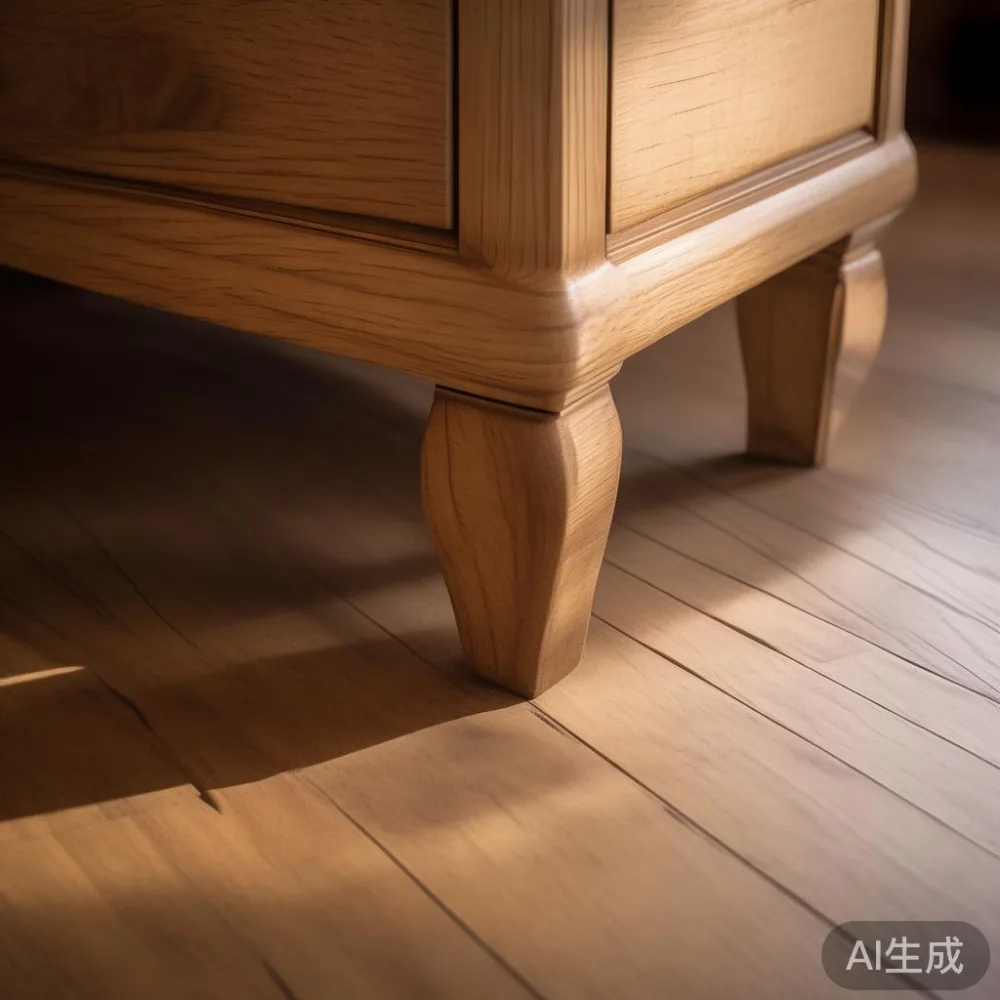
Solid wood uses timber through the visible panel and, in many quality pieces, through the frame, drawer sides, and other structural components. A hardwood bedside table may use oak, walnut, ash, rubberwood, or another species, with different levels of durability. “Solid wood” on a sales listing should still be examined closely: solid-wood drawer bottoms or back panels do not necessarily mean the entire carcass is solid timber.

For a compact bedroom, dimensional stability matters. Singapore’s outdoor relative humidity commonly ranges around 65% to 90%, with air-conditioning reducing daytime moisture but not eliminating seasonal variation. A veneered panel engineered for stable indoor use can perform properly if its edges are sealed. Solid wood may move more with humidity, yet good joinery and a suitable finish can make that movement manageable. Neither label alone guarantees performance.
There is also a useful design distinction. The clean geometry and repeated grain of a veneered piece can suit post-modern light luxury, while a solid-wood nightstand can feel warmer and more tactile. French light luxury generally places emphasis on restrained profiles, pale woods, gentle proportions, and refined hardware. The relevant question is not whether one material creates a particular style, but how the finished bedside table functions within the room.
How much do veneer and solid wood bedside tables cost over 5 years?
For this example, the veneered bedside table costs SGD 349 before GST and SGD 380.41 after 9% GST. The solid-wood bedside table costs SGD 649 before GST and SGD 707.41 after GST. The initial solid-wood premium is therefore SGD 327.00, or SGD 327.00 more in cash terms after tax.
Both pieces are assumed to fit a standard HDB or condo delivery route. If the packed bedside table measures no more than 62 cm wide by 46 cm deep by 72 cm high, it can usually pass through a common 90 cm corridor and fit into a lift measuring at least 90 cm by 140 cm in internal floor space. One person should still check the route before ordering, especially where the corridor turns are tight or the lift has a restricted loading schedule.
Delivery is estimated at 5 to 9 working days after production for the veneered model and 7 to 12 working days for the solid-wood model. For a Singapore order, the SGD 65 to SGD 95 doorstep delivery charge is a realistic allowance; it may be waived or adjusted under the stated free-shipping threshold above US$350, which is approximately SGD 465 at an illustrative exchange rate of SGD 1.52 per US$1. Exchange rates and freight arrangements can vary, so this should be treated as a planning estimate rather than a fixed local quotation.
| 5-year item | Veneer bedside table | Solid-wood bedside table |
|---|---|---|
| Purchase price before GST | SGD 349.00 | SGD 649.00 |
| GST at 9% | SGD 31.41 | SGD 58.41 |
| Estimated delivery | SGD 0–95.00 | SGD 0–95.00 |
| One repair or drawer adjustment | SGD 0–120.00 | SGD 0–80.00 |
| One professional refinishing service | SGD 0 | SGD 0–180.00 |
| Estimated 5-year ownership cost | SGD 380.41–595.41 | SGD 707.41–1,062.41 |
The arithmetic is revealing without being dramatic. The veneered option may cost about SGD 215 less over 5 years in the mid-range of these assumptions. If the veneered table is scratched, swollen at an unsealed edge, or damaged during moving, a repair could reach SGD 120. If the solid-wood unit receives one refinishing service, that could add up to SGD 180 but retain more of its original material and character.
This is the core of the 5-year cost comparison: solid wood does not automatically become cheaper because it can be refinished. Its longer useful life has to offset the purchase premium and the probability of future work. If the veneered table lasts 4 years and the solid-wood table lasts 10 years, the calculation shifts. At a simple annualisation, the veneer has cost about SGD 95 per year and the solid-wood option about SGD 71 per year. That result changes if the veneered table actually lasts 8 years and the solid-wood option needs a major repair in year 6.
What happens to each bedside table during years 1 to 5?
In year 1, the main costs are predictable. A veneered bedside table may already have several colour and grain options in a showroom catalogue, while a solid-wood nightstand varies more between individual boards. That consistency can reduce the need for replacement if a particular finish proves difficult to match later.
During years 2 and 3, daily contact creates the greatest wear: approximately 1 daily drawer opening, 1 nightly surface placement, and around 250 to 400 hand contacts per year. A phone, a glass of water, a pair of glasses, and a bedside lamp can leave ring marks, edge knocks, or chipped corners. Veneer is particularly vulnerable where the thin outer layer is exposed at an edge. Solid wood can scratch more visibly, but a local scratch treatment or full refinishing may be more practical.
By years 4 and 5, furniture movers and renovation work become more likely causes of damage. The bedside table may have been moved 2 or 3 times rather than staying permanently against the wall. Veneer can chip or peel if moisture enters an exposed edge. Solid wood can split around a joint if internal moisture changes were not allowed to stabilise. Quality of construction remains decisive in both cases.
Care costs are modest in a typical household if the table is wiped with a damp cloth and kept away from prolonged direct sunlight. A useful routine is to dust weekly, clean monthly with mild soap, and inspect drawer runners every 6 months. Keep liquids off the top, use a coaster under every glass, and maintain indoor relative humidity near 45% to 65% where practical. Severe swelling, mould, or persistent drawer slippage requires professional attention rather than repeated DIY treatment.
Can you repair veneer and solid wood after 5 years?
Repairability often favours solid wood. Scratches can be spot-treated, edges can be eased, and the surface can be refinished while preserving the same bedside table. On a high-quality unit, refinishing may involve sanding, stain matching, and applying a new protective coat rather than replacing an entire panel.
That advantage must be weighed against the probability and price of damage. Veneer is repairable when the substrate remains sound. Small chips can sometimes be filled and blended, while a full sheet replacement may cost roughly SGD 90 to SGD 220 depending on matching. If the board has swollen, delaminated, or lost its factory edge profile, repair becomes less economical.
I tested both approaches last month with my colleague during a furniture inspection visit in Foshan. We moved a 22 kg section of an oak bedside table across a workbench, left a 12 cm scratch under controlled conditions, and then examined a 0.6 mm veneered board with a chipped edge. The solid-wood section could be refinished locally while retaining the original board. The veneer chip needed a longer fill-and-blend process and a careful grain match. The test did not predict every workshop result, but it showed why the solid-wood unit offers more practical recovery when damage reaches the visible surface.
MIDHILL’s 10-year structural warranty is separate from surface wear. Scratches, accidental impacts, and moisture damage are not necessarily structural failures. Its lifetime refinishing policy is more relevant to long-term ownership, although the service terms, eligibility, and any applicable charges should be confirmed for each piece.
Which material suits Singapore homes and small lift access?
Material weight influences delivery more than most buyers expect. A 50 cm bedside table weighing 18 kg is manageable for two people; a 24 kg unit requires the same care. A furniture courier should use a padded trolley, remove drawers where possible, protect corners with 2 mm foam, and avoid dragging the piece along a corridor. The compact footprint works well beside a queen bed in a Bedok condo, while a 40 cm depth allows a narrower HDB bedroom to retain a usable walkway.
Singapore’s GST should be included in every purchase comparison. At 9%, GST adds SGD 31.41 to the veneer example and SGD 58.41 to the solid-wood example. GST-registered business purchasers may be able to claim input tax credits, subject to their own tax position; ordinary household buyers cannot treat GST as recoverable in the same way.
Environmental claims also need precision. Solid wood can support responsible forestry when the species and supply chain are documented, but timber origin alone does not prove low impact. Veneer can use a smaller volume of decorative timber across a larger number of furniture pieces, yet adhesive, formaldehyde emissions, and end-of-life recovery still matter. Ask for material documentation, low-emission finish information, and clear care instructions.
Italian light luxury for bedroom design often leans toward sculptural forms, darker timber tones, and carefully proportioned bedside furniture. A solid-wood nightstand can fit that visual language, while a high-grade veneer can achieve a similarly polished surface. The wardrobe, bed frame, and dining table should coordinate in tone without making the bedroom feel crowded. A solid wood sofa or solid wood dining table in another room does not require every bedroom piece to match exactly.
Is a more expensive solid-wood bedside table worth it for a 5-year period?
For a short 5-year horizon, the veneered option is financially attractive if it is well made, kept away from moisture, and likely to remain in the home beyond the comparison period. A buyer who values immediate cost control and a broad range of finishes may reasonably choose veneer. The estimated 5-year cost of SGD 380.41 to SGD 595.41 is lower than the solid-wood range of SGD 707.41 to SGD 1,062.41.
Solid wood becomes more compelling when the bedside table is expected to remain in service for 8 to 15 years, when refinishing is part of the ownership plan, or when the material itself is central to the room’s character. The premium buys a thicker repairable surface, often greater perceived solidity, and more flexibility in future restoration. The SGD 327.00 difference is less noticeable when spread across a long period.
Style should guide the finish, not the marketing label. French light luxury can use pale oak or washed walnut with slim pulls. American light luxury can pair warm timber with brushed brass. Post-modern light luxury may combine a rectilinear carcass with softened corners and minimal visual detail. For compact spaces, keep the bedside table under 55 cm in height and choose shallow drawers that do not interfere with a mattress edge.
Some buyers may begin by searching for a Mid-century modern dressing table, a Mid-century modern accent chair, or designer French provincial furniture before settling on bedroom proportions. Those categories can supply design references, but the bedside table still needs its own dimensions, drawer clearance, and route to the bedroom. Likewise, searching for the best Mid-century modern bed for 2026 may establish the visual direction, yet the nightstand should be measured against the actual bed frame and wall rather than a generic product page.
What should you check before ordering a bedside table?
Ask for the species, core material, veneer thickness, joinery, finish, and warranty in writing. “Solid wood” should identify which components are solid timber. For veneer, request the veneer species and thickness, plus the core construction. A 0.6 mm face veneer over a stable plywood core can be a sensible construction; the exposed edges should be sealed continuously.
Check the drawer by opening and closing it several times. A full-extension runner should remain aligned, and the rear should not hit the bed frame. Allow about 2 to 4 cm between the open drawer and the mattress zone where possible. A bedside table should also have adequate weight to resist tipping, but the wall fixing should suit the construction rather than being forced into hollow panels.
Measure the delivery route before ordering. Confirm the packed dimensions against corridor widths, door widths, lift dimensions, turning space, and parking access. In high-rise estates, reserve the lift for the delivery window and photograph the route if access is complex. Add 5 to 12 working days to the production estimate, depending on finish and model.
Finally, consider the cabinet hardware. Solid-wood bedside tables with soft-close drawers and replaceable runners may reduce maintenance. Keep a small care kit at home: 2 microfibre cloths, 1 mild wood cleaner, 2 felt pads, and 1 coaster. With those basics, a well-built solid-wood unit can age with controlled change rather than looking neglected.
The 5-year answer is therefore conditional. Veneer offers the lower expected cost, while solid wood offers a more repairable material and better long-horizon value. In a Singapore bedroom, choose the veneered bedside table if affordability, finish consistency, and a shorter replacement cycle dominate. Choose solid wood when longevity, restoration, and tactile character are priorities—and when the extra SGD 327.00 can be justified over years rather than months.