How to Match a Bedside Table and Solid Wood Furniture to a Warm Minimal Interior
Last month I visited a 92 sqm condo in Punggol with a young couple who had just collected their keys. The developer had handed them white walls, grey floor tiles, and a kitchen that looked like everyone else's on the same floor. Within an hour of walking the empty rooms with them, the question that kept coming up was simple: how do we make this feel like our home without turning it into a showroom or a clutter magazine? The answer, almost every time, started with the bedside table.
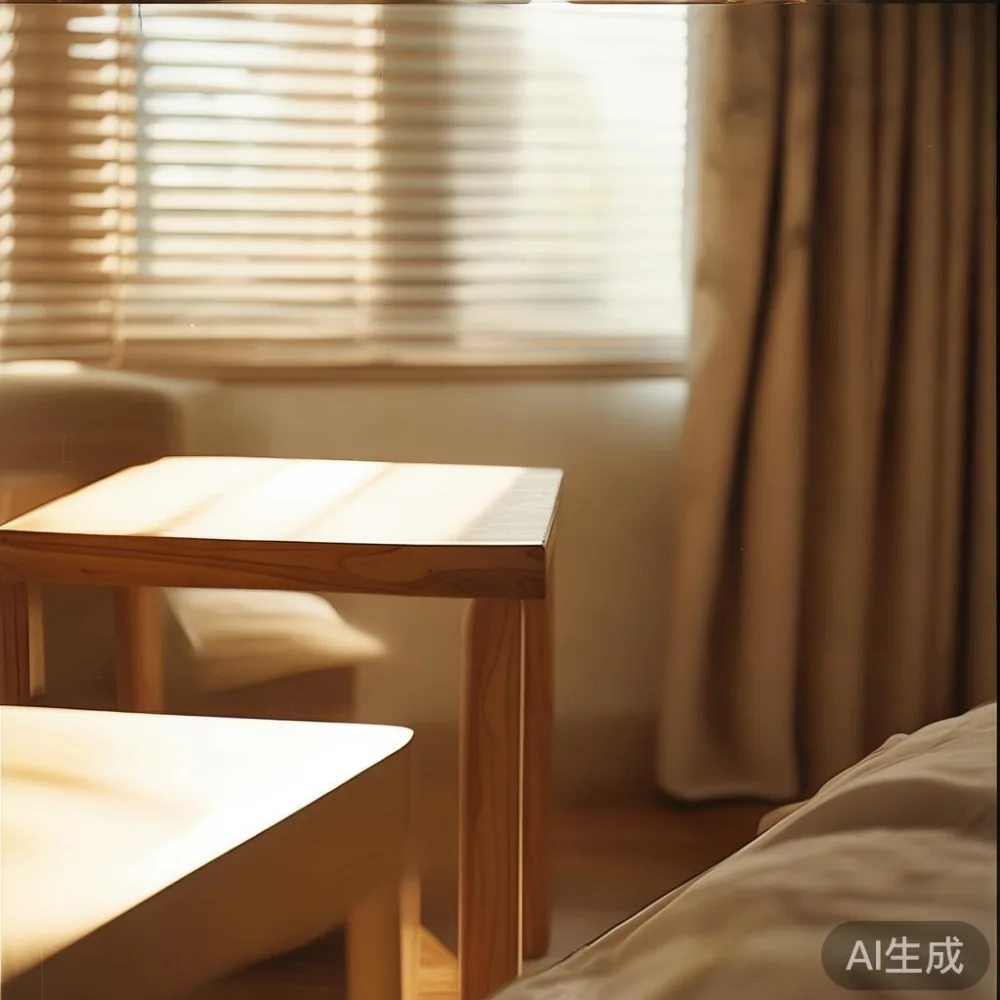
Warm minimalism is the style Singapore homeowners land on when they want calm without coldness. It pairs the quiet of a Japandi or Scandinavian room with the glow of natural wood — oak, ash, walnut, cherry. It survives the humidity of a Tampines HDB corridor, the afternoon sun through west-facing windows in a Bukit Batok resale flat, and the reality that most of us own more things than we think. The pieces that hold this style together are a solid wood bed frame, a calm dining table, a nightstand that does not shout, and a wardrobe with quiet joinery. Done well, the room reads expensive even though every item costs less than a renovated kitchen.
MIDHILL has been making this kind of furniture out of solid wood in Foshan since 2008. They export to more than fifteen countries, their frames carry a ten-year structural warranty, refinishing is offered for life, and shipping to a Singapore address is free above US$350, which works out to roughly S$475 — easy to clear once a bed frame is in the cart. Deliveries to a HDB block in Bedok or a private lobby in River Valley usually arrive inside fourteen working days from the Foshan warehouse.
What does "warm minimal" actually mean in a Singapore bedroom?
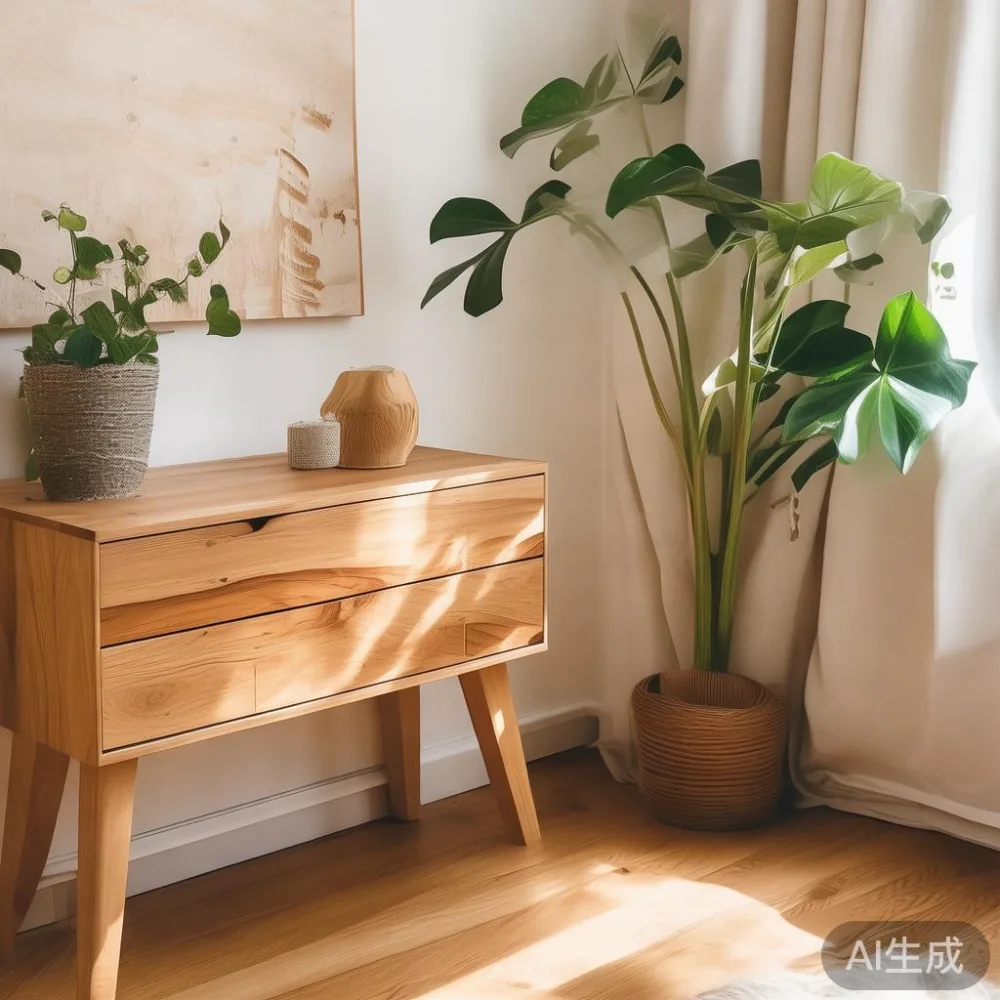
Warm minimal is a room where the number of objects is low, but every object has warmth. Walls lean toward off-white, oat, or a very pale clay — never the bright cool grey that looked modern in 2015 and now reads as tired. Flooring stays light: engineered oak, bamboo, or the pale laminate many BTOs come with. Into this quiet shell, you drop a small number of solid wood pieces with visible grain and rounded edges. A solid wood bed frame in white oak, an American cherry wood sectional sofa for the living room, a marble top side table for the reading lamp — each one carries weight, but the weight is warm rather than heavy.
The trick Singapore homes force on you is scale. A four-room HDB master bedroom is usually around 12 sqm, and a condo master is often 14 to 16 sqm. A king-size solid wood bed frame at 180 by 200 cm already takes most of the long wall. That leaves maybe 50 to 60 cm on each side for the bedside table. Anything wider than 55 cm will block your wardrobe door or hit the air-con trunking. So the bedside table here is not an afterthought; it is the most spatially constrained piece in the room, and the one a visitor sees first when they walk in.
How do I choose a dining chairs for a bedroom?
Pick one bedside table per side of the bed, both in the same solid wood and same height as your mattress top — typically 55 to 65 cm from the floor — and you will have a calm, symmetrical wall that reads intentional rather than crowded.
Why does that one sentence matter? Because the bedside table is the piece that frames the bed the way a good frame frames a photograph. If the heights are wrong, the bed looks like it is sagging. If the woods clash, the whole wall looks busy. If the tables are too deep, you cannot open the wardrobe behind you. Two matching nightstands, each around 45 to 50 cm wide, 40 cm deep, and 55 to 60 cm tall, solve all three problems at once for a typical Singapore bedroom.
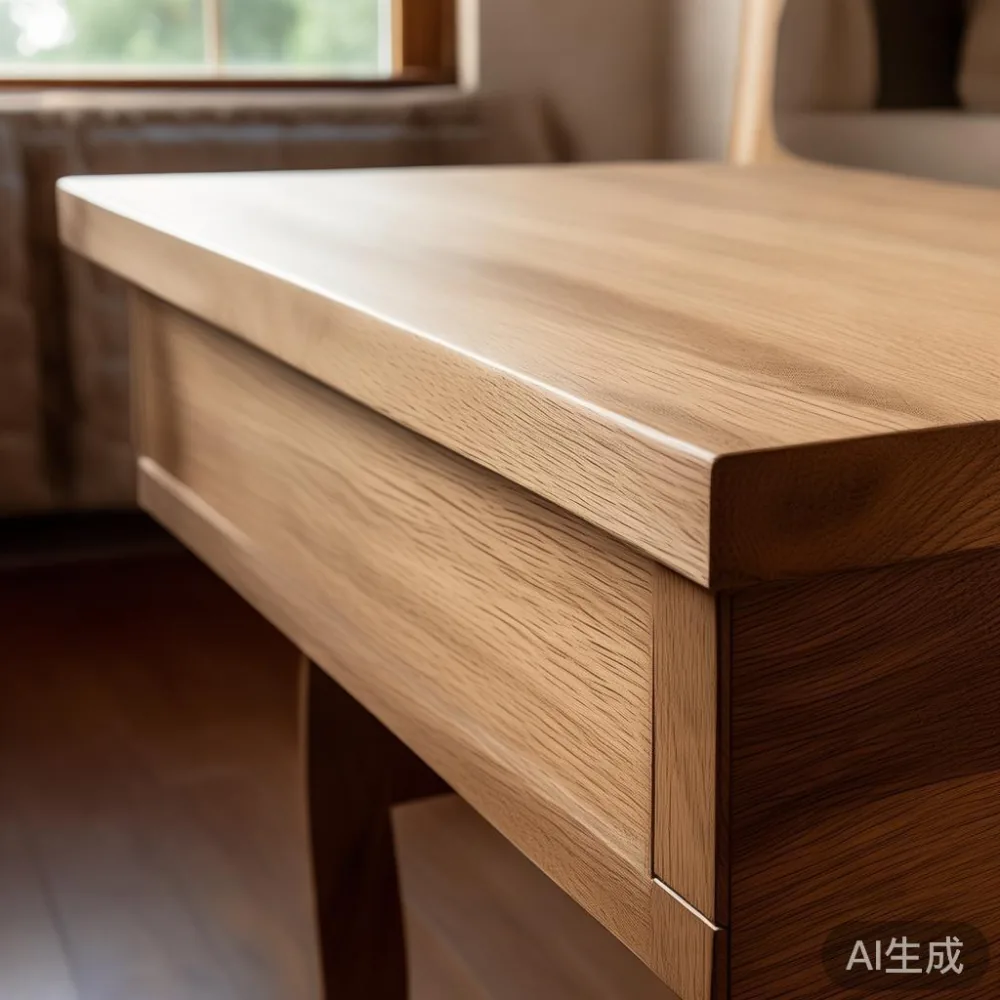
For warmth, look for solid wood with an open grain — white oak, ash, natural walnut, or American cherry. Avoid high-gloss lacquer, which reflects the ceiling light and makes a small room feel clinical. A matte hardwax oil finish is the sweet spot: it shows the grain, takes knocks, and can be re-oiled in your flat in an afternoon if a搬家 scratch ever appears. MIDHILL's bedside tables in the warm-minimal collection use that exact finish, and because the warranty runs ten years on structure and refinishing is for life, one table can easily outlast two lease cycles in a Punggol or Sengkang rental.
Which solid wood works best in Singapore's humidity?
Singapore sits between 70 and 90 percent relative humidity for most of the year, and that reality rules out a lot of "solid wood" claims. MDF with a wood-veneer sticker will balloon at the edges inside six months. Particleboard with a melamine wrap will chip the moment a renovation mover bangs a wardrobe panel against a corridor wall. What survives is true solid hardwood, kiln-dried to between 8 and 12 percent moisture content, with joinery that lets the wood move.
For warm minimal rooms, four species do the heavy lifting:
- White oak — pale, calm, takes a light stain well, very stable across humid months.
- Ash — slightly cooler than oak, with a pronounced grain that catches morning light from an east-facing window.
- American cherry — deepens in colour over twelve to eighteen months, so a new cherry bed frame will look richer in year two than on day one. Pairs with brushed brass reading lamps.
- Black walnut — the most expensive of the four, used as an accent on a marble top side table or a headboard panel rather than across an entire wardrobe.
Ask any supplier for the moisture-content reading before you pay. A serious Foshan factory will quote you 8 to 10 percent for export-grade pieces and will not hesitate to share the kiln schedule. MIDHILL publishes this on their spec sheets for every bed frame, dining table, and wardrobe they ship, which is unusual for the category.
What about the rest of the room — sofa, dining table, wardrobe?
Warm minimal works because the same wood logic repeats across the home, not because every piece matches like a 1990s furniture set. The recipe most Singapore interior designers reach for is this: one statement wood piece per room, two supporting pieces in the same species, and one contrasting accent.
In the living room, that often means an American cherry wood sectional sofa as the warm anchor, with a low marble table in front for the tray and the remote. The marble introduces a cool counterpoint that prevents the cherry from looking too sweet. Sectional sofas run large — a three-seater with chaise is usually 280 to 320 cm wide — so measure your lift lobby and corridor before you order. A standard HDB passenger lift internal is about 140 cm deep by 240 cm wide with a 210 cm door; a condo service lift is often 160 by 280 cm. The sofa should clear the smaller of those numbers with at least 5 cm to spare on every side, and the box it ships in will be even bigger than the sofa itself.
In the dining area, a solid wood dining table in white oak or ash, 140 to 160 cm long for a four-seater, seats a Singapore family comfortably without dominating a compact condo dining zone. Round tables at 110 to 120 cm diameter work better in a square Punggol kitchen because they soften the corners and let four people sit without elbows colliding.
The wardrobe is where most homeowners overspend on the wrong thing. A floor-to-ceiling wardrobe in a HDB bedroom usually runs 240 to 260 cm tall and 180 to 300 cm wide. A solid wood frame on the outside with a paper-based interior is fine; what matters is that the doors close square after the third humid season. Soft-close hinges, 18 mm back panels, and a real wood frame around the sliding doors are the three details to insist on. Anything else is a wardrobe you will replace in five years.
How much should I budget, and what does delivery look like?
Real numbers help here, because GST, delivery surcharges, and lift-access fees quietly add 12 to 18 percent to a furniture order in Singapore. A practical warm-minimal bedroom set, with one queen-size solid wood bed frame, two bedside tables, and a six-door wardrobe, lands in the following ballpark when shipped from a Foshan factory direct to your door:
- Bed frame (queen, 150 x 200 cm, white oak): S$1,250 to S$1,650
- Bedside table pair (45 x 40 x 55 cm each, matching oak): S$480 to S$640
- Wardrobe (240 x 240 cm, three sliding doors): S$1,800 to S$2,400
- Dining table (160 x 80 cm, solid ash, seats four to six): S$950 to S$1,350
Add 9 percent GST on the landed value, lift-access coordination with your condo management (some MCSTs charge S$50 to S$150 per delivery for protective wrapping of common-area walls), and a voluntary tip for the two deliverymen who carry a 90 kg dining table up to the 14th floor. Total for the bedroom set above, delivered to a Punggol Way condo with a usable service lift: roughly S$4,700 to S$6,100, all in.
From MIDHILL, an order above US$350 ships free to Singapore. Below that threshold, sea freight to a Singapore forwarder typically runs US$80 to US$150 per cubic metre. Lead time from order to doorstep is fourteen to twenty-one working days for in-stock solid wood pieces, longer if a custom wardrobe is involved. Returns are accepted within fourteen days for unused items in their original packing, which matters because a 90 kg dining table cannot be returned by regular courier.
What mistakes should I avoid when matching the bedside table to the room?
Three problems come up over and over in Singapore homes, and each one is avoidable with a tape measure and a calm five minutes of planning.
1. Buying the bedside table last. The nightstand should be chosen at the same time as the bed frame. Height is the reason: a mattress top in Singapore usually sits 55 to 65 cm off the floor depending on the slat height and mattress thickness. If the bedside table is 5 cm shorter or taller, the reading lamp will not clear the pillow, the phone will slide off every time you reach for it, and the room will quietly annoy you for ten years.
2. Choosing width by the shop, not the wall. A 60 cm wide nightstand looks modest in a 90 sqm showroom. In a 12 sqm HDB bedroom with a 180 cm wardrobe, it will block two of the three doors. Measure the gap between bed and wardrobe, subtract 8 cm for breathing room, and buy the largest bedside table that fits the smaller number. For most HDB layouts, that number is between 40 and 50 cm.
3. Mixing too many woods. Warm minimal can carry two wood species per room, occasionally three if one is a small accent. More than that, and the room looks like a sample board. Pick one primary wood — white oak is the safest starting point — and let the bedside table, bed frame, and dining table share it. Use cherry or walnut on a single accent piece such as a marble top side table, a picture frame, or a small chest at the end of the bed.
So, where does the bedside table sit in all of this?
The bedside table is the smallest piece of furniture in a warm-minimal bedroom, and it is also the one you touch every single day. It holds the phone, the water, the book, the lamp. It frames the bed. It sets the wood tone for the rest of the room. Get the bedside table right — two matching pieces, solid wood, correct height, matte finish, the right width for your specific wall — and almost every other decision in the room becomes easier. The wardrobe can be simpler, the bed frame can be plainer, the dining table can be quieter, and the room still reads warm, intentional, and calm.
That is the quiet trick of warm minimalism in a Singapore home. You are not buying more furniture. You are buying fewer pieces, better chosen, in a material that will still look good when the next renovation trend has come and gone. A solid wood bedside table from a Foshan maker with a real warranty is, for most homeowners in Tampines, Bedok, and Punggol, the smartest first step into that kind of room.