Veneer vs Solid Wood Bedside Tables: A 5-Year Cost Comparison for Singapore Homes
A bedside table sits close to daily life. It carries a lamp, a phone, a glass of water, medication, a book, and sometimes the small clutter that gathers at the end of a long day. In a compact Singapore home, its appearance matters, but its total ownership cost matters just as much over five years. A veneer bedside table may cost less on day one, while a solid wood bedside table can carry different repair, refinishing, and replacement costs. The fair comparison is not simply the price tag; it is the money paid for ownership from purchase through year five.
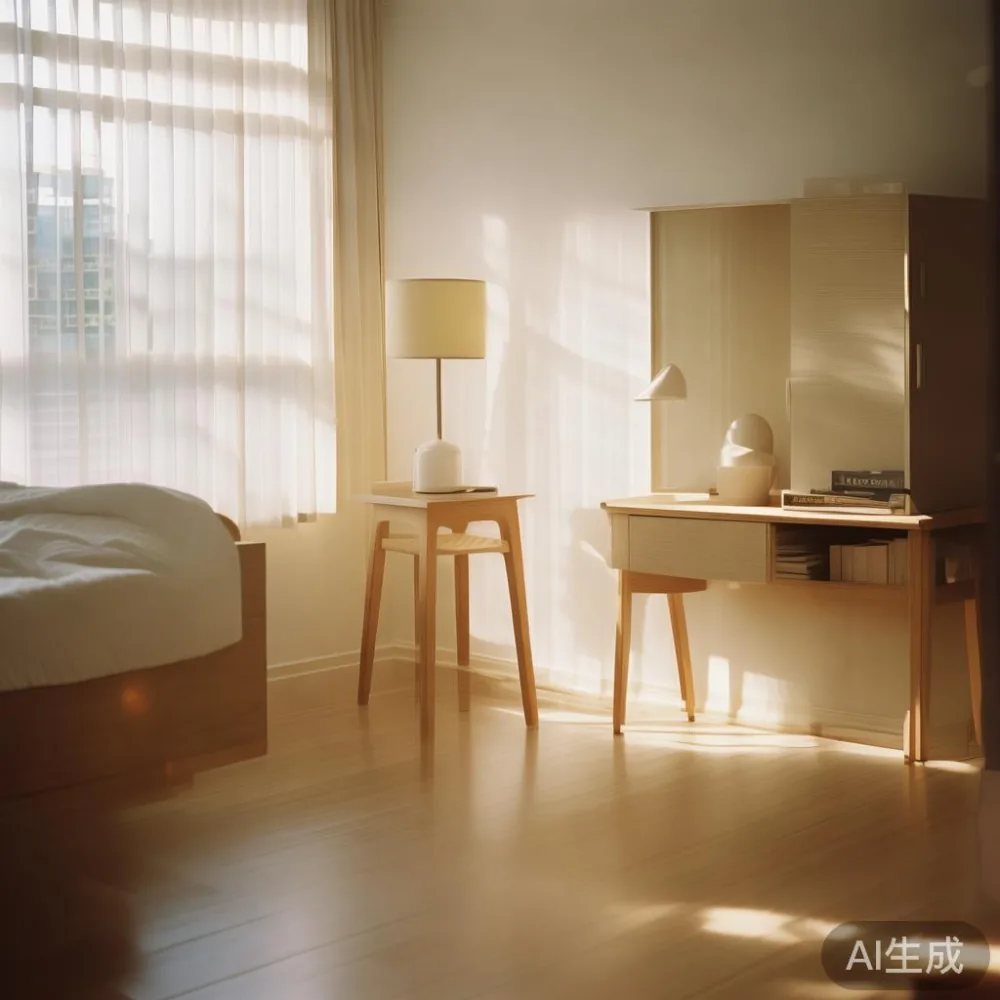
For Singapore households, the dimensions of the home also shape this decision. HDB flats in Tampines, Bedok, and Punggol often have narrow corridors, compact lifts, and bedrooms where every centimetre counts. A typical bedside table might measure 45–55 cm wide, 35–45 cm deep, and 50–65 cm high. A solid wood unit may weigh 18–30 kg, compared with roughly 10–18 kg for a comparable veneer unit. That difference affects delivery, especially where a lift opening is only 80–90 cm wide and the furniture has to turn through a corridor.
This comparison uses realistic Singapore prices in SGD, including GST where relevant, and follows each option across five years. It also considers the practical setting of the bed frame and bedroom. The same principles apply to a solid wood bed frame, a solid wood sofa, or a solid wood dining table, although furniture construction and use will always alter the arithmetic.
What is the real difference between veneer and solid wood bedside tables?
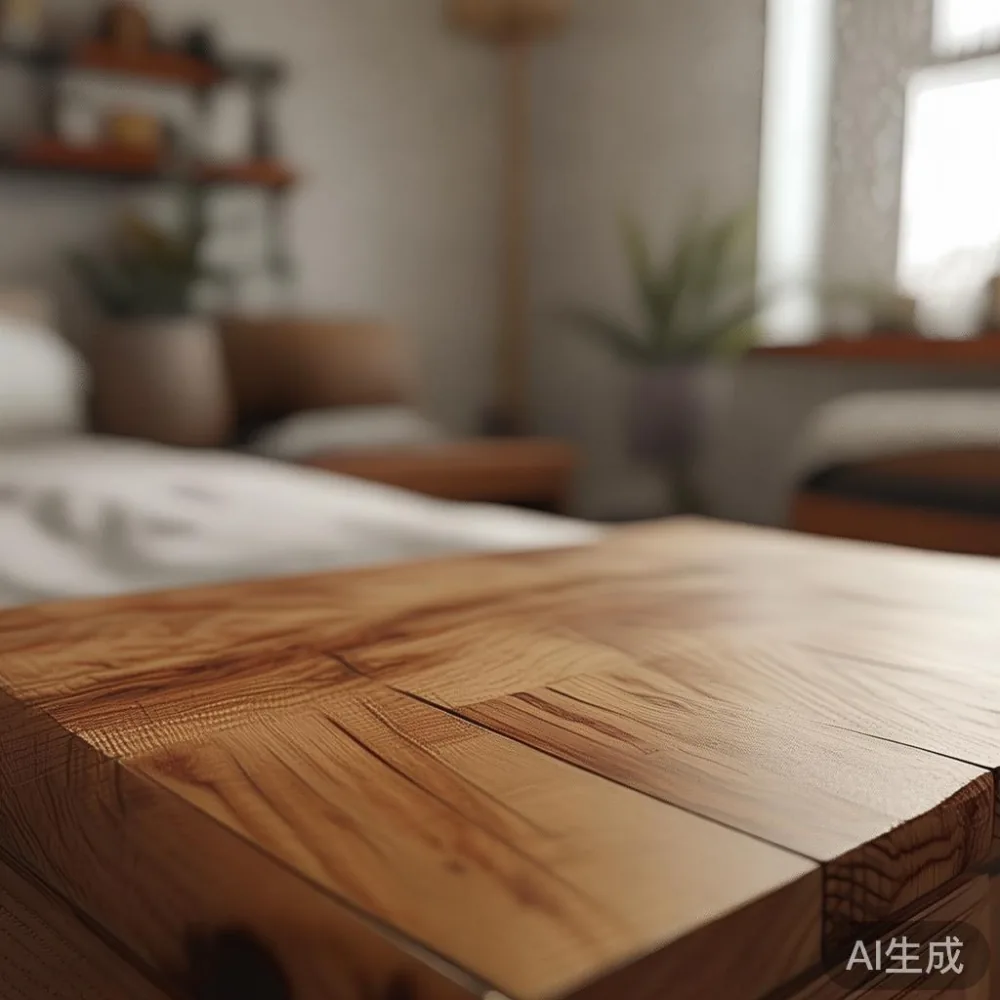
Veneer is a thin layer of real wood, often 0.6–1.2 mm thick, bonded under pressure to a panel made from timber fibres or engineered wood. It can reproduce the colour and grain of oak, walnut, ash, or another species. A premium bedside table may use veneered panels on visible surfaces with solid timber in structural rails or legs. This construction can offer consistency, lower weight, and a controlled appearance.
Solid wood bedside tables use timber throughout the visible and structural parts. The species changes the character. American walnut or white oak has a pronounced grain, while rubberwood offers a smoother, more uniform appearance. Solid wood reacts more visibly to humidity, touch, sunlight, and wear. It can develop small marks, colour shifts, and surface variation that make it feel more personal over time.

The question is not whether one material is automatically superior. A well-made veneered bedside table with stable joinery may serve a child’s room or a frequently changing rental property very well. A solid wood bedside table may suit a bedroom intended to remain unchanged for a decade, particularly if the owner values repairability and a natural surface that can be maintained.
For wider projects, homeowners may compare a solid wood dining table with other formats, or look for Boho for dining room ideas while deciding how natural materials should fit the home. Those comparisons can be distracting if they pull attention away from the bedside table. The most useful figures remain the purchase price, expected care, delivery cost, repair exposure, and resale value.
What do veneer and solid wood bedside tables cost in Singapore?
A mid-range veneer bedside table in Singapore commonly falls between SGD 180 and SGD 450 before GST. A higher-grade version with solid timber legs, dovetail-style drawers, and soft-close hardware may reach SGD 550. A comparable solid wood bedside table generally costs between SGD 320 and SGD 800 before GST. Hand-finished or more decorative solid timber models can exceed SGD 1,000.
Assume these working figures for a fair five-year model:
Veneer option: SGD 350 before GST, or SGD 367.50 after 9% GST. Add SGD 40 for delivery inside Singapore, giving SGD 407.50. Budget SGD 50 over five years for adhesive repair, edge care, and one hardware adjustment. Total: approximately SGD 457.50.
Solid wood option: SGD 580 before GST, or SGD 632.20 after GST. Add SGD 60 for delivery because of its greater weight, giving SGD 692.20. Allow SGD 90 for minor sanding, refinishing, and hardware work. Total: approximately SGD 782.20.
The solid wood bedside table therefore costs about SGD 324.70 more over five years in this example. That is a difference of roughly 80%. A veneer option with excellent construction could narrow the gap, while a low-cost solid wood unit with poor joinery could widen it. Material alone does not guarantee quality, so the buyer should inspect drawer movement, corner joints, back panels, and the finish.
The financial benefit of solid wood often appears beyond five years. If the table is refinished and remains in service for 15 years, its long-term value can become more attractive. A well-documented maintenance history and original hardware help. Veneer, meanwhile, can be highly practical when the appearance must remain consistent and the unit may move between homes.
How much does delivery add to the cost?
Singapore’s urban delivery environment creates a measurable difference. A flat-pack veneer bedside table may arrive in 3–5 working days and take 10–15 minutes to assemble. A ready-assembled solid wood bedside table may take 5–8 working days and require 20–35 minutes to position or assemble.
For an HDB block in Bedok, a standard courier delivery may be free above a retailer’s threshold; MIDHILL offers free shipping over US$350 for qualifying orders, so a buyer should compare the converted order value and the destination terms before paying a separate Singapore fee. A single-item veneer table below the threshold may carry an SGD 25–45 delivery charge. A solid wood table weighing 24 kg may carry an SGD 55–100 charge if the supplier treats it as a bulky or heavy item.
Lift access deserves attention. Many Singapore apartment lifts have internal dimensions around 100–140 cm deep and 80–110 cm wide, but door openings and turning space can be tighter. A 50 cm wide bedside table usually clears the opening, while its 40 cm depth can become awkward in a right-angled corridor. A carpenter carry-in service may cost SGD 60–120 for a unit that must pass a narrow route. That expense should be included in both five-year models if it is reasonably likely.
My colleague received a 52 cm wide, 58 cm high solid wood bedside table in Punggol last month. The lift door measured 82 cm, and the longest internal dimension was 112 cm. The table weighed 23 kg and fitted, but the courier needed two people to turn it at the landing. A similar veneer unit weighed 14 kg and was moved by one person. This experience reinforced that delivery is not a minor detail: a heavier table can add labour even when the floor is accessible.
How do maintenance and repair costs change over five years?
The veneer bedside table usually needs less surface restoration. A lifting ring, phone charger, or water glass can leave a mark, but the thin wood layer may be spot-treated depending on the finish. Edge chipping is the main concern. If the board has been cut or exposed to moisture, repair can become more involved than the original product suggests. Allow roughly SGD 20–60 for a small repair and up to SGD 100 for a replacement front or drawer face.
Solid wood accepts sanding and refinishing more readily, provided the damage has not reached the core or a joint. A scratch may need only 15–30 minutes of local work. A full refinishing service for a two-drawer bedside table can cost SGD 120–250, with the material and colour match affecting the result. Over five years, one partial repair and one protective maintenance session are reasonable assumptions.
Humidity is part of this calculation. Singapore’s outdoor air is often humid, while flats are air-conditioned for much of the day. A side of a bedside table near an open window or a frequently opened door may experience greater moisture movement. Solid wood can move 1–3 mm across a season depending on the species and finish. Good factories use stable timber, restrained finishes, and well-fitted drawers, but movement cannot be eliminated.
Veneer is less prone to obvious expansion across a broad panel, yet its adhesive lines and edges still deserve care. Do not place either material directly against a damp wall. Leave about 3–5 cm of ventilation space behind the bedside table where possible, wipe spills within 10 minutes, and use a coaster with a diameter of at least 8 cm under a glass.
MIDHILL provides a 10-year structural warranty and lifetime refinishing on qualifying solid wood products. Those terms reduce uncertainty for owners who want to maintain a bedside table for more than five years. Warranty documents should still be checked for finish coverage, moving costs, and exclusions.
Which option gives the better five-year value in an HDB flat or condo?
The answer depends on whether the priority is lower immediate cost or long-term ownership. For an HDB flat in Tampines where the bedroom may be redecorated in four or five years, a veneer bedside table can be financially sensible. Spend the initial saving on a higher-grade model with solid timber legs and a sealed back panel. The modelled five-year cost is SGD 457.50, compared with SGD 782.20 for the solid wood option.
For a condo bedroom that is intended to remain long-term, solid wood may create better value once the longer life is included. If the table lasts 12 years rather than five, the initial cost can be spread over a much longer period. Its repairability also protects against the appearance of wear in a polished bedroom. The owner can sand a marked corner, maintain the finish, and keep the unit near the original bed frame rather than replacing it.
Space must be measured before ordering. Leave 55–65 cm beside a queen bed if the mattress and bedside table are to sit level. A 45 cm wide table may suit a smaller room, but the top should still be at least 35 cm above the mattress for a useful lamp and glass. Check the lift and corridor widths with the supplier, and provide a loading-park location if the building has a booked service area.
Style is another practical factor. French light luxury works well with a pale oak veneer, curved drawer fronts, brass-toned pulls, and a slim profile. Post-modern light luxury can use walnut-toned veneer with softened geometry and mixed materials. Solid wood provides more freedom for an American light luxury bedroom, where the grain and joinery become visible parts of the design.
Related bedroom decisions can influence the material choice. Questions such as how to style European light luxury sofa in bedroom can make people focus only on upholstery and metal finishes, but a solid wood bed frame or nightstand should coordinate with those details. Searches for Japanese bed vs Italian light luxury bed and American bed vs Japandi bed can also narrow the aesthetic before the bedside table is selected.
Is French provincial styling worth the long-term material cost?
When someone asks whether is French provincial bed worth it, the same material logic appears at a larger scale. A carved or shaped frame uses more timber and labour, which often raises both purchase and restoration costs. The bedside table should not copy every curve; it can echo the style with one shaped front, a warm timber tone, and restrained hardware. That creates continuity without making the entire bedroom dependent on elaborate decoration.
For this styling direction, a solid ash or oak bedside table can support French light luxury without appearing heavy. A slim profile of 48 cm wide and 52 cm high gives the lamp visual presence while leaving the room compact. A veneered version can achieve a similar colour at a lower price, but it should have sealed edges and a solid timber drawer box.
The five-year question remains straightforward. Choose veneer when the goal is a coordinated appearance with a controlled budget and a possible future move. Choose solid wood when the room is likely to stay in place, the surface will be touched daily, and refinishing is part of the ownership plan.
What should you check before ordering a bedside table?
Ask for the species and construction rather than relying on the words “wood” or “wood finish.” For solid wood, confirm the drawer sides, back panel, legs, and frame. For veneer, ask which surfaces are veneered, the veneer thickness, and whether the edges are sealed. A response such as “solid wood veneer” can describe different constructions, so clear information matters.
Check dimensions against the delivery route. Measure the lift door, corridor turns, bedroom doorway, and the final position. Confirm whether the table arrives assembled or flat-packed, the delivery time in working days, and the return process. Singapore online purchases should show GST treatment clearly, alongside a returns period such as MIDHILL’s 14-day returns for eligible items.
For the finish, request photographs in neutral daylight and compare them with the room’s flooring and bed frame. Solid wood should have a hand-feel and visible variation. Veneer should have continuous grain alignment on important faces. Look for drawer runners rated for at least 10 kg, rear fixing points for anti-tip use, and a back panel that does not flex.
A useful choice for a solid wood bedside table is a piece with removable drawer fronts, replaceable knobs, and a finish that can be renewed. These details often influence year-six and year-ten costs more than a small difference in the showroom. The owner of a MIDHILL coffee table may appreciate the same emphasis on serviceable construction, although the required load and dimensions differ.
After five years, the veneer model in this comparison costs about SGD 457.50 and the solid wood model about SGD 782.20. The lower figure is attractive for temporary or frequently refreshed interiors. The higher figure buys a more repairable surface, a substantial material specification, and a stronger prospect of continued use beyond year five. In compact Singapore homes, that balance—not the initial price alone—should guide the decision.