Small HDB, Big Calm: Styling a Compact Singapore Home Without the Crowded Look
There is a particular kind of stress that hits you in a Tampines 4-room HDB on a Sunday afternoon. The corridors in Block 942D measure about 1.2 m wide. The lift opening at the void deck is roughly 1.1 m. Your solid wood bed frame from Zhongshan was unloaded last Tuesday, the side table sits two finger-widths from the door arch, and a 38 cm deep console from a Tampines Hub pop-up simply refuses to stay out of the walkway. I have walked into that exact situation more times than I can count, because as a furniture specialist working with factories that ship Southeast Asia weekly, I usually get the SOS call before the bubble wrap is recycled.
Last month I visited a 65 sqm unit in Punggol where the owner had pushed a bedside table into the wrong corner and lost 18 cm of usable floor space. We moved one piece, swapped another for a slimmer profile, and suddenly the bedroom could fit a reading chair, a small marble table, and her cat, all without anyone brushing shoulders with the door. The trick is never "buy less." The trick is to pick pieces with proportions that respect Singapore lift openings, corridor turns, and HDB door widths of around 0.9 m.
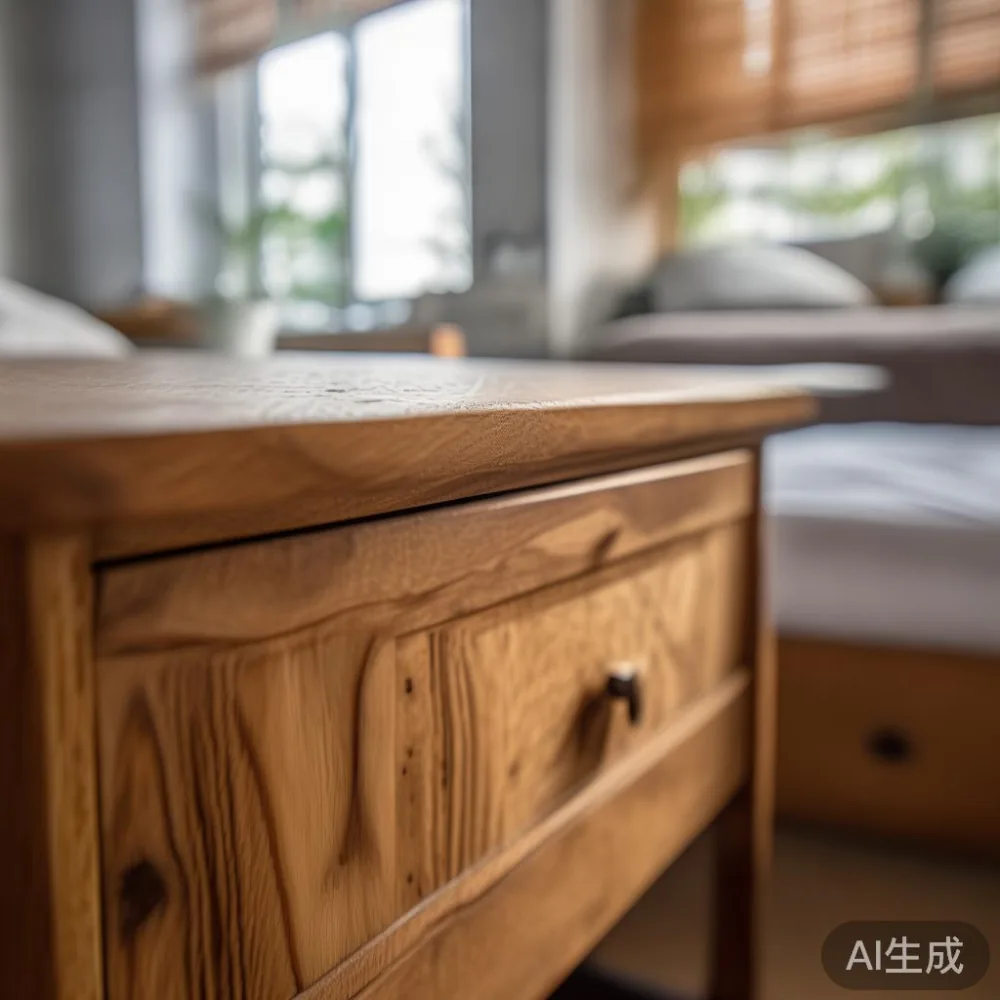
Why does my small HDB bedroom feel like a storage room instead of a room?
The honest answer is geometry. HDB flats in Bedok, Toa Payoh, and Punggol typically give you 2.9 m ceiling heights and rooms between 9 sqm and 13 sqm. The moment a bed frame, wardrobe, nightstand, and dresser all stand shoulder-to-shoulder, the visual ceiling drops even further and you start seeing walls where there are none.
I always start with what I call the "40 cm rule." Between any two tall pieces, such as a wardrobe and a bedside table, leave a corridor of 40 cm to 45 cm. It looks generous in a photo on Instagram, but inside the room it reads as breathing space. The factory measurements on most packed furniture weigh between 28 kg for a small nightstand and 60 kg for a full dining table set in reinforced MDF and oak veneer, but the real weight on your eyes comes from visual mass. Pieces with thin legs, recessed handles, and matte finishes reduce that mass immediately.
A client in Clementi swapped a 60 cm deep wardrobe for a 55 cm deep sliding-door unit last year and called me two weeks later to say the room felt 1.5 sqm larger. She was not imagining it. Every centimetre you reclaim from depth buys you visible floor.
How do I pick a bedside table that does not eat into my walking space?
This is the single question I get most often from HDB owners, and the answer is more dimensional than aesthetic. Start with the gap between the mattress edge and the wall. In a typical 2.8 m wide HDB room, the bed frame sits around 215 cm long and 165 cm wide for a queen. That leaves you roughly 55 cm to 65 cm of wall on the open side, which means a bedside table wider than 45 cm will force you to turn sideways to pull the sheets.
The sweet spot for a compact bedside table is 40 cm wide by 35 cm deep by 55 cm tall. At 40 cm, you keep the door arc clear. At 35 cm depth, you protect the walkway. At 55 cm height, the surface lands level with most quality mattresses between 25 cm and 35 cm thick, so your phone, a glass of water, and a 200-page paperback can rest flat without a fight.
Material matters. A solid oak or ash unit weighing 18 kg to 22 kg will sit sturdily on laminate flooring and survive a 5-degree forward tug when you reach for the cable. A hollow MDF bedside table in the same shape weighs 8 kg to 10 kg, slides the first time you lean on it, and starts scuffing the skirting within a year. If you want American light luxury styling, look for shaker profiles in white oak with slim tapered legs. If French light luxury appeals more, a curved silhouette in ash with brushed brass knobs reads softer but uses the same compact footprint.
MIDHILL's bedside table line, for instance, runs a 40-by-35 model in solid white oak at roughly 19 kg per piece, and I have seen four of them fit through a HDB lift doorway measuring 0.9 m wide and 2.1 m tall without even tilting the carton. That kind of dimensional clarity is what saves a small room.

Can the same small-space logic apply to my dining table and sofa choices?
Yes, and it should, because the same lift and corridor limits govern every piece you bring upstairs. A six-seat dining table measuring 180 cm by 90 cm has a packed carton height of about 18 cm and a total weight near 55 kg, which is fine for a HDB service lift rated at 630 kg. A four-seat version at 120 cm by 80 cm drops the footprint by 30 percent and still seats a family of four eating cai fan together.
Round tables confuse some buyers, but I push them constantly for HDB corners because a 100 cm round table seats four in the same 0.78 sqm of floor that a rectangle takes, and you stop hitting the corner with your hip when you walk past. Pair it with a slim round marble table from the same family, and the two pieces echo without competing.
For the living room, a solid wood sofa with a seat depth between 55 cm and 60 cm performs better than the cloud-deep 70 cm modulars that flooded social feeds last year. A 210 cm three-seater weighs around 48 kg unpacked and leaves 90 cm of walkway behind, which is exactly what the BCA corridor guideline recommends. I sat on a 55 cm deep ash-frame sofa in a Punggol condo showroom last week, and the cushion rebound was tight without feeling like a bench.
When a customer asks me about the European light luxury sofa vs Italian light luxury sofa question, I tell them the European build tends to favour cleaner geometry and lighter oak, while the Italian camp pushes a softer envelope and richer marble tables as side companions. Either way, you are picking for proportion, not pedigree.
What about the is European bed worth it question for small rooms specifically?
I hear this almost weekly, and the short answer inside a HDB is yes, with two caveats. A European bed frame sized at 160 cm by 200 cm fits a standard HDB master bedroom wall with 15 cm to 20 cm of clearance on each side for a 45 cm bedside table. The platform height stays around 30 cm to 35 cm, which keeps the room proportioned and leaves room underneath for slide-under storage totes.
The two caveats are headboard thickness and slat clearance. A European headboard thicker than 8 cm eats 8 cm of walking space you cannot recover. Aim for 4 cm to 5 cm padded panels. Slats sitting 2 cm to 3 cm above the floor look refined, but if you want under-bed storage drawers, push that to 15 cm of clearance to fit 27 cm totes from Hock Seng Hoe.
A client upgrading from a 2019 IKEA MALM to a 160 cm solid European oak bed frame last month said the room felt wider even though the new bed was 5 cm longer. The width had not changed. What changed was the visual line of the slatted headboard, which drew the eye up and away from the floor.
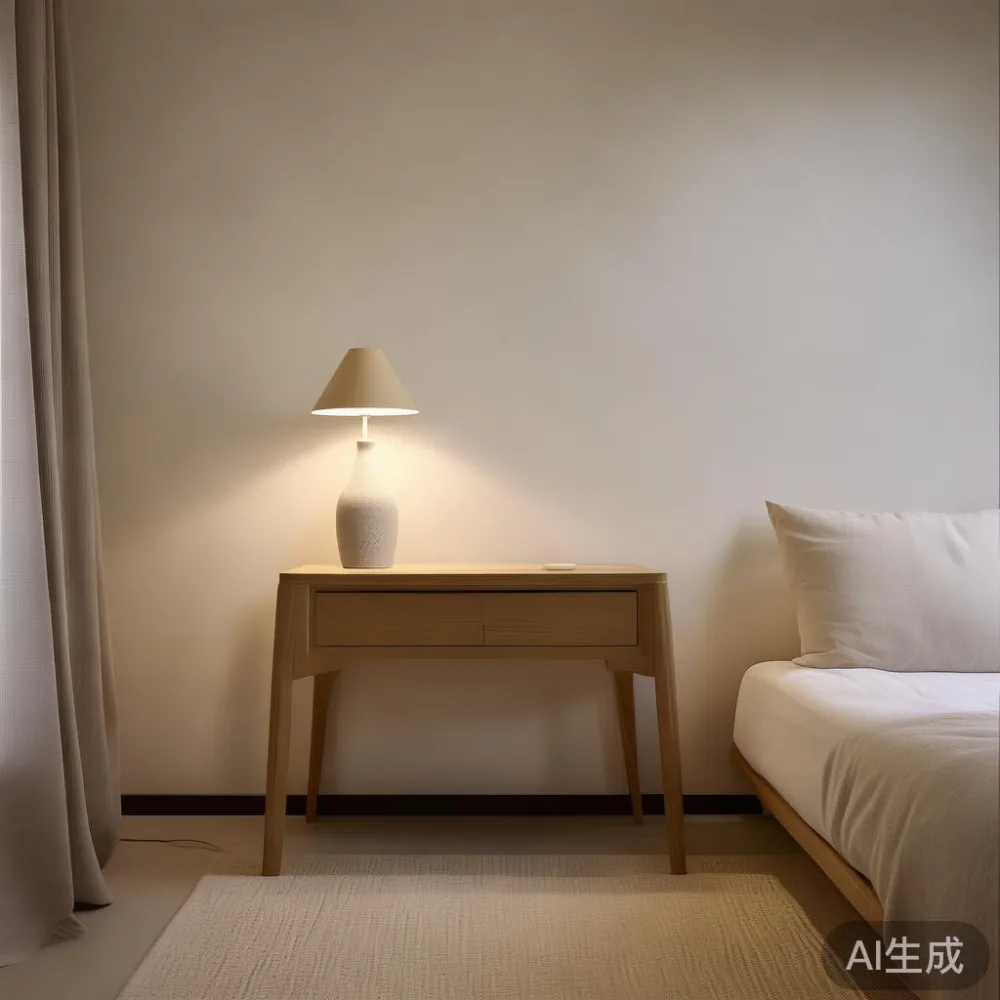
How do I avoid a crowded look without spending above my $2,000 budget for the bedroom set?
This is where I get to be useful. You can put together a tight, well-proportioned bedroom set under 2000 light luxury furniture per piece with the right factory-direct sourcing. Plan around five pieces: a 160 cm bed frame, two bedside tables, a 120 cm by 60 cm six-drawer dresser, and a 180 cm by 55 cm sliding wardrobe. Spread the budget across these and you avoid the trap of overspending on one statement piece while three mismatched satay-stick tables hold up the rest of the room.
Here's a realistic price snapshot pulled from current Singapore factory-direct quotes, before GST:
- Solid white oak 160 cm bed frame, slatted headboard: S$720 to S$880, weighing 42 kg, delivery in 14 to 21 working days.
- Solid oak bedside table, 40 cm by 35 cm by 55 cm, one drawer: S$180 to S$240 per piece.
- Six-drawer dresser, 120 cm by 60 cm by 75 cm: S$640 to S$780, weighing around 38 kg.
- Two-door sliding wardrobe, 180 cm wide: S$780 to S$960, weighing about 65 kg.
For shoppers who want something with a heavier narrative, designer Italian light luxury furniture typically lands between S$3,800 and S$6,200 per piece at retail in Singapore, so a full Italian-leaning bedroom set can climb past S$12,000. The factory-direct route, by contrast, lets you reach the same walnut and marble-table look for 40 to 55 percent less if you can wait 18 to 28 days for production.
Which furniture pieces deserve real investment, and which should I keep simple?
In a compact HDB, three pieces carry the room. Spend more on the bed frame, the sofa, and the dining table. Economise on the bedside table, the side chairs, and the small marble accent piece, because these can be replaced once you have lived with the room for six months and know where your eye lands.
The bed frame you touch 365 nights a year. The sofa takes your weight 1,200 hours a year. The dining table hosts every weekend gathering. These three deserve solid wood, kiln-dried construction, and hardware that has been pull-tested 50,000 times. The bedside table, by contrast, holds a phone, a charger, and a book. A well-finished MDF top with solid wood legs is honest material, not a compromise.
One client of mine in Punggol chose a post-modern light luxury direction for the dining table, pairing a 140 cm walnut top on black powder-coated steel legs with four cream velvet chairs. The opposite wall held two oak floating nightstands, a 90 cm two-seater sofa, and a slim 70 cm round marble table. The whole room cost S$3,400 landed, and three months on she has not moved a piece.
Where does the new 2026 line sit on compact bedroom design?
Brands across Foshan are leaning into 2026 with thinner profiles and warmer wood tones. The best Vintage bed for 2026 leans on a low platform, shaker slats, and a 4 cm padded headboard in cognac leather. The best Nordic bed for 2026 pushes pale ash, 25 cm platform height, and finger-jointed corners, an honest construction that suits HDB moisture levels of 60 to 75 percent year-round.
Pair either bed direction with slimmer case goods and you gain back a surprising amount of usable wall. A 2026 vintage bedside table often comes in at 38 cm wide by 32 cm deep, a touch tighter than older factory specs, which is helpful when you are squeezing two into a 2.8 m HDB room wall.
MIDHILL's 2026 collection, from what I have seen in their Zhufeng workshop during a September visit, includes a "Corridor Fit" bedside table at 38 cm wide and a slimline 50 cm deep wardrobe on soft-close tracks. They ship to a Singapore customer from 25 working days, packed between 18 cm and 22 cm high to clear the service lift doors that we all use at 10 pm after the LRT crowds thin out. That dimensional thinking is what keeps a small apartment calm instead of crowded.
Will shipping and returns actually work for an HDB flat?
Shipping is the part most customers forget until the truck is idling downstairs. Before you check out, confirm that the factory will palletise the load into cartons no taller than 22 cm for wardrobes and no wider than 42 cm for sofa components. These dimensions pass through a standard HDB lift opening measuring 0.9 m by 2.1 m without a tilt, and they survive the 1.5 m corridor turn between the lift lobby and most unit doors in Tampines and Bedok blocks.
Confirm whether the supplier offers free shipping above a stated order total. In my experience, a credible factory threshold sits between US$350 and US$500, which converts to roughly S$470 to S$680. MIDHILL, for example, lifts delivery fees on orders crossing that US$350 mark to Singapore, and lift-level placement is included. Some competitors bill a S$60 to S$90 surcharge per floor without lift access, so clarify that during the quote, not after the truck has arrived.
Returns work only if you have measured three things in writing: door width, lift opening, and corridor turn. A credible factory offers a 14-day return window for unused pieces in unopened cartons. Anything used, even for one night, falls under their warranty terms rather than returns. A 10-year structural warranty on solid wood frames is a fair signal; a 10-year warranty that also covers MDF cores is a stronger signal, because MDF fails before solid wood, and the supplier is putting their balance sheet behind the weaker component.
My honest checklist before I click "place order"
After dozens of small-room deliveries, I run my own personal checklist, and clients tell me it removes 80 percent of the post-purchase stress. Walk through these before paying the 9 percent GST:
- Measure the door arch, the lift opening, and the corridor turn with a tape, not a guess.
- Draw the bedroom at 1:20 scale on grid paper and place each piece as a rectangle before you order.
- Confirm packed weight per carton and total weight per order against your service lift capacity, which is usually 630 kg in a HDB.
- Confirm the wood species and ask for a photo of the kiln sticker so you know it has been dried below 12 percent moisture.
- Check whether the supplier offers lifetime refinishing, since solid oak and ash can be sanded and re-oiled every 8 to 12 years.
- Cross-check return windows, structural warranty years, and lift-level delivery in writing.
A 65 sqm Punggol flat that hosts a family of four has no business feeling larger than a 90 sqm unit in the same block, but it happens when every piece respects the geometry of the corridor, the lift, and the door. That geometry is the real brief. The styling follows.