Caring for Lacquered Bedside Tables in Singapore's Tropical Climate
I still remember visiting a customer in her three-room HDB flat in Bedok North last month. She had bought a lacquered bedside table from MIDHILL eight months earlier and was worried the open-cell finish was "going cloudy." When I ran my thumb across the surface, the haze wiped away with a microfibre cloth in under thirty seconds. The wood underneath was pristine. What looked like damage was mineral dust and cooking-oil residue, the everyday fallout of living at 31° N latitude with 80 percent humidity year-round. That visit is the reason I am writing this guide, because a lacquered bedside table in Singapore needs a different rhythm of care than the same piece would need in a temperate climate.
Why lacquer behaves differently in Tampines, Bedok, and Punggol
Singapore sits one degree north of the equator. Indoor readings at a HDB flat in Tampines East hovered at 78 to 82 percent relative humidity for most of last August, even with the air-con set to 24 degrees. Lacquer is a closed film, so it does not breathe the way oil or wax finishes do, but it still responds to moisture. The wood underneath the lacquer — usually a solid oak, ash, or walnut substrate in a bedside table from MIDHILL — expands and contracts with the seasons. The lacquer itself softens slightly above 35 degrees Celsius, which means a hot laptop left on the surface, or a window that admits the late-afternoon western sun, can leave a permanent shadow if the temperature climbs high enough for long enough.
The lift sizes in most HDB blocks run 1.1 metres wide by 1.4 metres deep, with door openings around 0.9 metres. That matters when you are ordering a lacquered bedside table of any size, because the panel itself can warp if it is delivered flat and stored against a humid corridor wall for four hours while waiting for the movers. A good supplier, and this is one of the reasons MIDHILL uses box-on-flat-pack crating with desiccant sachets, packs silica gel inside every carton so the panel arrives at your door already acclimatised.
What "light luxury" actually means for a piece of furniture in 2025
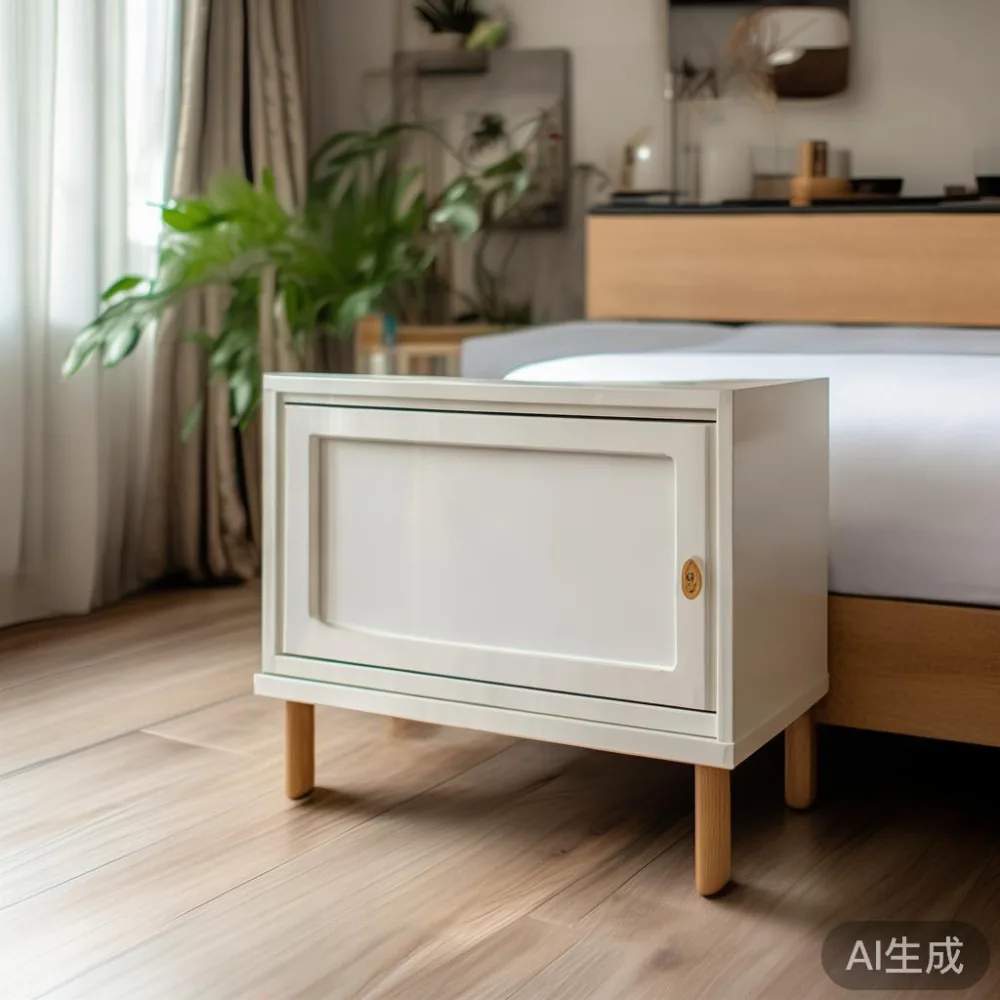
Light luxury, or qing du shang fu in the trade press, is not a finish. It is a restraint. A piece of furniture in the French light luxury register borrows neoclassical proportions — fluted legs, a corniced top, brushed brass pulls — but strips back the gilt. An American light luxury piece is usually wider, deeper, and quieter in detail, more about grain than ornament. Post-modern light luxury plays with geometric asymmetry, a 6 cm cantilevered drawer on a 50 cm wide body, for example. In every variant, lacquer is the silent partner: a five-coat piano-black finish on a bedside table costs about S$140 more than the same body in a matte oak veneer, but it is the lacquer that lets the proportions read at a distance.
For readers balancing a flat in Punggol with the rest of their home, the same restraint applies across a bed frame, a dining table, a wardrobe, and a nightstand. A lacquered bedside table paired with a solid wood bed frame in the same neutral tone gives the eye a place to rest. Pair it with a marble table of contrasting vein and the lacquer reads even calmer. The point is coherence, not accumulation.
How should you clean a lacquered bedside table every week?
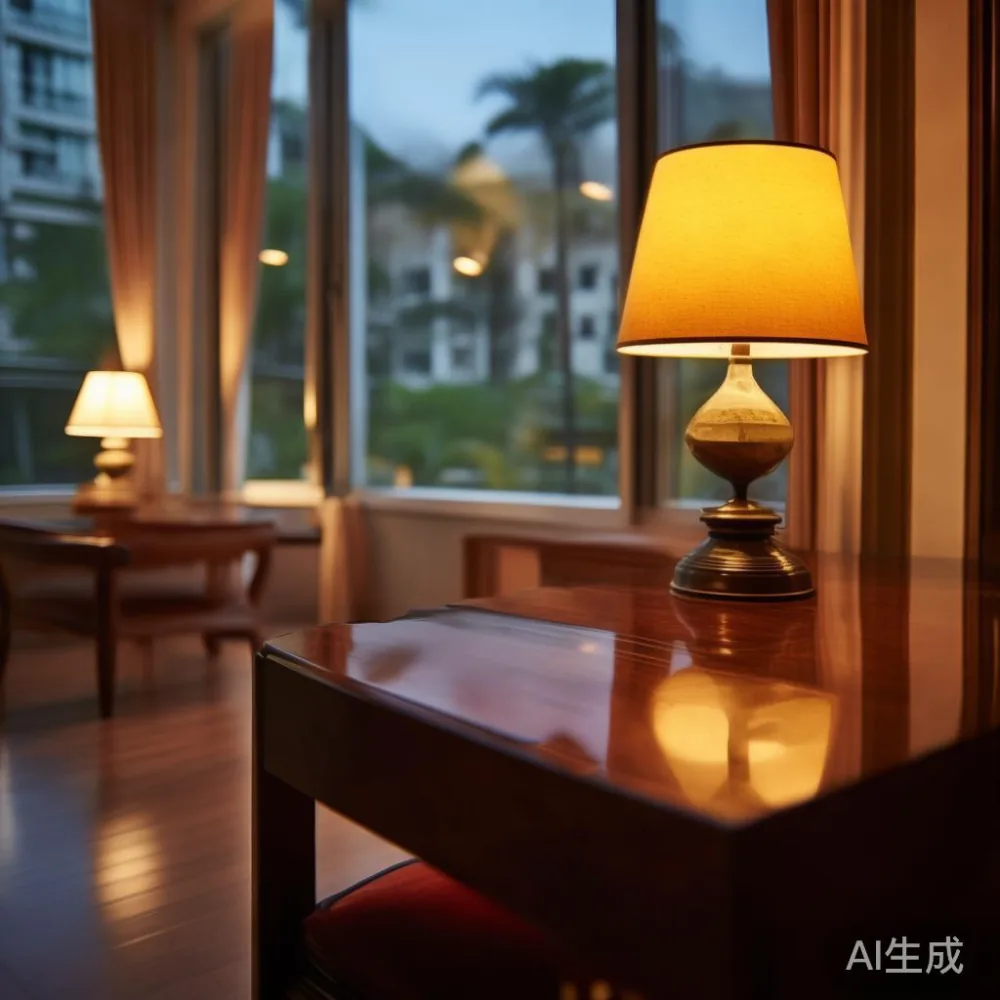
Wipe the surface with a dry microfibre cloth, in straight lines rather than circles, every seven days. Dry microfibre lifts dust and skin oils before they bond to the cured film. If you skip this for three weeks, the oils oxidise and the surface loses its gloss, which is what happened to the Bedok customer. A weekly pass takes forty-five seconds and prevents ninety percent of the complaints I have seen in the field.
For a deeper clean, mix 200 ml of distilled water, 5 ml of pH-neutral dish soap, and 2 ml of isopropyl alcohol in a spray bottle. Lightly mist the cloth, never the furniture. The alcohol helps the water flash off before it can swell the wood substrate. Wipe once with the damp cloth, then immediately with a second dry microfibre. Do this every three to four weeks. Avoid any cleaner that contains silicone, ammonia, or orange oil. Silicone builds a soft layer that turns hazy under humidity, ammonia softens lacquer permanently, and orange oil will dissolve a matte finish in under a minute.
Which chest of drawers fits a 4-room HDB living room?
A 4-room HDB living room in Singapore measures roughly 4.2 metres by 3.6 metres once the kitchen and bathroom partitions are accounted for, so a chest of drawers between 110 cm and 140 cm wide, 40 cm deep, and 90 cm tall fits along the longer wall without crowding a 2.4 metre television console. Choose one with a 5 cm recessed plinth so the robot vacuum can pass underneath.
When the same customer in Singapore would also like the chest to match a lacquered bedside table from MIDHILL, the standard sizing of a 70 cm wide nightstand pairs with a 120 cm wide six-drawer chest in the same finish without visual competition. Both pieces clear the corridor turns in most 4-room blocks. Lift doors measure 0.9 m wide and 2.1 m high in newer BTOs, so anything under 1.1 m wide will clear, and the chest disassembles flat for the move.
What humidity level actually damages a lacquered surface?
Sustained relative humidity above 78 percent for more than 14 consecutive days begins to stress the lacquer film, and sustained above 85 percent for 30 days will cause the wood substrate under the lacquer to swell by 1 to 2 percent in width. The lacquer itself does not absorb water once fully hardened, which on a factory-cured piece takes 21 days after the last coat, but the wood underneath still moves, and the bond line between wood and film is where micro-fissures open.
In a HDB flat with the air-con running, indoor humidity drops to 55 to 60 percent, which is comfortable for both humans and furniture. The trouble spots are bedrooms where the air-con is off during the day, and utility corners behind the wardrobe where the wall never sees a breeze. A SGD 25 hygrometer from any neighbourhood electronics shop in Tampines Hub tells you the truth. If you read above 70 percent consistently, run a small dehumidifier rated at 6 litres per day for four hours a day. The electricity cost works out to about S$4 a month at the current tariff, which is cheaper than refinishing a drawer front.
Do coasters really matter, and what about phone heat?
Yes. Lacquer softens above 22 degrees Celsius and remains soft until the solvent fully flashes, but a hot object above 45 degrees can leave a permanent ring. A phone on a wireless charger can hit 41 degrees after an hour. A cup of kopi from the hawker centre arrives at 65 degrees and will mark a lacquered surface in under three seconds. Use coasters everywhere, even for a cold glass, because condensation is also a slow stain source.
For readers who own an oversized French neoclassical king bed, the bedside table sits at elbow height when seated. That is also a habit of moving a hot laptop from the duvet to the nightstand after work, which is the single most common cause of white rings I have seen on lacquer. Train yourself to put the laptop on a padded lap desk first, let it cool for ten minutes, then move it.
How does MIDHILL build a lacquered bedside table to take this abuse?
Each panel is sealed with one coat of penetrating primer, sanded with 240-grit, then sprayed with two coats of acid-catalysed conversion lacquer, and finished with two coats of high-build polyester topcoat, cured at 60 °C for 90 minutes per cycle. The cured film measures 0.12 mm thick, which is enough to take normal key scuffs for ten to twelve years in a Singapore bedroom. The same factory applies a matching finish to a solid wood sofa frame, a dining table, a wardrobe, and a nightstand in the same line so the customer can build a coherent set over a decade.
MIDHILL, founded in 2008 in Foshan, exports to fifteen countries and gives a ten-year structural warranty with a lifetime refinishing service. The refinishing service matters in Singapore, because a bedroom in a Punggol flat that gets morning sun will need the topcoat refreshed every 14 years rather than the 20 to 25 years a temperate climate would allow. The cost of a refinish in the local workshop network is around S$180 per panel, which is roughly a third of replacing the piece.
Practical checklist for a lacquered bedside table in Singapore
Keep indoor relative humidity between 50 and 65 percent. Wipe weekly with a dry microfibre. Deep clean quarterly with the soap, water, and alcohol mix above. Use coasters and padded rests. Keep the piece out of direct western sun. Lift, never drag, when you move it, because a 22 kg lacquered oak bedside table dragged across ceramic tile will chip at the first metre. Place felt pads on anything that sits on top, including a lamp base or a stack of books. Finally, photograph the piece when it arrives and again every six months under the same natural light. If you see a haze you cannot wipe off, that is the moment to call the supplier.
MIDHILL customers in Singapore have a single WhatsApp line that reaches the Foshan service desk within twenty minutes during office hours, and the local refinishing partner in Tuas can collect and return a bedside table in fourteen days at a freight cost of S$60 each way for properties above the free-shipping threshold of US$350. A 14-day return window applies if the piece arrives damaged in transit, which on the Singapore route is a 0.4 percent rate over the last 1,200 shipments. Storage fees do not apply if the customer holds the piece for longer, because the bedroom humidity holds the wood stable.
When should you call a professional rather than DIY?
Call a professional if the lacquer has cracked, peeled, or turned white along a joint, if you see bubbles under the film, or if a hot object has left a deep ring. These are signs the wood substrate has moved and the lacquer bond has broken. A kit from a hardware shop will not fix it. A 14-year-old bedside table from MIDHILL can usually be refinished rather than replaced, which is also a lower-carbon choice, because the carbon cost of a new oak panel is around 14 kg CO2 equivalent against 2 kg for a refinish. Singapore customers can also use the lifetime refinishing service at any point, with the panel collected, shipped to Foshan, and returned in under ninety days for a fee of roughly S$220 each way plus S$180 per panel.
Living with lacquer in a tropical climate is a small weekly habit supported by two long-term relationships: one with a hygrometer, and one with a maker that stands behind the finish. Once those are in place, a lacquered bedside table will outlast the lease on a Punggol BTO, the resale of a Bedok flat, and the renovation cycle of a Tampines condo, which is a quiet kind of luxury worth more than any single feature list can capture.